Architecting the Connected Marina: A Blueprint for the Modern Marine Ecosystem
For decades, the leisure boating industry has operated in fragmented silos. While global commercial shipping lanes embraced advanced logistics, recreational waterways remained bound to traditional methods. Marina operators, dock masters, and harbor managers have historically managed their facilities using a patchwork of hand-written ledgers, local spreadsheets, and manual radio checks. While this hands-on approach has a certain nostalgic charm, it introduces significant operational vulnerabilities: lost revenue from empty slips, double-bookings, administrative bottlenecks, and frustrated boaters who expect the same instant connectivity they experience in other travel sectors.
The solution lies in a fundamental shift toward the connected marina. By integrating physical infrastructure with intelligent digital ecosystems, waterfront properties can eliminate operational blind spots, automate administrative workflows, and unlock entirely new revenue streams. Moving to a connected model is no longer a luxury reserved for mega-yacht harbors; it is the essential blueprint for running a profitable, resilient, and responsive modern marine ecosystem.
Understanding the Core of a Connected Marina
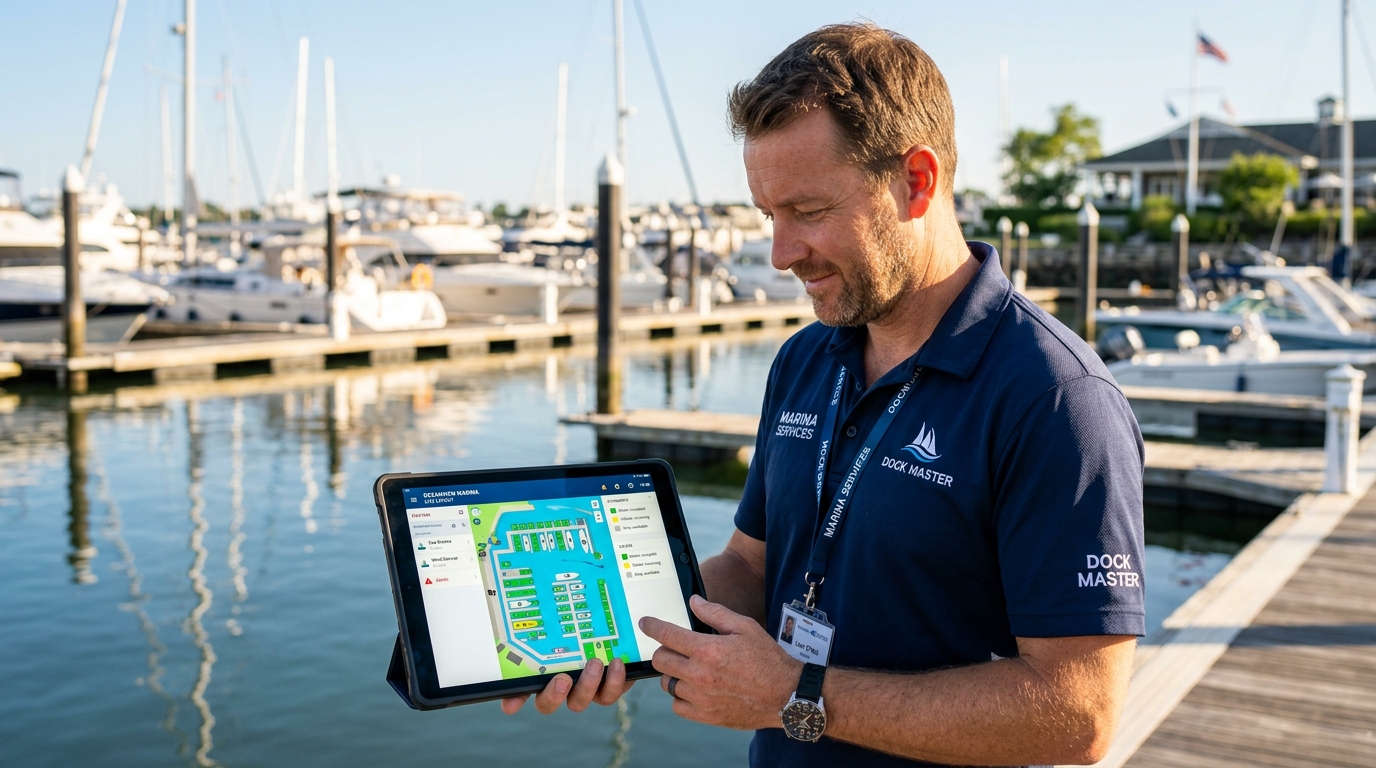
At its heart, a connected marina is an operational model where physical assets—such as wet slips, dry storage stacks, moorings, and utility pedestals—are synchronized in real-time with a centralized cloud-based system. Instead of relying on manual visual checks to confirm whether a slip is vacant, dock masters use a live, interactive Marina Map View that automatically displays Live Berth Availability.
This connectivity is powered by a seamless exchange of data. When a resident boater leaves the marina for a weekend cruise, the system automatically registers the vacancy. Rather than letting that slip sit idle, the platform makes it instantly available for transient booking. By linking physical docks to digital inventory, operators can confidently transition from static, manual monitoring to dynamic, automated optimization.
The Vital Organs of the Modern Marine Ecosystem
A thriving marine facility does not exist in isolation. It is part of a larger regional marine ecosystem that includes local yacht clubs, commercial maintenance providers, charter companies, private waterfront residents, and transient cruisers. In a legacy setup, these entities function independently, causing friction at every point of contact. In a connected model, they are unified through shared digital pipelines.
For example, a connected framework allows a yacht club to instantly coordinate guest slips with neighboring facilities during major regattas. Similarly, local service providers can be notified when a vessel docks, allowing them to coordinate hull cleaning or mechanical servicing without requiring the boat owner to act as a manual middleman. By bridging the gap between municipal harbors, commercial marinas, and private waterfront assets, we create a fluid, transparent waterway network that benefits every stakeholder.
How Marina Match Features Bridge the Operational Gap
The transition from legacy management to a fully connected system requires clear, powerful tools. Let us look at how the integrated suite of Marina Match Features directly replaces traditional, inefficient workflows:
- Manual vs. Automated Reservations: Instead of taking phone calls, writing down dimensions, and manually checking paper calendars, the Dock Master Dashboard displays instant booking requests made through the online marina booking platform.
- Unmanaged Waitlists vs. Automated Waitlists: Rather than maintaining a static spreadsheet of hopeful boaters that grows outdated by the week, the system utilizes an automated waitlist. When a long-term berth becomes vacant, the platform automatically contacts eligible boaters based on vessel draft, beam, and length overall (LOA), securing a new lease-holder without requiring manual administration.
- Scattered Payments vs. Stripe Secure Payments: Instead of chasing physical checks or manually inputting credit card numbers over a crackling VHF radio, all financial transactions are handled securely through integrated Stripe Secure Payments, automatically updating ledger records and distributing digital invoices.
- Siloed Docks vs. Global Marina Network: Instead of operating as an isolated harbor, facilities gain exposure on a global marina network, putting their vacant berths for rent or berths for sale directly in front of an international audience of verified boaters.
Optimising Resource Allocation with Smart Dock Management Software
Every square meter of water in a marina represents potential revenue, yet managing this physical space is exceptionally complex. Unlike hotel rooms, which are uniform in size, slips must accommodate vessels with wildly varying drafts, beams, and lengths. A single catamaran can take up the space of two monohulls, while a deep-draft sailboat cannot be placed in a shallow inner basin.
Modern dock management software acts as an intelligent spatial planner. By maintaining precise dimensions of every berth and comparing them against incoming booking requests, the software prevents costly docking errors. Dock masters can visualize their entire facility at a glance, group vessels logically to maximize dock space, and assign utility loads safely without overloading electrical shore-power circuits. This level of precision is especially critical during peak seasons, where even a 5% increase in spatial efficiency can translate to thousands of dollars in additional monthly revenue.
Enhancing Boater Experiences Through an Online Marina Booking Platform
Modern boaters belong to a digital-first generation. They are accustomed to booking flights, reserving rental cars, and managing banking on their mobile devices. When they encounter a marina that requires them to make multiple phone calls, send emails, and wait days for a booking confirmation, they often choose to take their business elsewhere.
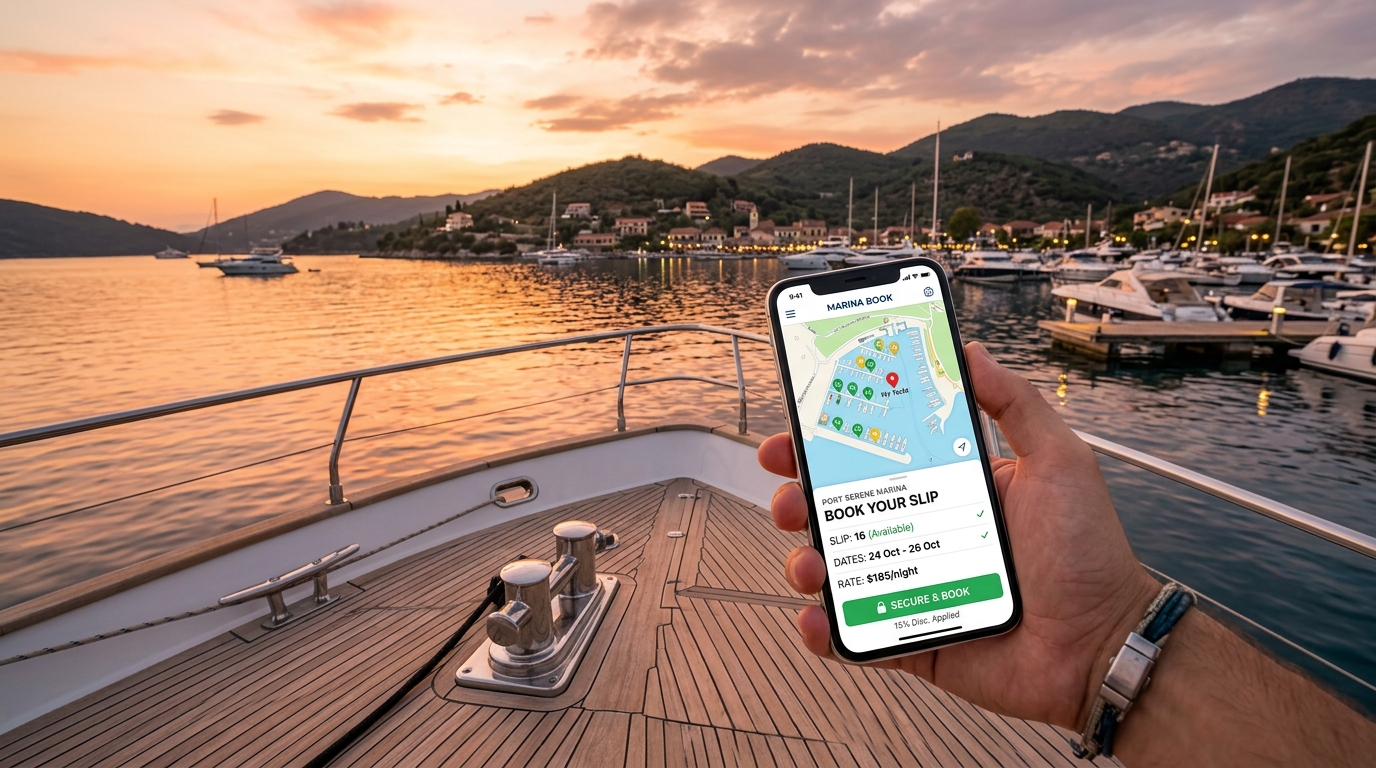
An intuitive marina booking platform changes the relationship between boaters and operators. Through a clean Boater Dashboard, vessel owners can search for available berths, filter by required amenities (such as three-phase power, fresh water, or fuel docks), upload boat registrations and insurance certificates, and lock in their reservation within minutes. This convenience is not limited to commercial facilities; it extends directly to private dock rental. Waterfront property owners with an underutilized private jetty or mooring can list their space for rent, providing boaters with safe, alternative berthing options while earning passive income from their private assets.

Data-Driven Logistics: Leveraging Marina Analytics for Growth
One of the greatest limitations of legacy marina management is the lack of actionable data. Operators often make critical business decisions based on gut feeling or historical anecdotes. A connected marina, however, generates a wealth of continuous operational data that can be analyzed to drive long-term growth.
By utilizing comprehensive marina analytics through a dedicated Revenue Dashboard, operators can identify key performance indicators such as historical occupancy trends, peak arrival windows, utility consumption patterns, and revenue per linear meter of dock space. These insights allow for highly strategic decision-making. For example, if analytics reveal a consistent, year-round demand for wide-beam catamaran berths, an operator might choose to reconfigure a series of narrow, underperforming single slips into wider, high-yield multi-hull spaces during their next infrastructure upgrade.
Demystifying Connected Marina Security and Financial Workflows
Transitioning to cloud-based systems often raises valid questions regarding digital security and financial safety. Marina operators handle sensitive personal information, vessel documentation, and substantial financial transactions daily. Ensuring this data is safe is paramount to maintaining trust within the boating community.
A modern digital marina platform addresses these concerns by utilizing advanced security protocols. By routing all financial transactions through globally recognized, PCI-compliant payment gateways like Stripe, sensitive bank details and credit card information are never stored directly on the marina's local servers. Furthermore, granular staff permissions ensure that dockhands have access to arrival manifests and slip assignments on their mobile devices, while sensitive financial reporting and customer accounts remain securely restricted to authorized management personnel.
Conclusion: Navigating Toward a Smarter Horizon
The marine industry is standing at a pivotal crossroads. The traditional, manual ways of managing waterfront properties are fast becoming unsustainable in an increasingly fast-paced, digital world. Transitioning your facility into a connected marina is not merely about replacing paper logs with digital forms; it is about building a highly optimized, resilient, and responsive business that thrives as part of a unified, global marine ecosystem.
By embracing modern Marina Management Software, operators can eliminate administrative strain, maximize physical berth occupancy, secure recurring revenue streams, and deliver the seamless, stress-free experience that modern boaters demand. Whether you are managing a municipal harbor, a busy commercial facility, a prestigious yacht club, or simply looking to monetize a private jetty, the path forward is clear.
Are you ready to unlock the full potential of your waterfront property? Partner with Marina Match today to explore how our advanced digital platform can transform your daily operations, connect you to an international network of boaters, and position your facility at the very forefront of modern marine innovation.
Frequently Asked Questions
What exactly is a connected marina?
A connected marina is a waterfront facility that integrates physical infrastructure, like docks, moorings, and utilities, with real-time cloud-based software. This connectivity allows operators to automate reservations, monitor live slip occupancy, streamline payments, and interact directly with boaters through a single digital platform.
How does dock management software prevent double-bookings?
Modern dock management software uses an intelligent database that cross-references vessel dimensions (length, beam, and draft) with live berth availability. When a booking is made, the slip is instantly locked in the system, updating the interactive marina map across all staff devices in real-time to completely eliminate booking conflicts.
Can I list my private jetty or dock on a marina marketplace?
Yes. Platforms like Marina Match offer dedicated features for private dock rental. Private waterfront property owners can list their private jetties, slips, or moorings for rent, specifying vessel size limits and utility access, connecting directly with boaters seeking safe alternative berths.
Is cloud-based marina software secure for financial transactions?
Yes, highly secure. Reputable platforms utilize fully encrypted, PCI-compliant payment processors such as Stripe. This ensures that boater payments, deposits, and recurring slip fees are processed securely without storing sensitive financial details on local computer systems.
Do we need specialized IT staff to run connected marina software?
No. Modern platforms are designed to be intuitive and user-friendly, requiring no advanced IT knowledge. The systems are hosted securely in the cloud, meaning all updates, security patches, and backups are handled automatically by the provider, allowing your team to focus entirely on on-water operations.
Recent Blogs