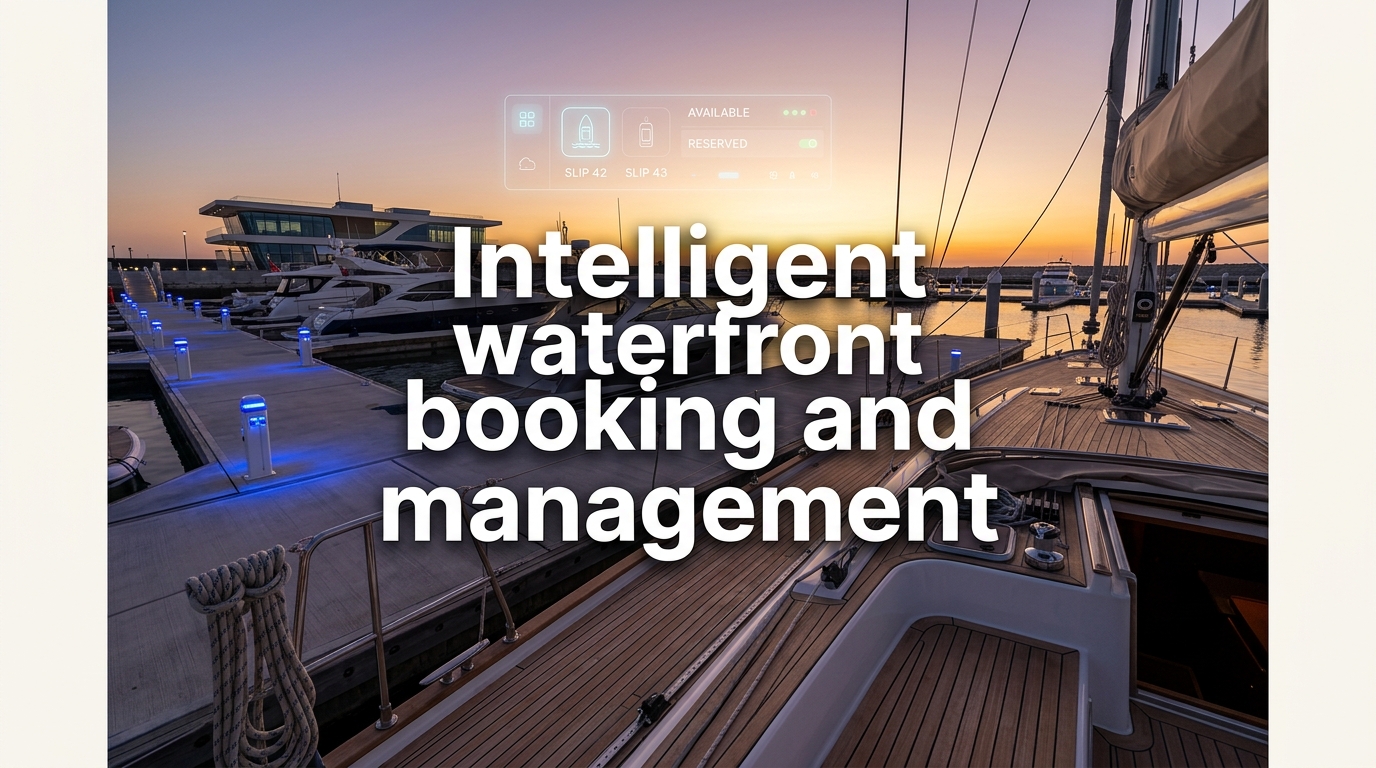
Cultivating Boater Loyalty: How Modern Marina Software Redefines Customer Relationship Management
Suggested URL Slug: modern-marina-software-and-crm
Featured Image Alt Text: Aerial golden hour view of a modern connected marina featuring yachts, private jetties, and smart berths.
Social Media Summary: Discover how modern marina software is revolutionising waterfront hospitality. By integrating intelligent CRM systems, operators can automate berth reservations, enhance boater relationships, and tap into a global marina network. Learn how to transform your marina business from a static parking lot into a vibrant, connected digital hub.
The marine hospitality industry is undergoing an unprecedented paradigm shift. In an era where travelers can reserve a boutique hotel room, hail a ride, or rent an executive apartment with a few taps on a smartphone, today’s boaters expect the same level of digital responsiveness. Gone are the days when a yacht owner or sailing enthusiast was content to spend their afternoon playing phone tag with harbor offices, hoping for a transient berth reservation.
To remain competitive and highly profitable, a modern marina operator must rethink how they engage with their audience. The solution lies in abandoning isolated, manual workflows and adopting a robust, cloud-based marina software system designed specifically to handle the unique physics of waterfront management while serving as a highly effective marina CRM. This deep dive explores how connecting docks, boaters, and administrative teams under a unified digital umbrella not only simplifies daily tasks but also integrates facilities into an active global marina network that drives long-term asset value.
The Intersection of Docks and Data: Understanding Marina CRM
At its core, a standard customer relationship management (CRM) tool is designed for transactions involving digital or physical goods that do not have physical dimensions. In the maritime industry, however, a customer is not just a name and an email address. They represent a complex physical asset—a vessel with a specific length overall (LOA), beam width, draft depth, and displacement. When that vessel docks, it requires utilities ranging from high-amperage shore power connections to freshwater access and waste pump-outs.
A generic CRM simply cannot process these operational variables. This is why a dedicated marina CRM, embedded directly within modern marina software, is essential. It marries the qualitative aspects of customer relations (such as owner preferences, billing histories, and service logs) with the physical realities of the slips themselves.
By tracking this data in a single repository, a marina operator can anticipate their customers' needs before the boat even arrives. For example, if a returning transient vessel has historically required a 50-amp shore power hookup, the system can automatically flag suitable berths, ensuring the dock master dashboard displays only compatible options. This level of precision eliminates the logistical friction of re-routing vessels upon arrival, creating a smooth and highly professional welcome.
Why Traditional Methods Fail and Modern Marina Software Succeeds
For decades, many marina facilities operated using paper ledgers, dry-erase whiteboards, or heavily modified spreadsheets. While these manual methods may have sufficed when boating communities were primarily local and static, they are wholly inadequate for today’s dynamic, high-velocity boating ecosystem. Manual workflows are prone to double-bookings, missed revenue opportunities, and communication breakdowns that frustrate both staff and visitors.
Consider the administrative effort required to manage a waitlist manually. When a berth owner decides to travel for the season, leaving their slip vacant, a manual operator must manually cross-reference their waitlist, contact potential renters individually, verify their vessel dimensions, and collect payment. By the time this process is complete, days of potential slip rental revenue have been lost.
Modern marina software completely transforms this workflow by automating the matching process. Let us compare the operational contrasts between manual legacy management and modern software solutions:
- Data Access and Storage: Legacy systems rely on offline local servers or paper logs, risking data loss and restricting access to a single desk. Modern systems feature secure cloud-based data accessible from any device, allowing the team to manage dockage from a smartphone while standing on the pier.
- Reservation and Booking Flow: Traditional bookings rely on slow back-and-forth emails, phone tag, and manual validation of vessel dimensions. Modern systems offer automated, self-serve online booking portals that instantly validate vessel specifications against active berth parameters.
- Payment Collection and Security: Manual invoicing requires paper checks, manual credit card entry, or delayed bank transfers. Modern software integrates secure Stripe payment gateways, automating recurring monthly fees, transient booking deposits, and incidental billing.
- Waitlist Coordination: Staff must manually review paper waitlists, call candidates one-by-one, and cross-examine hull sizes. Modern systems use automated waitlists that instantly notify the next qualifying boater when a suitable berth becomes vacant.
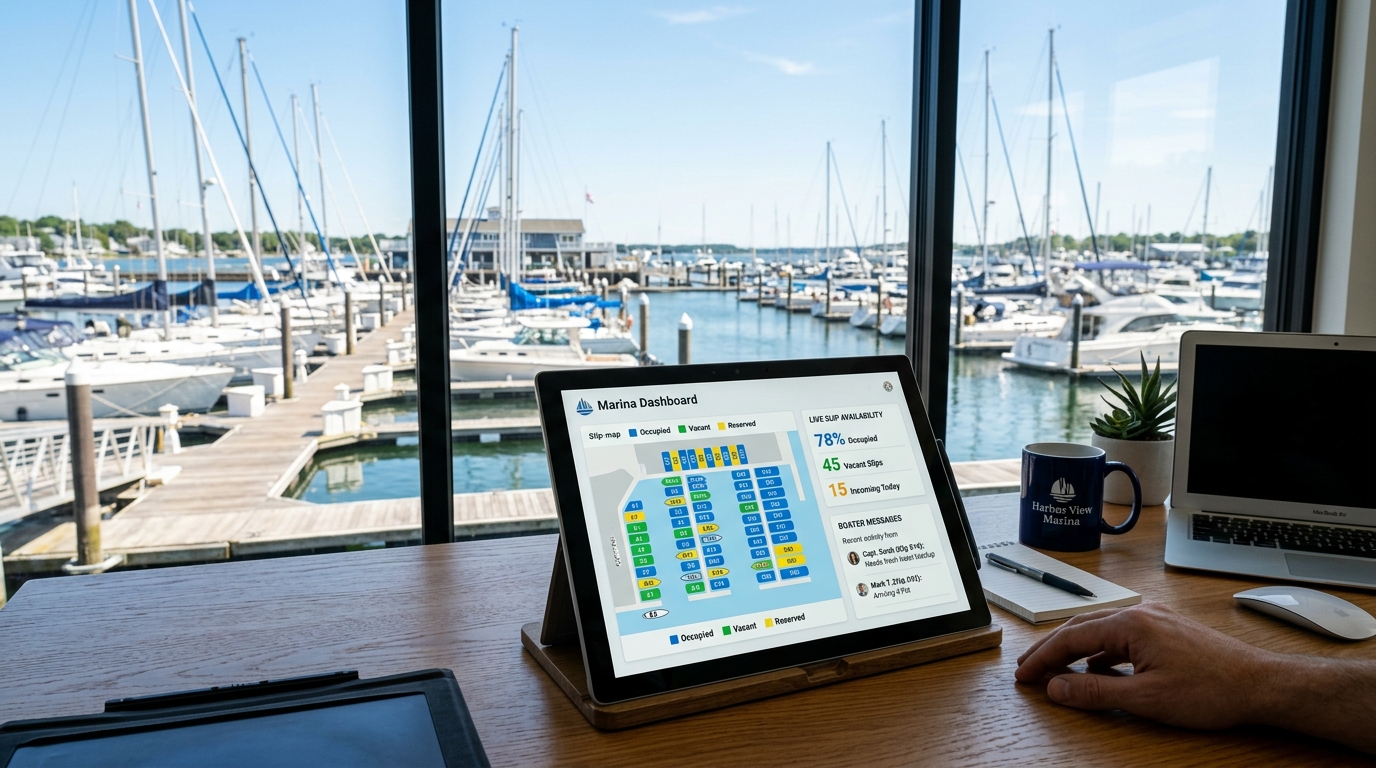
- Reporting and Analytics: Manual operators spend hours compiling monthly spreadsheets to calculate basic occupancy. Modern platforms provide an interactive marina dashboard with real-time financial reporting, occupancy forecasting, and historical yield analysis.
By replacing administrative friction with automated workflows, modern software allows your team to focus on what truly matters: providing world-class service to boaters on the water.
Transforming Guest Experiences with Online Marina Booking
The modern consumer journey begins online. Whether a boater is planning an offshore cruise or looking for a weekend getaway, they want to secure their slip with the same ease they reserve a hotel room. Providing a frictionless online marina booking experience is no longer a luxury—it is a baseline requirement for any thriving marina business.
An intuitive booking platform acts as your digital front door, operating 24 hours a day, 7 days a week. It displays live berth availability, calculates exact pricing based on vessel length, and allows the boater to submit necessary documents—such as proof of insurance and vessel registration—directly through the portal during checkout. This means when the vessel arrives at your docks, your staff already have everything they need to facilitate a safe and swift check-in.
This digital convenience also opens up new avenues for private waterfront property owners. Individuals who own a private jetty, private dock, or private berth often struggle to find reliable boaters to lease their underutilised space. By leveraging a public marina marketplace, these private owners can post a listing to rent my berth, exposing their dockage to a vast network of vetted captains. The system manages the secure payments, digital agreements, and booking schedules, turning quiet residential jetties into secure, income-generating marine assets.
Unlocking Global Reach via a Connected Marina Network
No marina is an island—even if it is physically located on one. Historically, individual facilities operated as isolated silos, meaning they had to spend significant marketing dollars to attract new transient boaters. Today, the most forward-thinking operators are amplifying their visibility by joining a global marina network.
A connected marina network bridges the gap between independent docks and the international boating community. When a marina shares its real-time inventory on a centralized marketplace, it instantly gains exposure to thousands of active cruisers who are planning voyages. This network effect operates much like global booking networks in the hotel industry, steering boaters toward connected properties where they know their customer profile, vessel specs, and payment methods are already saved.
This connectivity is highly beneficial for yacht clubs and multi-location marina portfolios. By utilising unified yacht club software connected to a broader ecosystem, clubs can easily manage reciprocal member privileges, coordinate inter-club regattas, and share verified vessel records across multiple locations. Boaters enjoy a seamless, highly personalised experience wherever they cruise, while operators benefit from elevated brand loyalty and a steady stream of incoming transient traffic.

Boosting Marina Revenue with Intelligent Occupancy Analytics
To build a resilient marina business, operators must treat their berths as valuable, time-sensitive inventory. A vacant slip represents lost revenue that can never be recovered. Therefore, maximizing yield requires more than simply filling docks; it requires understanding the historical, seasonal, and real-time data that drives boater behavior.
Modern marina software provides a powerful marina dashboard that delivers actionable analytics right to your screen. Instead of guessing which weekend will be the busiest, operators can analyze multi-year occupancy trends to implement dynamic pricing strategies. For instance, during peak holidays or major fishing tournaments, slip rates can be adjusted automatically, while off-peak discounts can be offered to long-term transient cruisers to keep the docks full during slower months.
Furthermore, analytics allow operators of complex facilities—such as those with a dry storage marina, wet slips, and deep-water moorings—to orchestrate their space efficiently. If the dashboard reveals that the dry stack marina is operating at capacity while transient wet berths are underutilised, operators can strategically reallocate staff and dock space to balance the load. This data-driven approach removes guesswork from capital expenditure planning, giving investors clear, audit-ready reports on exactly how their marine assets are performing.
Transitioning Your Waterfront: A Practical Roadmap to Implementation
While the benefits of transitioning to a modern, digital ecosystem are clear, many marina managers hesitate because they fear the migration process. Moving decades of historical member data, active slip assignments, and pending waitlists can feel like steering a superyacht through a narrow channel. However, with the right approach and a clear roadmap, the transition can be smooth, secure, and stress-free.
The first step in any successful software migration is a comprehensive data audit. Clean up your existing database by removing expired contact information, outdated boat profiles, and resolved billing disputes. Once your data is organized, your software provider can safely import it into the new platform, ensuring that existing slip holders do not experience any disruption to their billing cycles or gate access.
Next, focus on team training. Introduce your staff to the dock master dashboard gradually, highlighting how features like visual slip maps, automated gate codes, and instant SMS communication will save them hours of tedious work each week. Finally, roll out the new platform to your boating community. Send a friendly onboarding email explaining how to access their new boater dashboard, set up automatic recurring payments via Stripe, and book future transit slips. By positioning the transition as an upgrade to their overall experience, you will foster immediate adoption and excitement.

Frequently Asked Questions about Marina Software and CRM Integrations
Q: How does modern marina software help prevent double-booking of slips?
A: The software utilizes real-time inventory management synced across both your back-of-house dock master dashboard and your public online booking engine. When a berth reservation is confirmed, those specific dock coordinates are instantly blocked off for that vessel’s dimensions, preventing any overlapping bookings.
Q: Can independent yacht clubs benefit from a global marina network?
A: Absolutely. Joining a global network allows yacht clubs to easily administer reciprocal member programs, verify visiting vessel dimensions, and increase transient occupancy without sacrificing their exclusive member-focused culture.
Q: Is our financial data safe when processing payments through marina software?
A: Yes, provided you choose a platform integrated with top-tier payment gateways. Industry-standard solutions, like Stripe secure payments, ensure all financial data is fully encrypted, PCI-compliant, and processed safely, giving both operators and boaters total peace of mind.
Q: How long does it typically take to transition from paper logs or spreadsheets to cloud-based software?
A: While every facility is unique, most marinas can complete the onboarding and data migration process within two to four weeks. Modern platforms provide dedicated support teams to guide your staff through data cleanup, system setup, and boater onboarding.
Q: Can private dock or private jetty owners list their spaces using this technology?
A: Yes. A comprehensive marina marketplace allows private waterfront property owners to securely list their individual jetties, docks, or moorings for rent. They can set availability, specify acceptable boat dimensions, and handle payments safely, just like a commercial facility.
The Next Horizon for Modern Marina Businesses
The marine industry stands at the threshold of a highly connected digital era. As vessels become more advanced and boaters become more tech-savvy, the expectation for seamless, data-driven waterfront services will only intensify. Marinas that continue to rely on siloed, outdated workflows risk falling behind, while those that embrace modern marina software will secure their place at the forefront of the industry.
By adopting a platform that blends robust day-to-day management tools with an intelligent marina CRM and a global marina network, you are doing more than just automating administrative tasks. You are building the digital infrastructure required to provide exceptional boater experiences, optimize your waterfront's financial yield, and join a connected marine ecosystem.
If you are ready to future-proof your facility and simplify your operational workflows, Marina Match offers a comprehensive, AI-ready platform built by marine experts for the modern waterfront. From interactive marina maps and live berth availability to automated waitlists and secure Stripe payments, Marina Match is the ultimate partner for modernizing your operations. Discover how we can transform your marina business today.
Recent Blogs
September 15, 2026
Designing the Automated Marina: A New Era for Jetty Rental
September 13, 2026
Sailing Globally: The Value of a Global Marina Network
September 11, 2026
Upgrading Boat Mooring Systems with Berth Management Software