
Sailing Globally: The Value of a Global Marina Network
The maritime world is undergoing a profound structural shift. For decades, the relationship between boaters and marina facilities was highly fragmented and intensely local. A captain planning a voyage across international waters or even neighboring coastal districts often had to rely on manual phone calls, static email contact forms, and word-of-mouth recommendations to secure overnight berthing. This analog approach is rapidly giving way to a more integrated, digital marine ecosystem. Today, we are witnessing the rise of a global marina network, an interconnected environment that unites commercial marinas, yacht clubs, private dock owners, and boaters into a singular, responsive platform.
At the heart of this transformation is the concept of operational connectivity. Boaters are no longer just seeking a physical wooden pontoon to tie their lines; they are seeking real-time access to digital gateways that offer live updates on berth availability, tidal conditions, and seamless payment processing. By bringing together disparate docks and individual private moorings into a unified network, the marine industry is solving long-standing operational bottlenecks, maximizing marina occupancy, and delivering unprecedented convenience to the modern seafaring community.
The Rise of Connected Boats and Digital Navigation
To understand the necessity of an integrated marine network, one must look closely at how modern vessels are designed and operated. Today’s fleets increasingly consist of Connected Boats—vessels equipped with sophisticated onboard telematics, GPS navigation, automated monitoring systems, and real-time communication modules. These smart vessels constantly monitor their own performance, fuel levels, and geographic coordinates, generating valuable data streams that can be shared with onshore facilities.
When Connected Boats approach a coastline, they should ideally be able to communicate seamlessly with nearby berthing providers. Imagine a vessel experiencing unexpected mechanical issues or navigating through sudden inclement weather. Rather than forcing the crew to manually search the web or call multiple harbours while steering through heavy swells, a smart, connected system allows the boat to query the local network for an immediate berth reservation. The onboard dashboard can communicate directly with the marina's database, matching the boat’s beam, draft, and electrical requirements with a vacant slip. This level of automation is no longer a distant dream; it represents the inevitable future of marine logistics, bridging the gap between offshore navigation and onshore operations.
The Core Infrastructure of a Global Marina Network
Building a global marina network requires more than just launching a directory of harbours. It demands a robust, cloud-based infrastructure capable of handling millions of real-time data points, coordinating secure financial transactions, and managing complex inventory configurations across different time zones and currencies.
At its core, this infrastructure must cater to three primary groups:
- Commercial Marina Operators: Large-scale facilities that require comprehensive software to track daily occupancy, automate slip allocations, manage waitlists, and generate detailed financial reports.
- Yacht Clubs and Private Associations: Entities that manage member-first berths but want to monetize vacant spaces during quiet seasons to offset operational costs.
- Private Waterfront Property Owners: Individuals who own a private jetty, a backyard dock, or a deep-water mooring but lack the marketing reach or administrative tools to rent them out securely.
By integrating these diverse stakeholders into a single marketplace, the network expands the total volume of available berths far beyond what traditional directories can offer. A boater looking for a safe harbor during a busy summer holiday is no longer restricted to overbooked municipal marinas. They can easily search the network to discover a private jetty or a secure mooring that matches their boat's specifications, widening their choices while generating new revenue streams for local waterfront property owners.

How a Marina Operator Optimises Yield and Occupancy
For a professional marina operator, running a waterfront business is a delicate balancing act. Slips must be filled to maximize revenue, yet room must be left for high-paying transient yachts. Staff must manage physical maintenance, security, and customer service, all while handling administrative inquiries, billing disputes, and reservation changes.
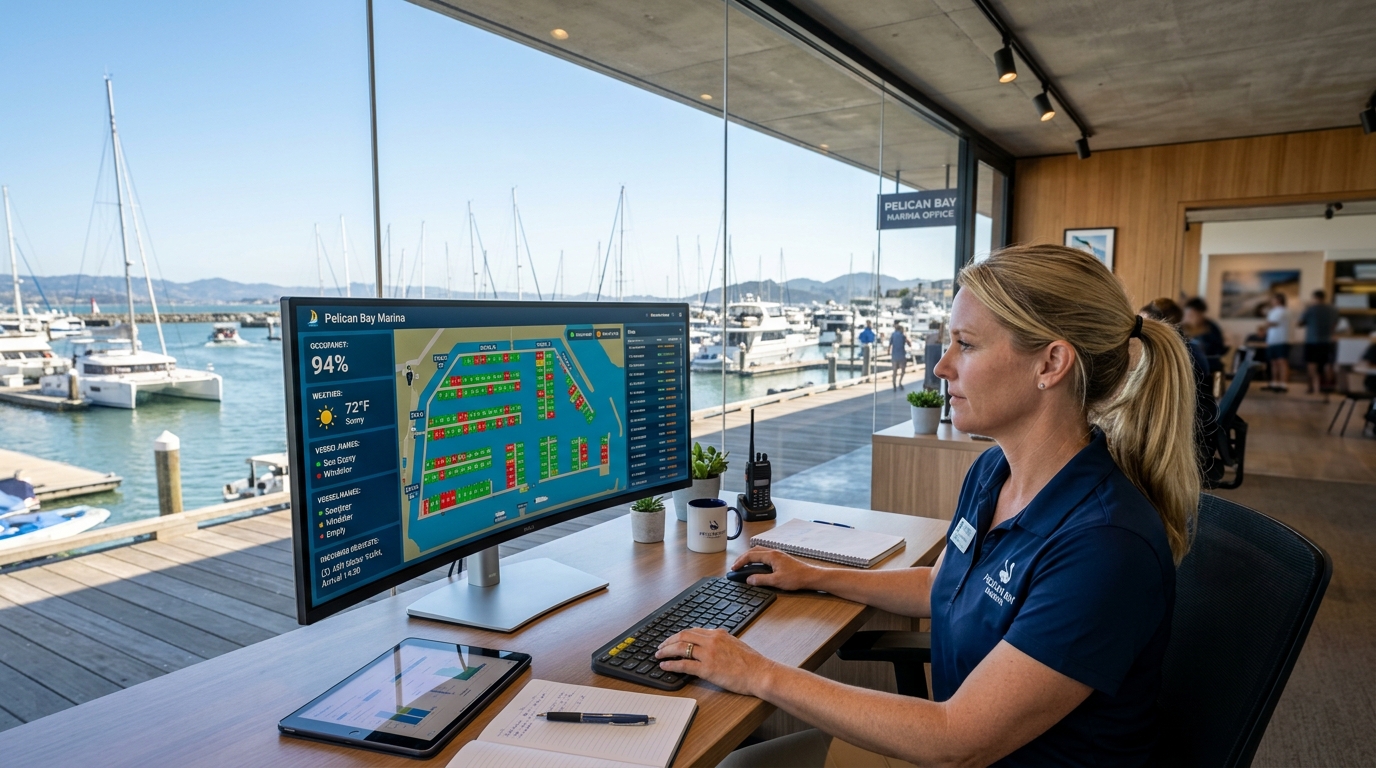
Legacy systems often fail to provide a clear overview of actual, live availability. If a boat leaves its slip three days early, that space often sits empty because the staff are too busy to manually update their records or reach out to waitlisted boaters. A connected management platform resolves this by automating the entire cycle. When a boater utilizes an online marina booking platform, the reservation is instantly registered on the Dock Master’s digital dashboard. If a berth becomes vacant unexpectedly, the system can automatically ping the next boater on an automated waitlist, offering them the spot instantly. This keeps marina occupancy consistently high, reduces administrative overhead for staff, and ensures that no revenue-generating opportunity is wasted. Using comprehensive marina analytics allows operators to study historical booking patterns, adjust seasonal rates dynamically, and make data-driven decisions that secure long-term profitability.
Comparing Traditional Marina Operations vs. The Connected Global Network Model
To understand the leap forward, consider how key operational elements compare between traditional, isolated methods and the integrated network model:
- Booking Method: Traditional approaches rely on phone calls, static emails, or paper logs. The connected network uses real-time online booking with instant confirmation.
- Inventory Management: Legacy marinas use manual spreadsheets or whiteboard planning. A smart network integrates a live digital dashboard showing actual berth availability instantly.
- Private Asset Utilization: Private docks historically sit idle due to a lack of secure platforms. The global network permits secure private dock rental, turning empty slips into active listings.
- Vessel Interaction: Traditional check-ins require manual paperwork upon arrival. Connected Boats automatically share specifications with shoreside databases to guarantee a perfect fit.
- Waitlist Efficiency: Hand-written waitlists lead to missed revenue. The modern approach utilizes automated waitlists that offer vacant berths instantly via automated notifications.
Transforming Private Assets: From Mooring for Sale to Private Dock Rental
One of the most exciting aspects of a connected marine marketplace is its ability to unlock the latent potential of private marine properties. Across the globe, thousands of private jetties, residential docks, and offshore moorings sit empty for months at a time. Simultaneously, boaters struggle to find safe harbor in high-demand regions where commercial marinas are operating at 100% capacity.
Consider a waterfront homeowner who wants to "rent my berth" while their own boat is away cruising for the season. Historically, doing so was a legal and logistical nightmare. How would they advertise the space? How could they ensure secure payment? What would happen if a transient boat refused to leave? A modern, unified marketplace eliminates these hurdles by offering a secure, structured platform for private dock rental. Owners can easily create a listing, specify draft and length limitations, set their own pricing, and accept bookings via secure payment processors like Stripe.

This marketplace concept also extends to property transactions. When a boat owner is looking to purchase a permanent home for their vessel, finding a suitable mooring for sale has traditionally involved navigating outdated classified ads or local yacht club noticeboards. By hosting dedicated listings for maritime real estate, a connected network allows buyers to browse global listings, compare prices, analyze structural integrity details, and make informed purchasing decisions with confidence. Investing in a mooring for sale is far less risky when the asset is backed by verifiable historical data, localized depth charts, and clear terms of ownership.
Streamlining Operations for Yacht Clubs and Specialised Facilities
Yacht clubs represent a unique segment of the marine industry. Unlike commercial marinas, they operate on a member-first philosophy, balancing private club events, youth sailing programs, and reciprocal berthing privileges with transient public bookings. Managing these complex layers of access requires specialized tools.
Implementing modern yacht club management software within a wider global network allows clubs to digitalize their operations seamlessly. Members can reserve berths, register for club regattas, and pay their annual dues through a personalized member portal. Meanwhile, the club's administration can allocate empty member berths to visiting yachtsmen during peak regatta weekends, maximizing both community goodwill and auxiliary club revenue. This delicate balance of hospitality, member services, and maritime logistics is made effortless when everything is managed through a single, intuitive interface.
Frequently Asked Questions
What is a global marina network, and how does it benefit boaters?
A global marina network is an interconnected digital ecosystem that links commercial marinas, yacht clubs, private dock owners, and boaters on a single platform. For boaters, it means they can view live berth availability, make instant bookings, secure payments, and locate private moorings or berths for rent anywhere in the world without making manual phone calls or sending multiple emails.
How do Connected Boats integrate with smart marina management software?
Connected Boats use onboard GPS, telematics, and internet connectivity to share crucial dimensions (like length overall, beam, and draft) directly with smart marina software. This allows the system to instantly verify if a vacant slip is a safe match, streamlining the berth reservation process and reducing the risk of docking errors upon arrival.
Can I list my private jetty or backyard mooring for rent on a global marketplace?
Yes. Private waterfront property owners can use the marketplace features of the network to safely lease out their empty docks, jetties, or moorings. The platform handles listings, sets booking rules, and processes payments securely through Stripe, turning idle waterfront assets into reliable passive income.
How does an automated waitlist work for busy marinas during peak season?
When a marina operates at maximum occupancy, boaters can join an automated digital waitlist. If an existing guest departs early or cancels their reservation, the marina management software automatically detects the vacancy and alerts the next matching boat on the waitlist via SMS or email, allowing them to book the slot instantly.
What should I look for when searching for a permanent mooring for sale?
When buying a permanent mooring, look for critical parameters such as maximum weight capacity, water depth at low tide, shelter from prevailing winds, and structural mooring compliance certifications. A professional marine network provides transparent listings that highlight these details clearly to protect your investment.
Is payment secure when booking a berth through a digital marina network?
Yes, all financial transactions are handled through integrated, secure payment gateways like Stripe. This ensures that credit card details are encrypted, payments are processed securely, and hosts receive their funds directly without handling cash or sensitive card data manually.
Charting the Path Forward with Marina Match
The digitalization of the marine industry is no longer an optional upgrade; it is the standard by which modern waterways will be managed. For too long, the barrier between boaters, commercial operators, and private dock owners has been defined by isolation and fragmented systems. Embracing a unified global marina network is the key to unlocking the full potential of global waterways.
By integrating advanced tools like real-time maps, automated waitlists, secure transaction gateways, and smart analytics, the marine ecosystem becomes safer, more efficient, and more profitable for everyone involved. Whether you are a commercial operator looking to maximize occupancy, a yacht club manager seeking to streamline member services, a private homeowner aiming to rent out an idle dock, or a boat captain planning your next coastal passage, a connected digital framework provides the tools you need to succeed.
As the industry moves closer to complete connectivity, pioneering platforms like Marina Match are building the infrastructure that makes this future possible. Explore how Marina Match can transform your maritime operations, secure your next berth reservation, or turn your private mooring into a thriving asset today.
Recent Blogs
September 13, 2026
Sailing Globally: The Value of a Global Marina Network
September 11, 2026
Upgrading Boat Mooring Systems with Berth Management Software
September 7, 2026
Redefining Slips: AI Berth Allocation in Connected Boating
September 5, 2026
AI Dock Management: Shaping the Modern Marine Ecosystem