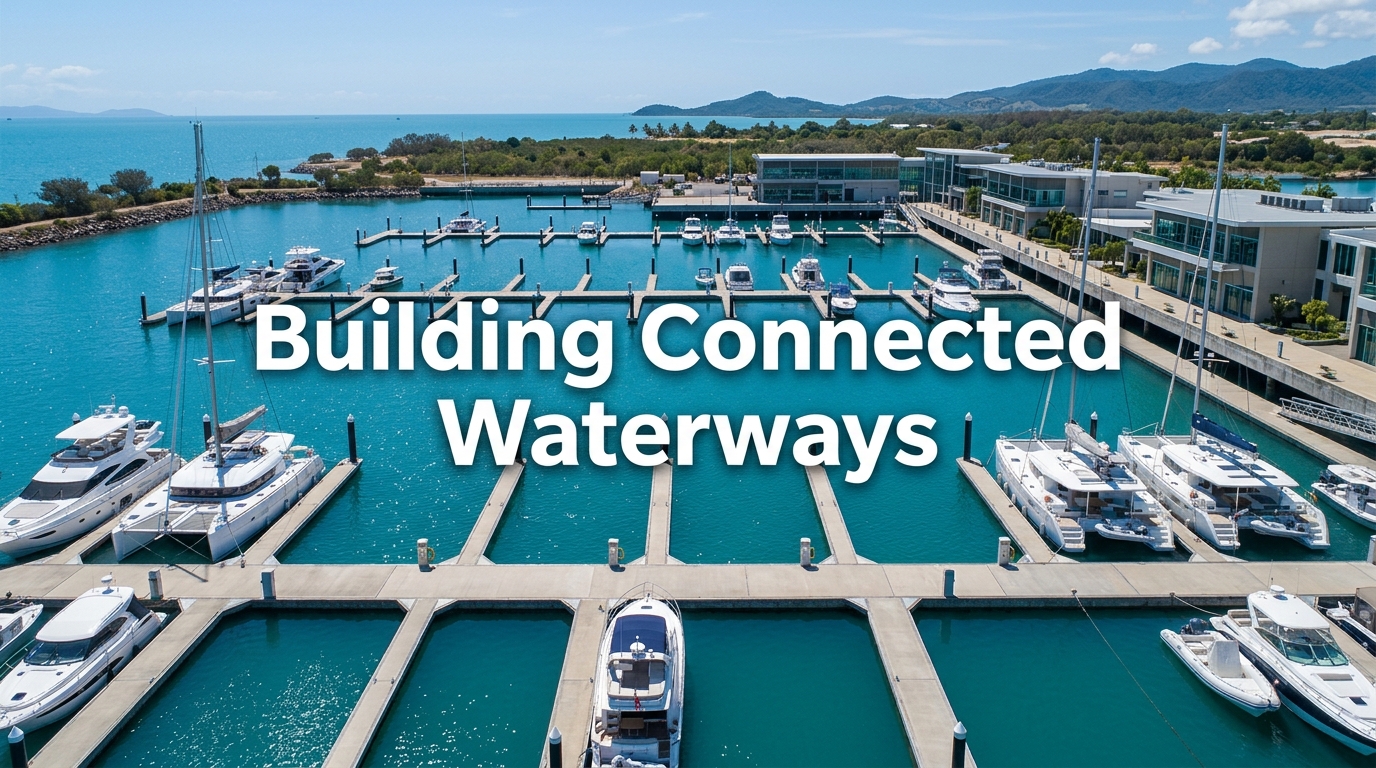
Streamlining Slip Reservations: How Modern Marina Booking Software Drives Growth
The recreational boating sector is experiencing unprecedented growth. Across the globe, more families are taking to the water, purchasing vessels, and planning coastal journeys. Yet, while yachts and navigation technologies have leaped into the modern age with touchscreens and satellite connectivity, many waterfront facilities remain anchored in the past. Marina managers, dock masters, and yacht club boards often find themselves buried under manual tasks, juggling phone calls, radio requests, and paper logbooks just to coordinate daily arrivals.
In an era where travelers can book boutique hotel stays or secure private transport in seconds, boaters expect the same effortless convenience when reserving a berth. This rising demand for digital accessibility has pushed waterfront managers to rethink their operational strategies. To remain competitive and efficient, modern operators are shifting toward cloud-hosted solutions, particularly dedicated marina booking software, to coordinate arrivals, track occupancy, and automate tedious administration. This article explores how a digital transition streamlines workflows, opens new revenue streams, and establishes a foundation for smart marina technology.
The Traditional Marina Dilemma: Overhead, Paper Trails, and Lost Revenue
Running a traditional marina business involves a complex balance of spatial logistics and customer service. Without centralized software, a typical day is filled with friction. Dock masters must manually match incoming vessels with appropriate berths based on length, beam, draft, and electrical requirements. A single error in calculation can lead to double bookings, compromised safety, or a vessel being turned away at the fairway.
Furthermore, reliance on manual phone reservations creates significant administrative overhead. Staff spend valuable hours playing telephone tag with transient boaters instead of maintaining the docks or assisting guests. During peak seasons, the lack of real-time visibility into berth availability means that short-term vacancies go unmonitored. For example, if a seasonal berth holder leaves for a weekend cruise, that empty space represents lost revenue. Without an automated waitlist or live tracking, the marina operator has no easy way to monetize that temporary vacancy. Transitioning from manual systems to a connected digital marina eliminates these communication gaps, allowing teams to reclaim their time and capture every possible transaction.
Maximising Berth Occupancy with Marina Booking Software
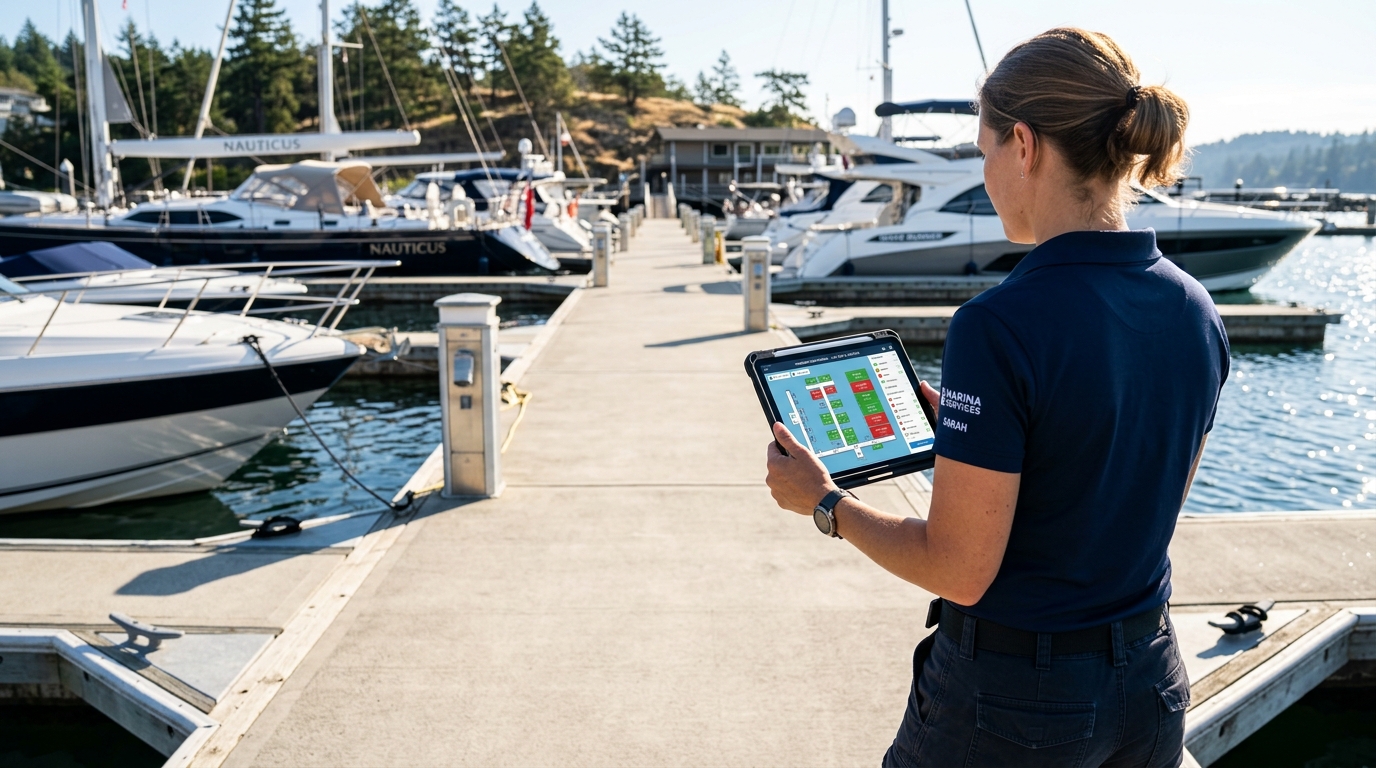
At the core of any modern marine business is the ability to manage space dynamically. By implementing cloud-based marina booking software, operators can move away from static spreadsheets and adopt a live, visual interface. A digital dock master dashboard provides an instant, birds-eye view of the entire facility, showing which berths are occupied, which are vacant, and which are scheduled for maintenance.
This shift benefits both the operator and the boater. Through an intuitive boater dashboard, customers can view live berth availability, enter their vessel details, and secure an online marina booking within minutes. The software automatically filters available slips based on the boat's dimensions, ensuring that only compatible spaces are presented for booking. This automation reduces human error to zero, allowing the marina team to focus on providing top-tier dockside service.
Furthermore, the integration of secure digital payment gateways, such as Stripe secure payments, ensures that transactions are processed instantly and safely. Boaters can settle their fees, agree to terms of service, and upload insurance documents before they ever throw a line. For dry storage marina facilities and dry stack operations, this platform-based coordination allows boaters to schedule launch times in advance, reducing bottlenecks at the fork-lift bays and matching valet services with customer arrivals perfectly.
Unlocking New Revenue Streams with a Global Marina Network
The digitisation of marine assets extends far beyond commercial facilities. Along coastlines, canals, and rivers worldwide, thousands of private marine properties sit underutilised. Private jetty owners, waterfront property hosts, and residential dock masters often have deep-water moorings or private berths that are completely empty for months of the year.
Through a unified marina marketplace, these individual owners can easily list their assets for rent. This peer-to-peer sharing model creates an entirely new category of waterfront inventory, offering boaters alternative mooring options in crowded waterways where commercial slips are sold out. A homeowner with a private dock can turn an empty asset into a source of passive income by hosting private dock rental opportunities for transient vessels.
This open network benefits commercial operators as well. By connecting with a global marina network, established businesses can reach a broader audience of international and regional boaters. When a boater plans an extended coastal voyage, they can use a single marina booking platform to map out their journey, booking consecutive overnight stays across a mix of commercial marinas, yacht clubs, and private jetties. This interconnected approach builds topical authority for the entire industry, turning isolated docks into cooperative nodes of a modern marine ecosystem.
How Automation and AI are Reshaping Waterfront Management
While live booking and digital payments represent the immediate standard for modern operations, the horizon of waterfront management is being shaped by artificial intelligence and marina automation. Forward-thinking operations are already preparing their systems to integrate with smart marina technologies that bridge the gap between software and hardware.

Consider how automated waitlists can transform peak-season logistics. Instead of staff manually managing a handwritten notebook of hopeful boaters, an intelligent system automatically monitors berth cancellations. The moment a slip becomes available, the software scans the waitlist, matches the space to a vessel with compatible dimensions, and automatically sends a reservation offer to the boater's mobile app. If the boater accepts, the transaction is finalized, and the dock layout updates in real-time without requiring a single minute of staff intervention.
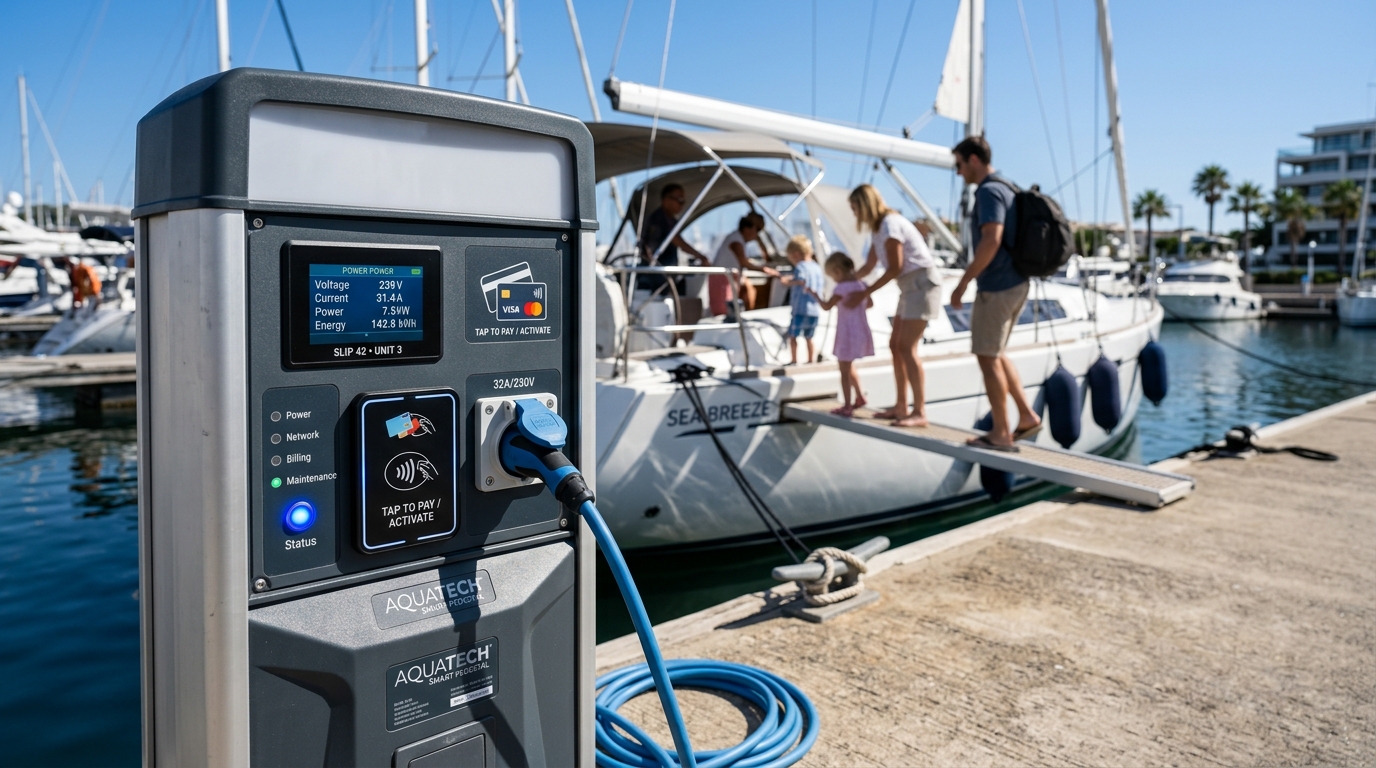
Looking toward the future, an AI-ready platform will be able to analyze historical occupancy rates, local weather patterns, and regional boating events to recommend dynamic pricing strategies. By utilizing predictive marina analytics, operators can automatically adjust slip rates during high-demand holidays to maximize yield, or offer discounted rates during mid-week lulls to encourage transient stays. Furthermore, integrating smart utilities—such as connected power pedestals that automatically track and bill electricity usage directly to the boater's digital account—replaces manual meter reading and simplifies checkout processes entirely.
Transitioning Your Dock Operations: A Comparison of Systems
For operators contemplating an upgrade, it is helpful to contrast the capabilities of traditional manual management with those of a fully integrated smart marina system:
- Traditional Management: Relies on local spreadsheet software, physical whiteboards, and phone logs. Leads to frequent double-bookings, limited after-hours accessibility, manual utility tracking, and isolated marketing reach.
- Connected Smart Marina Software: Powered by cloud-hosted dashboards and mobile interfaces. Offers zero-error automated slip allocation, 24/7 self-service booking, integrated digital payments, automated utility tracking, and global exposure to active boaters.
Making the transition is highly straightforward. Modern platforms are designed with user-friendly onboarding flows, allowing dock masters to build out their custom marina map view, set seasonal rates, and begin accepting reservations within days rather than weeks.
Why Marina Match is the Ideal Infrastructure for Modern Waterfronts
As the maritime industry continues its digital evolution, Marina Match stands out as the comprehensive infrastructure building the future of connected boating. The platform is uniquely designed to serve every player in the marine ecosystem, from multi-million dollar commercial slipway networks to the individual waterfront homeowner listing a single private jetty.
By consolidating essential operations into a single, cohesive environment, Marina Match offers a suite of advanced features, including:
- The Dock Master Dashboard: A highly visual, real-time interface allowing operators to oversee slip occupancy, assign berths, and manage dry stack launches on the fly.
- A Dynamic Marina Marketplace: A public-facing portal where boaters can search for berths for sale and berths for rent, filtering by location, price, and exact vessel specifications.
- The Interactive Marina Map View: A graphical representation of the facility that updates dynamically, allowing boaters to select their preferred slip during the online booking process.
- Automated Analytics: A robust revenue dashboard providing actionable insights into occupancy trends, historical performance, and financial growth.
Whether you are looking to modernise a historic yacht club, optimise a commercial marina business, or monetise an idle private mooring, Marina Match provides the digital tools, international exposure, and automation required to thrive in a competitive landscape.
Frequently Asked Questions
How does marina booking software prevent double-bookings?
Modern booking engines use real-time synchronization. When a boater inputs their vessel length, beam, and draft, the system cross-references these specifications against the physical parameters of vacant slips in the database. A slip is temporarily held during the checkout process and officially locked once payment is processed, making it impossible for another user to book the same space simultaneously.
Can private dock owners use marina booking software?
Yes. Private jetty and dock owners can easily leverage modern platforms like the Marina Match marketplace to list their unused spaces for rent. The system provides private owners with the same high-level scheduling, secure payment processing, and communication tools used by commercial operators, allowing them to earn passive income safely and efficiently.
How do digital platforms manage peak-season waitlists?
Automated waitlists replace manual tracking. Boaters can join a digital waitlist for specific dates and slip sizes. If an existing reservation is canceled, the platform automatically contacts the next compatible boater in line, processes the booking, and updates the dock master's dashboard instantly.
Is smart marina technology difficult to integrate with existing infrastructure?
Not at all. Modern cloud-based systems are designed to operate independently of hardware, requiring only a web browser or mobile device to run. As a facility grows, the software can scale to integrate with IoT-enabled hardware like smart utility pedestals and automated gate systems through modern APIs.
What are the benefits of cloud-based software over local desktop systems?
Cloud systems ensure that data is updated in real-time across all devices, whether accessed by a dock hand on a tablet or an owner checking performance metrics from an off-site location. Furthermore, cloud platforms offer automatic software updates, secure off-site data backups, and seamless integration with global payment systems.
How does the platform handle security and international payments?
Through integrations with trusted global processors like Stripe, platforms handle transactions securely, supporting multi-currency payments, credit cards, and digital wallets while maintaining full compliance with modern data security standards (PCI-DSS).
Embracing the Connected Waterfront Future
The future of boating is undeniably connected, automated, and digital. As boater expectations continue to lean toward instant access and self-service options, the facilities that adapt will capture the lion's share of market demand. Embracing a digital strategy is no longer a luxury reserved for mega-marinas; it is an essential operational step for any forward-looking maritime business.
By upgrading to modern marina booking software, waterfront operators can reduce their administrative burden, delight their guests with seamless transactions, and unlock hidden revenue from empty berths. Whether you operate a bustling commercial harbor, coordinate a prestigious yacht club, or own a single private jetty, the infrastructure you choose today will define your success tomorrow. Take the first step toward a smarter, more profitable waterfront by exploring the digital solutions and global network waiting for you at Marina Match.
Recent Blogs