

Calculating Accurate Vessel Footprints for Efficient Yacht Club Berth Allocation
The Precision Gap in Yacht Club Berth Allocation
Yacht club managers and dock masters frequently face a recurring challenge: a boat registered as a 12-metre vessel arrives at the pontoon requiring 14 metres of usable dock space. When registered length is confused with operational boat length overall for berthing, the result is obstructed fairways, bowsprit collisions, and compromised safety margins during peak sailing weekends.
Accurate spatial management requires assessing a vessel's total envelope—including bowsprits, anchor rollers, davits, and tender platforms—against dock dimensions and fairway turning radii. This guide breaks down the mathematics of true LOA calculations, safety clearance ratios, and modern workflows for handling transient dock rental requests without compromising member safety.
Why Registered Length Differs from Operational Boat Length Overall (LOA)
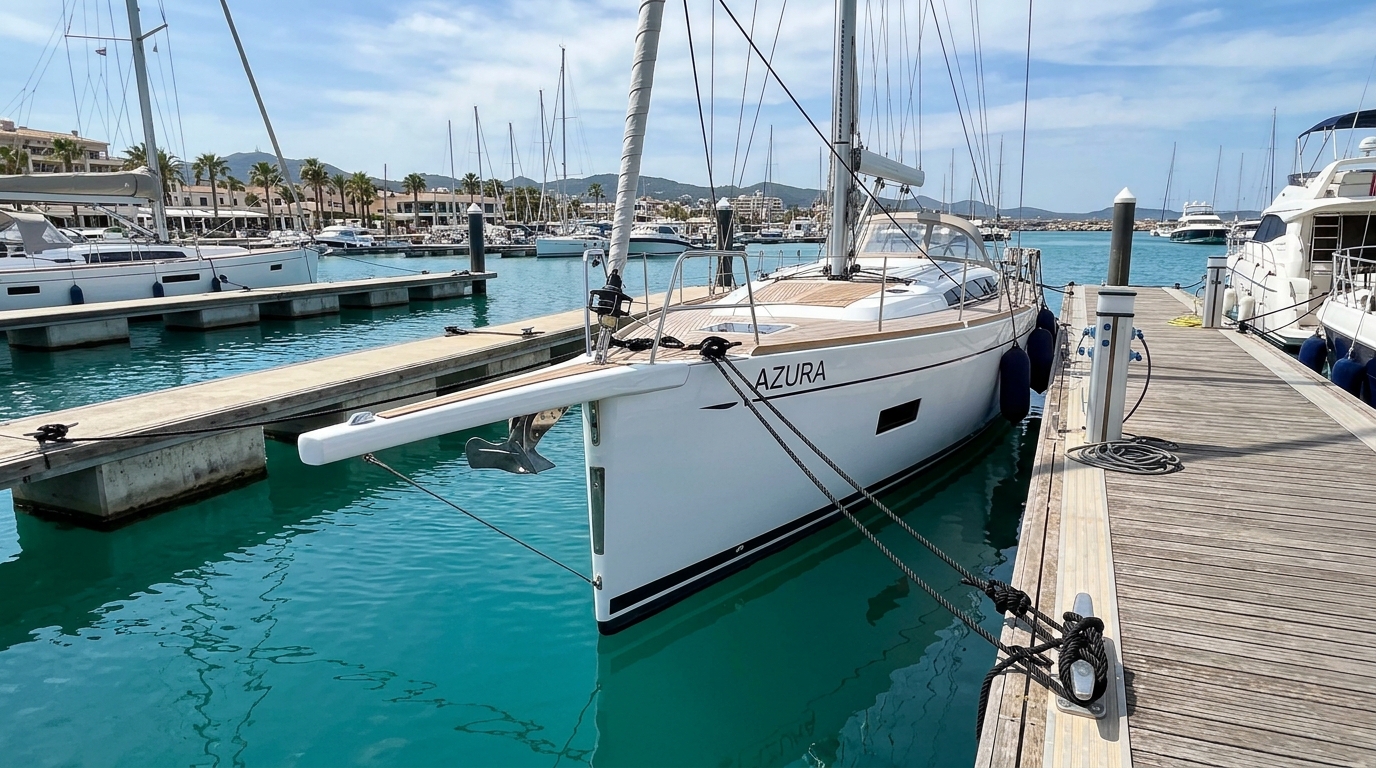
A vessel's official registration paper rarely reflects its physical footprint in the water. Naval architects measure length on waterline or hull length for classification, but berth managers must account for total operational extent.
- Bowsprits and Anchor Rollers: Anchors hanging over the stem add between 0.5 and 1.5 metres of forward protrusion beyond the deck line.
- Outboards and Sterndrives: Tilted engines on trailerables and rigid inflatable boats extend well past the transom.
- Tender Davits and Swim Platforms: Overhanging tenders on davits significantly increase the total stern clearance needed.
- Fender Buoyancy Space: Beam considerations must include deployed fender diameter on both port and starboard sides during dockage.
When a club assigns berths based on registration certificates alone, overhangs encroach into navigating fairways, creating collision risks for neighbouring craft during docking maneuvers.
Calculating Safe Berth Margins and Fairway Clearances
To ensure structural integrity and safe navigation, yacht club berth management requires standardized clearance formulas. A well-designed berth layout factors in both static vessel dimensions and dynamic windage drift during maneuvering.
1. Minimum Berth Length Formula
The minimum required finger pier or slip length should accommodate the true LOA plus a buffer for line tension and stern clearance:
Required Berth Length = True LOA + 10% Safety Buffer (Minimum 0.5m)
For example, a motor yacht with a 13.2m hull length and 1.3m swim platform/anchor assembly has a True LOA of 14.5m. The minimum berth length required is 14.5m + 1.45m = 15.95m (rounded to a standard 16m berth).
2. Fairway Turning Radius Guidelines
Fairway width between opposing pontoon rows should never fall below 1.5 times the True LOA of the largest vessel berthed in that fairway section. In tidal or high-current harbours, this allowance should increase to 1.75 times LOA to accommodate side-slip under crosswinds.
Optimising Visitor Allocations and Transient Dock Rental
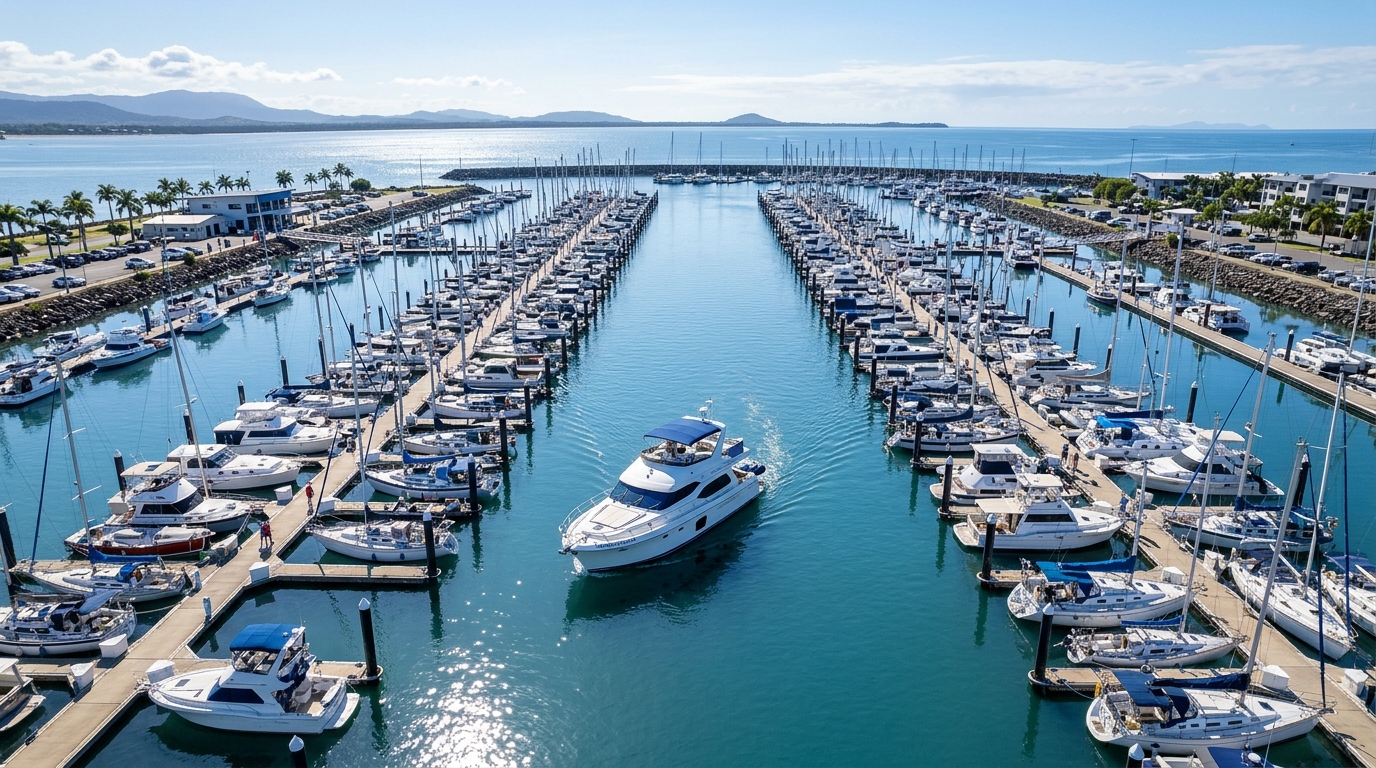
Boaters searching online for transient dock rental options expect real-time availability and guaranteed berth dimensions. When accepting short-term arrivals or visiting rally fleets, marina operators must balance maximum revenue against structural berth constraints.
Workflow for Transient Dock Allocations
- Capture True LOA at Booking: Mandate total tip-to-tip length measurements during online reservation intake rather than relying on manufacturer model numbers.
- Match Beam and Draught Constraints: Ensure draft clearance at lowest astronomical tide maintains a 0.5-metre keel margin beneath deep-draft keelboats.
- Dynamic Berth Re-assignment: Utilise real-time dock management systems to fit visiting craft into temporary gaps left by absent permanent berth holders without risking spatial overlap.
Frequently Asked Questions
What is the difference between LH and true LOA for berthing?
Hull Length (LH) measures the main structural hull excluding removable fittings. True LOA for berthing measures the absolute extreme ends of the vessel, including permanently fitted bowsprits, anchor rollers, swim platforms, and dinghy davits.
How much fairway clearance is required in a yacht club marina?
Standard marine engineering recommendations suggest a minimum fairway width equal to 1.5 times the length of the longest vessel utilizing that channel, expanded to 1.75 times in strong cross-current environments.
How can yacht clubs verify vessel dimensions before granting a berth?
Yacht clubs can request physical verification upon arrival, require uploaded side-profile photos with measurement declarations during application, or leverage digital berth management profiles that track verified vessel dimensions across marina networks.
Streamline Your Club Spatial Planning
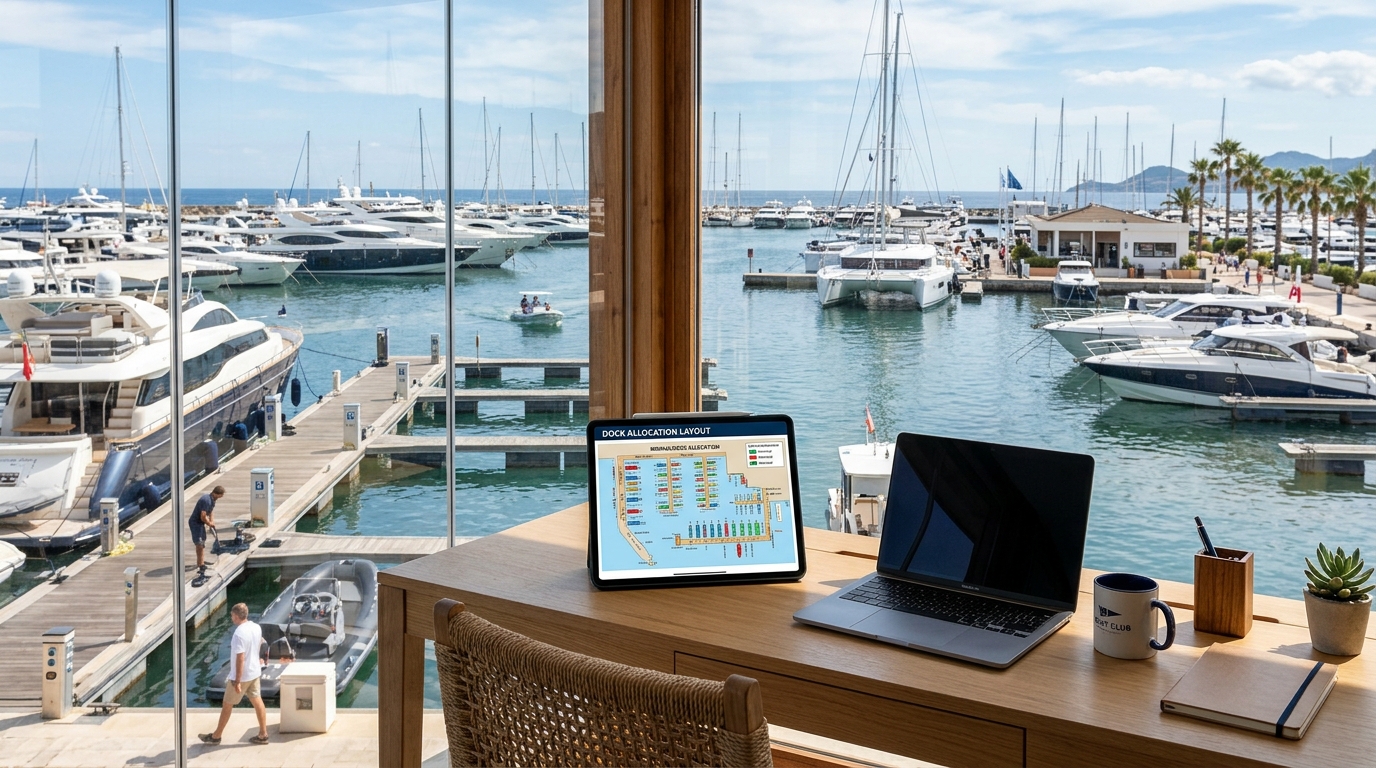
Ensuring accurate vessel measurement and dynamic berth allocation protects marina infrastructure, improves waterway safety, and maximizes occupancy revenue. Contact the Marina Match team to discover how our intelligent berth management tools simplify spatial tracking and transient rental operations for modern yacht clubs.
Do you run a marina or own a berth?
Reach boat owners searching for berths. Listing is free.
Recent Blogs
October 24, 2026
Find a Berth for Rent Near You | Marina Match
October 24, 2026
Marina Berth Costs & Boat Slip Rental Prices | Marina Match
October 24, 2026
Overnight, Monthly & Long-Term Berth Rental | Marina Match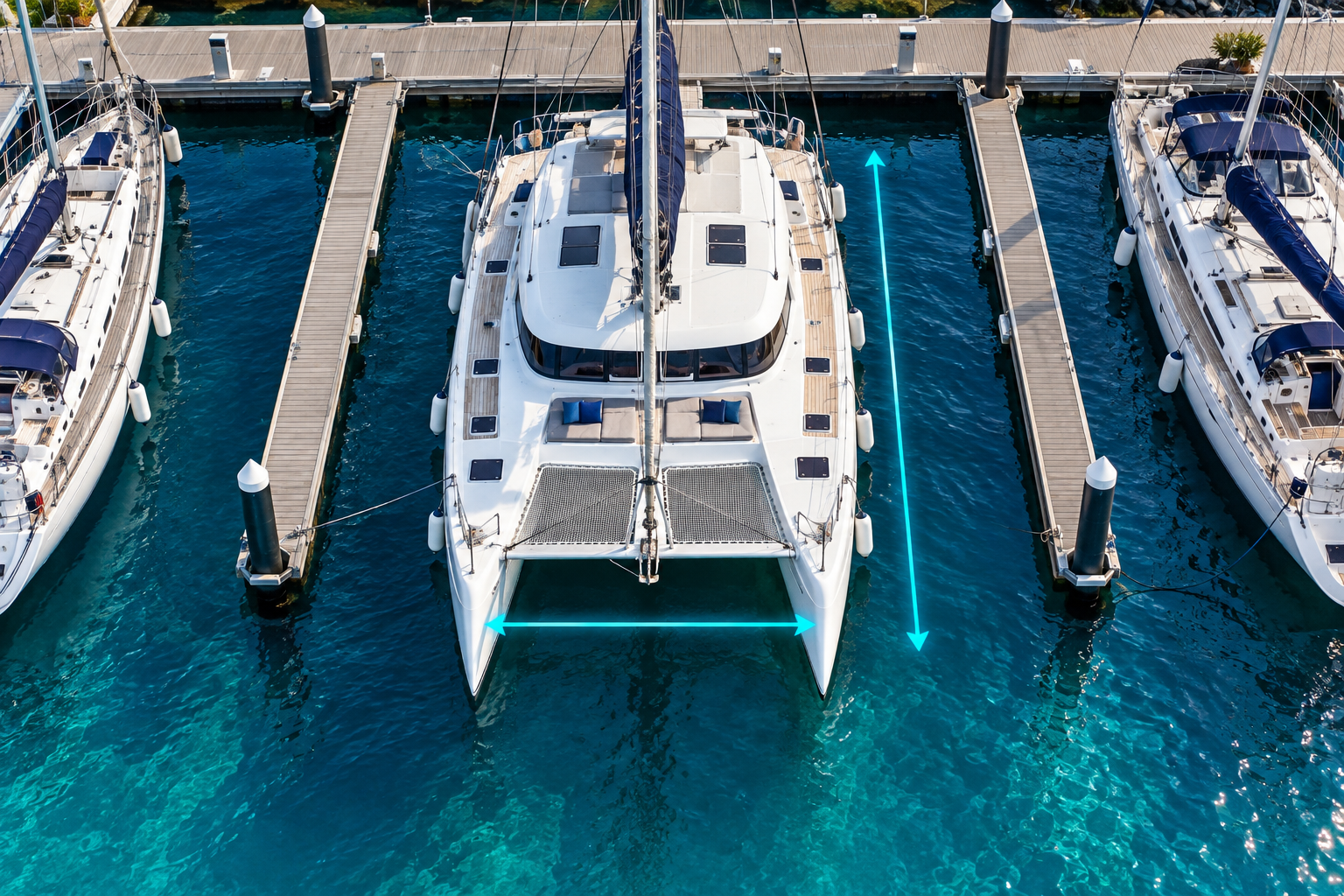
October 24, 2026
What Size Berth Do I Need? Boat & Catamaran Guide