
What Size Berth Do I Need? Boat & Catamaran Guide
What Size Berth Do I Need? A Guide to Boat and Catamaran Berthing
The right berth must accommodate your boat’s length, beam and draft within the operator’s permitted limits, with suitable clearance and access. A berth advertised by length alone does not tell you whether the entrance, water depth or surrounding space will suit your vessel.
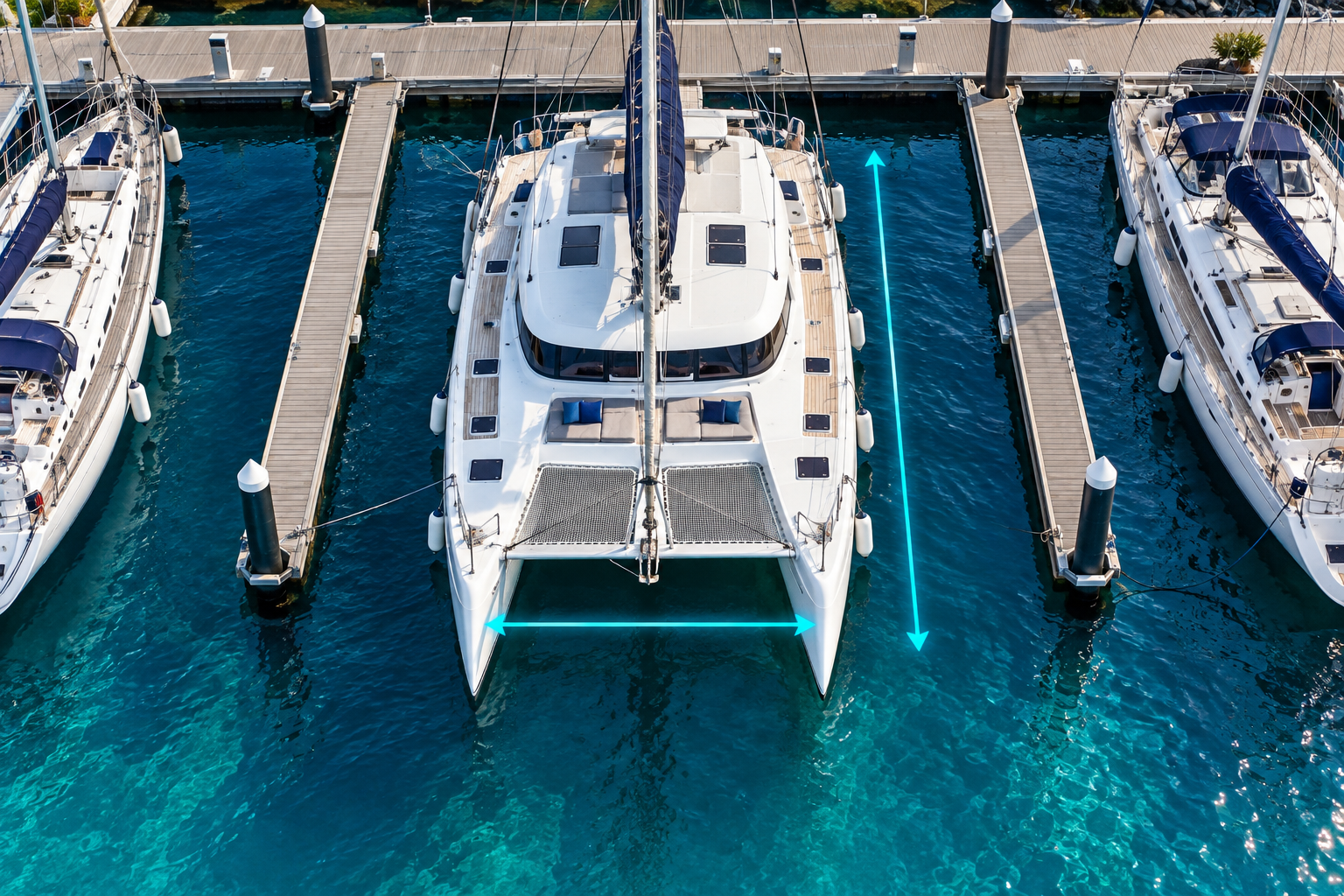
For a catamaran, pay particular attention to beam. For a sailing yacht, overhead clearance may also affect the route to the berth. Start with accurate measurements and confirm the limits of the actual space you intend to book.
Which boat measurements do I need?
| Measurement | What it describes | What to check |
|---|---|---|
| Length overall | The vessel’s overall length, including relevant projections | The operator’s measurement method and maximum permitted vessel length |
| Beam | The vessel’s maximum width | Berth entrance, usable width and required side clearance |
| Draft | The depth of the vessel below the waterline | Depth at the berth and along the approach, accounting for conditions |
| Air draft | Height above the waterline | Bridges, overhead obstructions and the conditions affecting clearance |
The boat’s advertised model length may differ from its actual overall dimensions. Check extensions such as a bowsprit, swim platform or outboard. Westhaven Marina, for example, specifies outer dimensions that include extensions and overhangs in its berth conditions. Westhaven’s measurement guidance.
Does a 12-metre boat fit a 12-metre berth?
Not necessarily. The marina may use the stated berth length to describe the structure, a berth category or a maximum permitted vessel size. The boat’s overall measurement may also differ from its model designation.
Ask for the maximum vessel dimensions accepted in the specific berth. Confirm how projections are treated and whether the allocated space provides the clearance required by the operator. Do not assume that a nominal length permits overhang.
There is no single extra-clearance figure that can be applied reliably to every berth, vessel and marina layout.
What should I check for a catamaran berth rental?
A catamaran can require substantially different berthing arrangements from a monohull of a similar length. Confirm:
- The permitted beam and the usable entrance width.
- Whether the allocation is a dedicated multihull berth, an alongside space or another approved arrangement.
- The location of piles, fingers and neighbouring vessels.
- Space for fenders, lines and boarding.
- The price for the particular allocation.
Do not assume that two adjacent spaces can be combined or that the price will simply equal one or two standard berth charges. Confirm both the arrangement and the total cost with the operator.
How do depth and tidal access affect suitability?
Check the berth and the route into it. A deep berth can still be reached through a shallower approach.
Ask what a quoted depth represents, when it was assessed and whether there are tidal restrictions. Your loaded draft, local conditions and the clearance required for the vessel all matter. Avoid treating a single depth figure as a guarantee of access at every state of the tide.
For voyage planning, use current authoritative information and your own assessment of conditions. NSW guidance specifically includes checking tides, weather and current warnings before setting out. NSW pre-departure weather guidance.
What about turning room and bridge clearance?
Being able to lie alongside a pontoon does not establish that the boat can approach or leave comfortably. Consider the fairway, turn into the berth, other vessels and any obstructions. Wind and current can also affect the manoeuvre.
If the route includes a bridge or overhead obstruction, confirm the clearance information and the conditions to which it applies. Check air draft for the vessel in its actual configuration.
For an unfamiliar marina, request the assigned berth position and approach information before arrival. A listing map helps with orientation, but it does not replace navigational information.
What is different about a private jetty rental?
A private jetty may have a different boarding arrangement and fewer shared facilities than a commercial marina. Check whether it is floating or fixed, how you step ashore and which parts of the property you may access.
Also ask about lighting, parking, water, electrical connections and any restrictions on hours or activities. A photograph taken at one tide may not show how boarding works at another.
What should I confirm before booking?
Prepare a short vessel summary with length overall, beam, draft, air draft where relevant, and vessel type. Check those details against the listing, then resolve any uncertainty before paying.
Keep written confirmation of unusual arrangements, particularly for a wide vessel, restricted approach or special boarding need. Recheck the berth assignment if the operator offers a different space.
Find a space suited to your vessel
Search with accurate dimensions, compare the actual berth limits and check the approach as carefully as the space itself.
Explore marina berths and private jetties on Marina Match.
Do you run a marina or own a berth?
Reach boat owners searching for berths. Listing is free.
Recent Blogs

October 24, 2026
Find a Berth for Rent Near You | Marina Match
October 24, 2026
Marina Berth Costs & Boat Slip Rental Prices | Marina Match
October 24, 2026
Overnight, Monthly & Long-Term Berth Rental | Marina Match
October 24, 2026
What Size Berth Do I Need? Boat & Catamaran Guide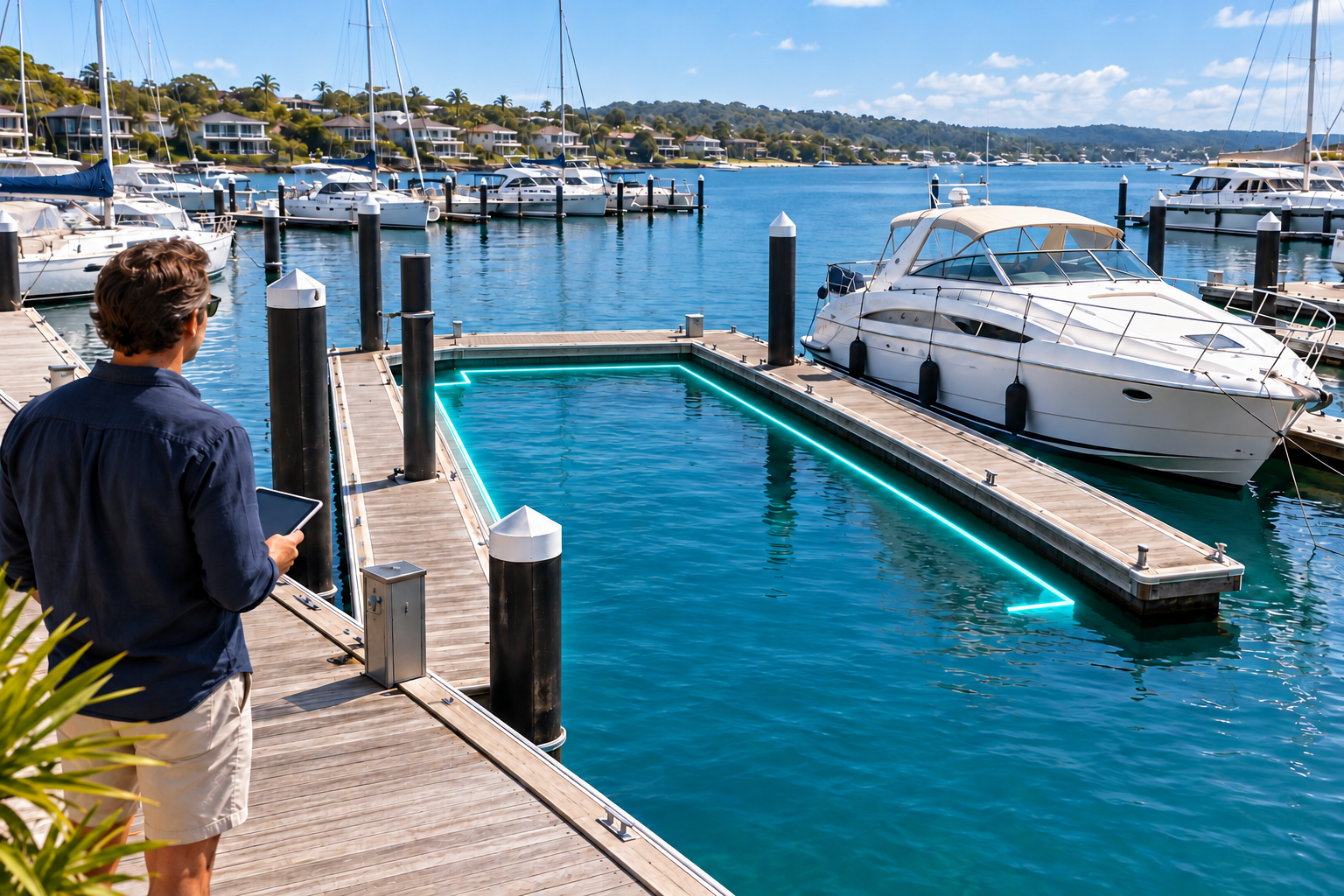
October 24, 2026
How to Rent Out Your Berth | Marina Match