
Evaluating Storage Strategies: Weighing Berth Ownership Versus Rental and Dry Boat Storage
Choosing the Right Home for Your Vessel
Selecting where and how to store a vessel is one of the most significant operational and financial decisions a boat owner makes. Beyond securing a safe tie-up, your choice of vessel keeping impacts annual operational budgets, routine maintenance overheads, hull longevity, and spontaneity on the water.
Vessel owners generally evaluate three primary models: purchasing a long-term berth leasehold (ownership), entering into a short- or long-term rental agreement, or utilizing dry boat storage (rack and stack facilities). Each model brings distinct legal structures, financial commitments, and operational trade-offs. Modern marina platforms and real-time marina booking calendar interfaces further alter how boaters interact with these options, turning traditional berthing commitments into flexible, managed assets.
Berth Ownership Versus Rental: Financial and Operational Realities
Understanding the distinction between berth ownership versus rental requires examining long-term financial exposure, capital liquidity, and long-term security of tenure.
Long-Term Berth Ownership (Leasehold Equity)
In most marine jurisdictions, 'owning' a berth means purchasing a long-term equity leasehold or unencumbered tenure rights over a specific wet slip for a set period, often ranging from 20 to 99 years. Key aspects include:
- Capital Allocation: Purchasing a berth demands substantial upfront capital, but it caps exposure to volatile annual rental price inflation over multi-decade horizons.
- Sub-Leasing Potential: When the owner is cruising or absent for extended seasons, an owned berth can often be sub-leased to transient boaters. Modern marina software allows owners to list their vacant periods on a verified marketplace, earning passive yield to offset annual outgoings.
- Ongoing Obligations: Owners remain responsible for annual marina body corporate levies, sinking fund contributions, and routine berth maintenance costs regardless of vessel usage.
Berth Rental Agreements
Renting a berth—whether on a daily, monthly, or annual contract—offers maximum lifestyle and geographical flexibility without capital lock-up.
- Flexibility: Boaters can move their home port according to seasonal weather patterns, family relocations, or changing vessel sizes without needing to liquidate a real estate asset.
- Predictable Costs: Renters pay an all-inclusive fee that covers infrastructure maintenance, water access, and administrative overheads, protecting them from unexpected capital assessment levies.
- Tenure Security: Rental rates are subject to annual adjustments, and berth allocation may be subject to availability or non-renewal upon contract expiration.
Dry Boat Storage: Operational Benefits and Launch Considerations
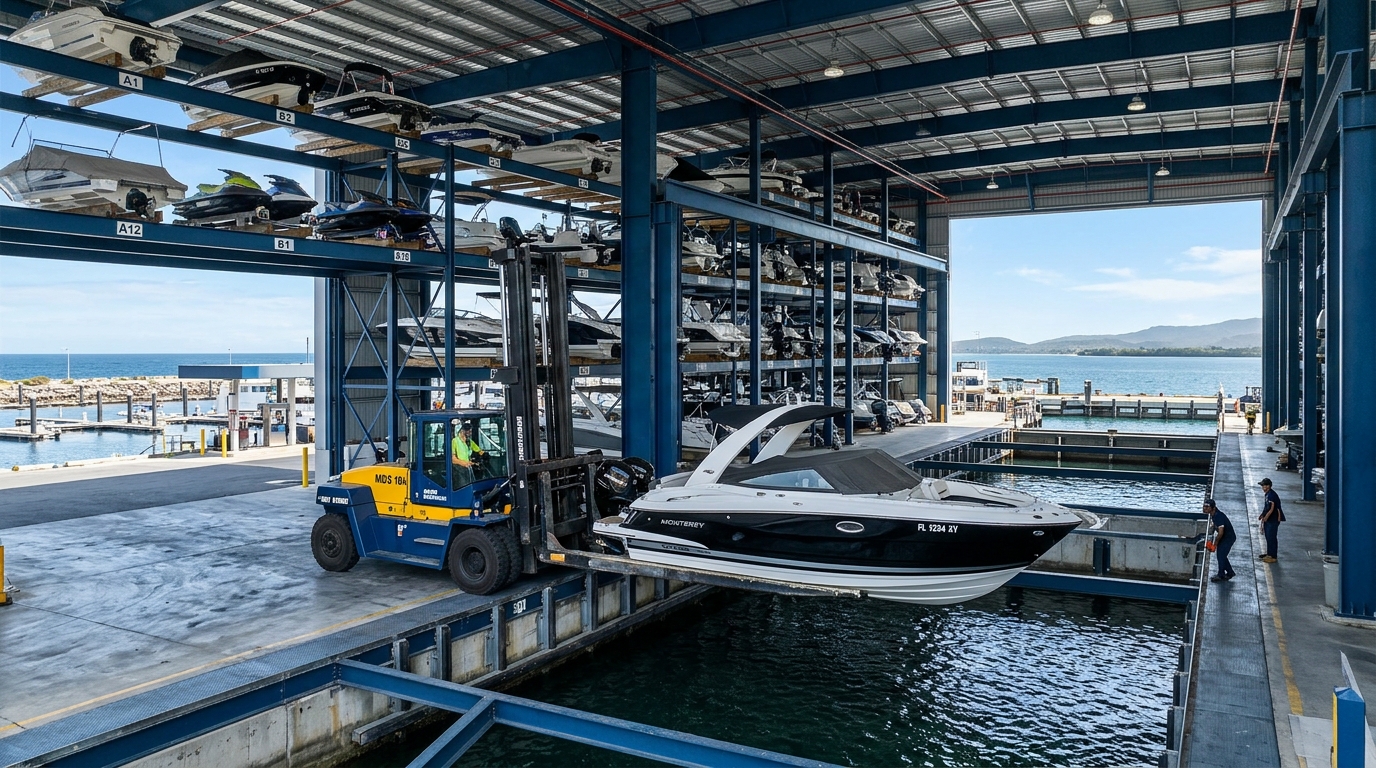
For powerboats under 35 to 40 feet (approximately 10 to 12 metres), high-density dry boat storage facilities present a compelling alternative to traditional wet berthing.
Hull Protection and Reduced Maintenance
Storing a vessel out of the water inside an enclosed rack system dramatically reduces environmental degradation. Key maintenance advantages include:
- Elimination of Anti-Fouling: Without constant immersion in saltwater, hulls do not require aggressive bottom paint application or regular underwater scraping, saving thousands of dollars annually in shipyard bills.
- Protection from Atmospheric Wear: Fully enclosed dry stack buildings safeguard gelcoats, upholstery, clear clears, and marine electronics from intense ultraviolet radiation and harsh coastal salt spray.
- Anode and Mechanical Longevity: Outboards and sterndrives stored out of the water experience significantly less galvanic corrosion and marine organism growth inside cooling jackets.
Launch Logistics and Operational Deadlines
The primary constraint of dry stack storage is operational dependency on marina heavy-lift forklifts and launch crews. Unlike a wet berth where an owner can walk down the dock and untie at sunrise, dry stack boaters must request a launch slot in advance. On peak weekend mornings, call-to-launch queues can create minor delays if scheduling relies on legacy phone logs or paper boards.
The Role of a Real-Time Marina Booking Calendar
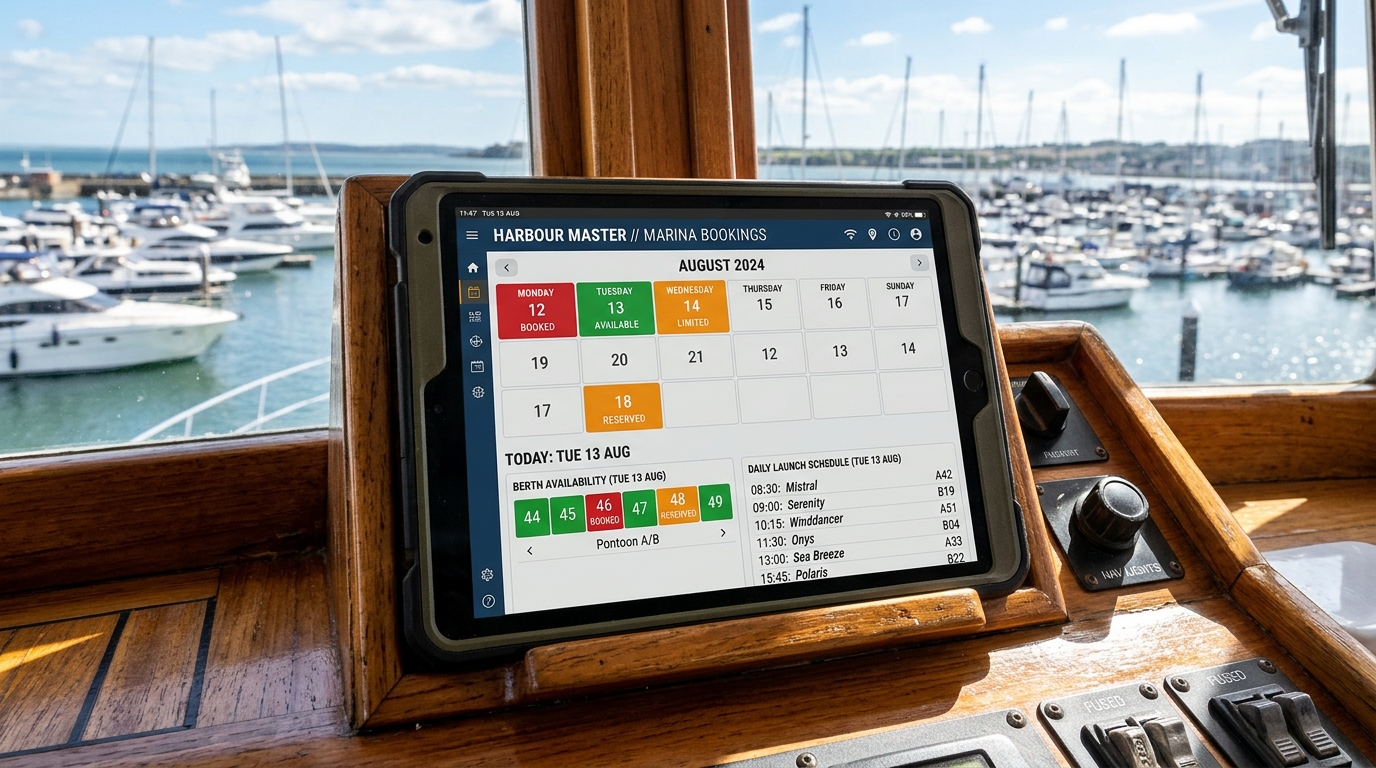
Digital management platforms have transformed how boaters manage launch schedules and berth access. Integrating a real-time marina booking calendar across wet berths and dry storage facilities bridges the gap between convenience and operational capacity.
Automated Launch and Retrieval Requests
In modern dry stack operations, boaters schedule launch, rinse down, and return times directly through a mobile interface. The marina's automated calendar allocates forklift staging slots based on vessel dimensions, fuel bay access, and dock space availability, ensuring the vessel is safely in the water before the captain arrives at the quay.
Maximising Berth Occupancy via Reciprocal Sub-Leasing
For wet berth owners, an integrated booking calendar turns idle berths into active assets. When an owner logs a planned fortnight offshore, the system automatically marks the berth as available on the transient booking network. Visiting boaters can book and pay for short-term stays, generating income for the berth owner while providing high-demand berthing options for transient cruisers.

Practical Decision Matrix and Owner Checklist
To determine the most suitable storage arrangement for your vessel, evaluate your requirements against this practical checklist:
- Vessel Type and Hull Draft: Deep-draft sailing yachts and large motor yachts require wet berths due to height and displacement limitations of dry stack forklifts. Powerboats under 12 metres are prime candidates for dry storage.
- Usage Frequency: Frequent mid-week afternoon boaters often prefer the immediate access of a wet berth, whereas weekend cruisers benefit from the automated launch staging of dry stack storage.
- Annual Budget Structure: Compare the capital outlay and levies of berth ownership against the operational predictability of annual rental contracts and the maintenance savings of dry stack facilities.
- Long-Term Mobility: If your long-term plans include coastal cruising or changing vessel sizes within three years, temporary rental agreements or dry stack contracts avoid lease liquidations.
Frequently Asked Questions
What are the primary differences when comparing berth ownership versus rental?
Berth ownership involves purchasing long-term leasehold rights (often 20 to 99 years), providing long-term tenure security and sub-leasing rights, but requiring significant capital and ongoing levies. Renting involves short- or long-term lease agreements with predictable monthly costs and zero capital commitment, but offers less long-term tenure certainty.
How does dry boat storage reduce annual maintenance costs?
Dry boat storage keeps the vessel stored in a covered rack out of the water. This eliminates the need for bottom anti-fouling paint, significantly reduces galvanic anode erosion, protects gelcoats from UV degradation, and prevents marine fouling on stern drives and outboards.
How does a marina booking calendar simplify dry stack launch requests?
A digital marina booking calendar allows vessel owners to select precise launch and retrieval times from their mobile device. The marina dock staff receive automated task allocations, ensuring the boat is launched, tied up, and ready at the staging dock prior to arrival.
Can I rent out my owned berth when I am away cruising?
Yes, subject to your marina management agreement. Modern marina software platforms enable berth owners to update their availability calendar so transient boaters can reserve the vacant slot, generating rental income that offsets annual levies.
Next Steps for Vessel Owners
Whether you are evaluating wet berth rental availability, investigating long-term berth purchase opportunities, or seeking dry stack options, choosing the right facility requires clear visibility of operational terms and berth allocation schedules.
Explore verified berthing options and flexible booking networks through Marina Match to find suitable vessel storage near you.
Do you run a marina or own a berth?
Reach boat owners searching for berths. Listing is free.
Recent Blogs


October 24, 2026
Find a Berth for Rent Near You | Marina Match
October 24, 2026
Marina Berth Costs & Boat Slip Rental Prices | Marina Match