
Harmonising Waterfront Infrastructure: How Next-Gen Marina Software Unites Private Docks and Connected Boats
As marine activity accelerates globally, the boundary between commercial facilities and private waterfront assets is rapidly dissolving. Traditionally, commercial marinas, municipal harbors, and residential waterfront property owners operated in silos. Boaters struggled with fragmented berth availability, relying on phone calls, outdated VHF radio queries, and uncertain docking arrangements. Simultaneously, private dock owners often left valuable moorings sitting idle for months at a time.
Today, the rise of telemetry-enabled connected boats—vessels equipped with real-time GPS, smart battery monitors, and automated navigation hardware—demands a far more dynamic approach to dock management. Deploying modern marina software serves as the critical bridge connecting these disparate elements. By linking commercial slips, private dock inventory, and live vessel data into a unified digital ecosystem, the marine industry can unlock higher berth occupancy, enhance maritime safety, and deliver frictionless cruising experiences for boaters worldwide.
The Evolving Waterfront Landscape: Bridging Commercial and Private Marine Assets
Waterfront real estate is one of the most valuable yet underutilised resources in coastal and inland waterways. Commercial marinas often face seasonal capacity constraints, struggling to accommodate transient vessels during peak cruising periods. Meanwhile, thousands of linear metres of residential private dock space sit vacant directly across the bay or down the channel.
Integrating these private assets into a wider network has historically presented massive administrative challenges. Private property owners lacked the security tools, payment mechanisms, and operational control necessary to list their berths safely. Modern digital infrastructure changes this dynamic completely. By extending enterprise-level features to private dock owners, modern software creates a shared marine marketplace that benefits all stakeholders.
- Commercial Operators: Expand destination choices for their members, mitigate overflow congestion, and access global network data.
- Private Dock Owners: Safely monetize unused waterfront property with automated liability insurance, verified boater profiles, and seamless payment processing.
- Boaters and Skippers: Gain access to verified, real-time berth availability across commercial facilities, yacht clubs, and residential private jetties through a single application.
What Modern Marina Software Does for Private Dock Operations
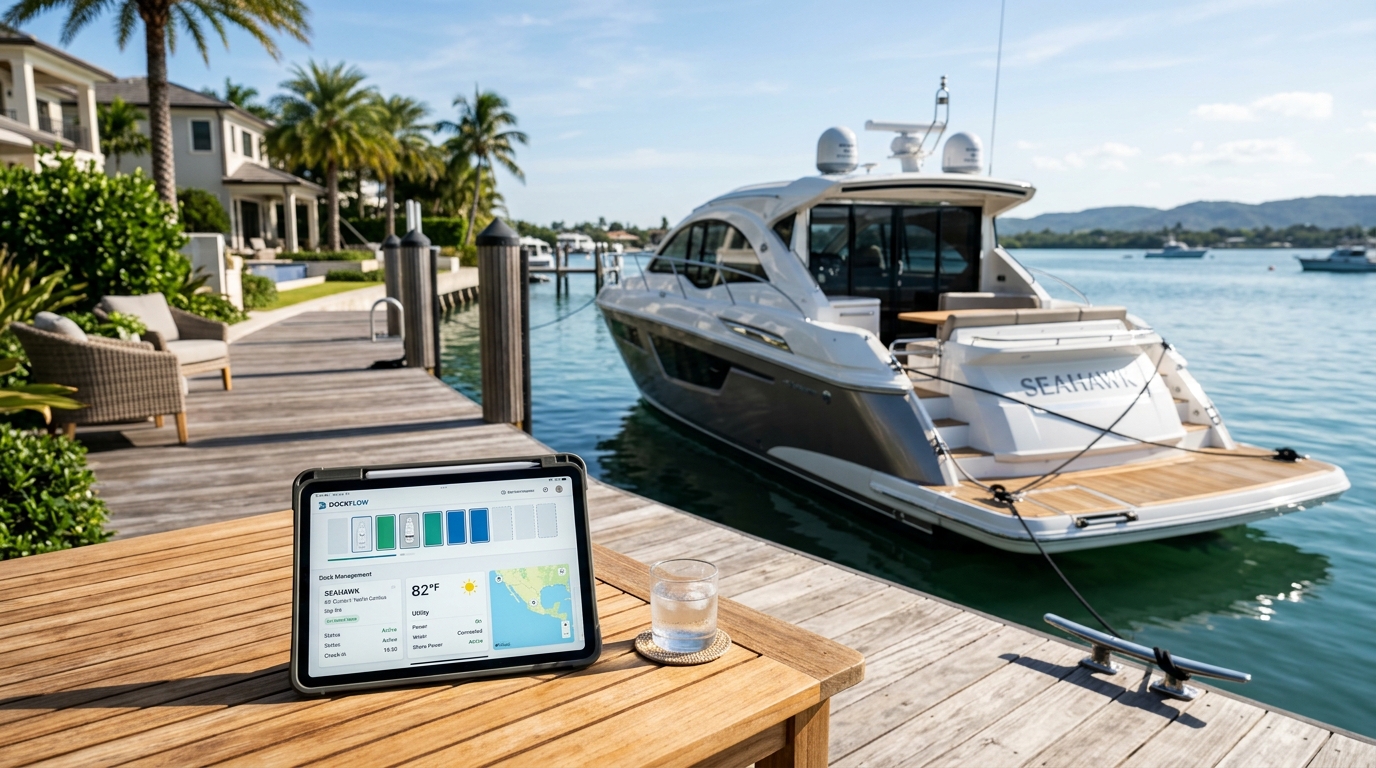
Managing a commercial marina requires sophisticated logistics, but extending those management capabilities to a private dock or residential jetty requires an intuitive, adaptable approach. Modern marina software brings high-level operational clarity to non-commercial waterfront property owners without overwhelming them with complex administrative tasks.
For a waterfront homeowner considering whether to rent my berth or list a private dock, security and ease of use are paramount. Specialized dock management software allows private owners to maintain full control over vessel criteria, including length overall (LOA), draft limits, beam restrictions, and electrical power demands. Owners can set custom availability calendars, approving transient bookings manually or enabling instant confirmation for pre-verified boaters.
The Role of Connected Boats in Real-Time Dock Management
The modern vessel is no longer an isolated mechanical craft; it is a node in an expanding digital network. Connected boats stream telemetry data regarding speed over ground (SOG), estimated time of arrival (ETA), fuel levels, onboard battery status, and vessel dimensions directly to dockside systems.
When connected boats communicate automatically with modern marina platforms, dockmasters and private owners receive precise arrival notifications long before the vessel comes into view. This integration solves several long-standing operational headaches:
- Eliminating Visual Overhead: Dockmasters no longer need to manually check slips or guess arrival times, drastically reducing labor costs and phone queries.
- Automated Check-Ins: When a vessel crosses a digital geofence near the harbor entrance, the berth reservation status automatically updates to present, notifying dock personnel to stand by for line handling.
- Dynamic Slip Allocation: Real-time draft and beam updates from arriving vessels allow harbor systems to dynamically assign berths best suited for the boat's exact specifications.
Operational Synergies: Combining Marina Software with Automated Berth Allocation
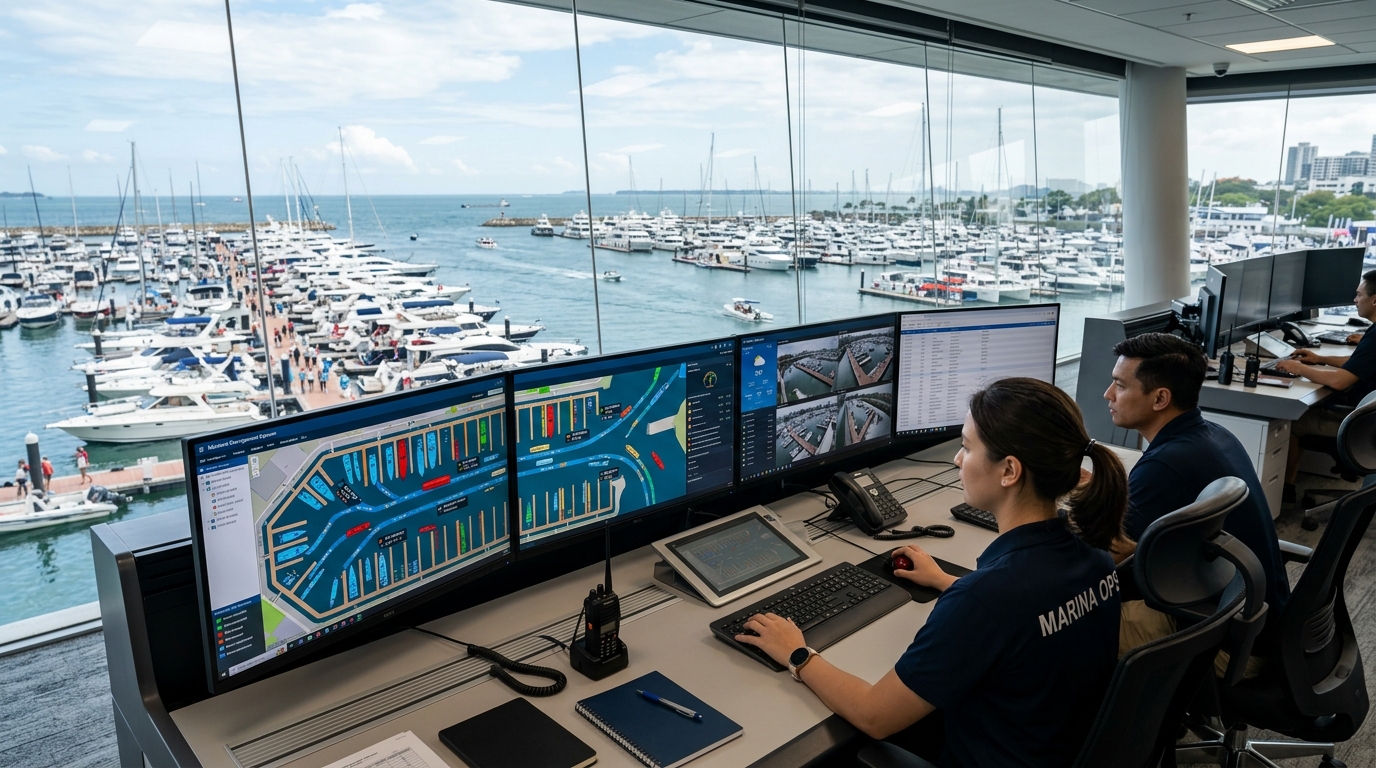
To understand the practical impact of unifying connected boats, private jetties, and commercial harbors, it is helpful to compare traditional management approaches with a modern connected network.
- Berth Allocation Strategy: Traditional harbors rely on manual whiteboard scheduling or static spreadsheets, leading to frequent double-bookings and underutilized slips. In contrast, unified marina software utilizes dynamic map views, real-time telemetry, and automated berth allocation to maximize space efficiency.
- Inventory Reach: Legacy systems only track slips within a single physical property. A connected ecosystem aggregates commercial marinas, yacht club slips, swing moorings, and private dock options into one accessible interface.
- Booking and Reservations: Traditional methods require phone calls during business hours and manual credit card processing. Modern platforms offer 24/7 online marina booking with instant confirmation and secure payment handling via Stripe.
- Financial Insights: Traditional management offers limited end-of-month reporting. Advanced platforms deliver live revenue dashboards, marina analytics, and dynamic yield management based on local demand trends.
Practical Strategies for Operators and Private Dock Owners
Transitioning from fragmented, legacy systems to a fully connected digital waterfront requires a structured, practical approach. Whether managing a 500-slip commercial facility or a single residential jetty, following these implementation steps ensures maximum operational yield and smooth boater onboardings.
Step 1: Audit Waterfront Capacity and Asset Constraints
Begin by taking precise measurements of all available water space. Record length limits, depth at low tide, available shore power amperages, water hookups, and fairway clearance width. Inputting accurate structural parameters into the platform ensures incoming boaters are only matched with berths that safely accommodate their vessel's displacement and draft.
Step 2: Implement an Interactive Marina Map View
Replace text lists with a visual marina map view. A visual layout allows dockmasters and waterfront property owners to monitor berth availability at a glance. Color-coded slip statuses—indicating occupied, reserved, undergoing maintenance, or available for transient rental—drastically reduce administrative errors and speed up dock master dashboard decision-making.
Step 3: Enable Automated Berth Reservation and Secure Payments
Integrate digital payment processing to handle transient slip fees, security deposits, and utility billing automatically. Utilizing Stripe secure payments guarantees that funds are authorized prior to vessel arrival, eliminating non-payment risks and minimizing cash-handling burdens for dock staff.
Step 4: Connect Boater Dashboards with Vessel Telemetry
Encourage visiting boaters to connect their vessel profiles to the boater dashboard. By linking boat specs and telemetry data, skipper profiles automatically share required power specs, vessel photos, insurance certificates, and real-time location. This streamlined exchange creates a trusted environment for commercial operators and private dock hosts alike.
Step 5: Leverage Marina Analytics for Dynamic Pricing
Use built-in marina reporting and revenue analytics to evaluate seasonal occupancy trends. Adjust night-time rental rates dynamically based on local marine events, peak holiday weekends, and weather conditions to ensure maximum harbor revenue and optimum berth occupancy year-round.

Frequently Asked Questions
How does modern marina software help private dock owners rent out unused space?
Modern platforms allow private waterfront owners to list their private dock, jetty, or swing mooring on a secure marine marketplace. Property owners maintain full control over booking approvals, vessel size restrictions, and availability schedules, while automated systems manage identity verification, insurance documentation, and payment collection.
What are connected boats and how do they communicate with marina systems?
Connected boats are vessels equipped with smart onboard telemetry systems and internet or satellite connectivity. They transmit real-time data such as GPS position, speed, vessel dimensions, and estimated time of arrival (ETA) directly to dock management software, enabling automated check-ins and dynamic slip assignments.
Can small marina operators or private jetty owners use enterprise-grade dock management software?
Yes. Cloud-based marine platforms are designed to scale smoothly, offering simple interfaces for single private dock owners as well as comprehensive management modules for large commercial marinas, yacht clubs, and multi-location harbor networks.
How does live berth availability reduce operational friction for dock masters?
Live berth availability updates dock status in real time across digital maps and online booking engines. This eliminates double-bookings, reduces repetitive phone inquiries from boaters looking for transient slips, and allows dock masters to focus on dockside safety and guest services.
What security and payment protections exist for online marina booking?
Leading platforms integrate enterprise-grade payment gateways like Stripe Secure Payments. Boater identities and payment details are verified before reservations are locked in, ensuring funds are collected automatically and host properties remain protected through clear terms of service and verified boater documentation.
How does AI-ready marina software optimize berth allocation?
AI-ready platforms analyze vessel dimensions, draft requirements, power needs, duration of stay, and real-time traffic to calculate the most efficient slip arrangement. This maximizes spatial efficiency, reduces vessel shuffle within fairways, and identifies open spaces for transient bookings that human schedulers might overlook.
Key Takeaways and Future Outlook
The digitalization of the marine sector is transforming how waterfront assets are managed, shared, and monetized. Unifying commercial harbors, residential private docks, and connected boats into a single digital grid solves chronic capacity shortages and brings unprecedented convenience to boaters.
By adopting forward-thinking marina software, marina operators can automate labor-intensive scheduling, optimize slip occupancy, and grow dynamic revenue streams. Simultaneously, private dock owners gain a simple, protected avenue to participate in the global marine ecosystem. As connected boating technology continues to advance, platforms that bridge data between vessels and shore side infrastructure will define the standard for modern maritime logistics.
Explore how Marina Match is building the infrastructure for a connected global marina network. Whether you manage a full-service harbor, operate a yacht club, or own a private dock, discover how our AI-ready platform, live map views, and secure marketplace can elevate your waterfront operations today.
Do you run a marina or own a berth?
Reach boat owners searching for berths. Listing is free.
Recent Blogs
October 13, 2026
Best Marina Management Software 2026 | Free AI | Marina Match
October 9, 2026
Expanding Access: Why a Marina Network Matters Today
October 7, 2026
Leveraging Shared Assets: Rent My Jetty to Boost Revenue