Multihull Docking Spatial Requirements: Sizing Catamaran Beam Widths for AU and USA Marina Rentals
Understanding the Beam Expansion: Why Standard Slips Fail Modern Catamarans
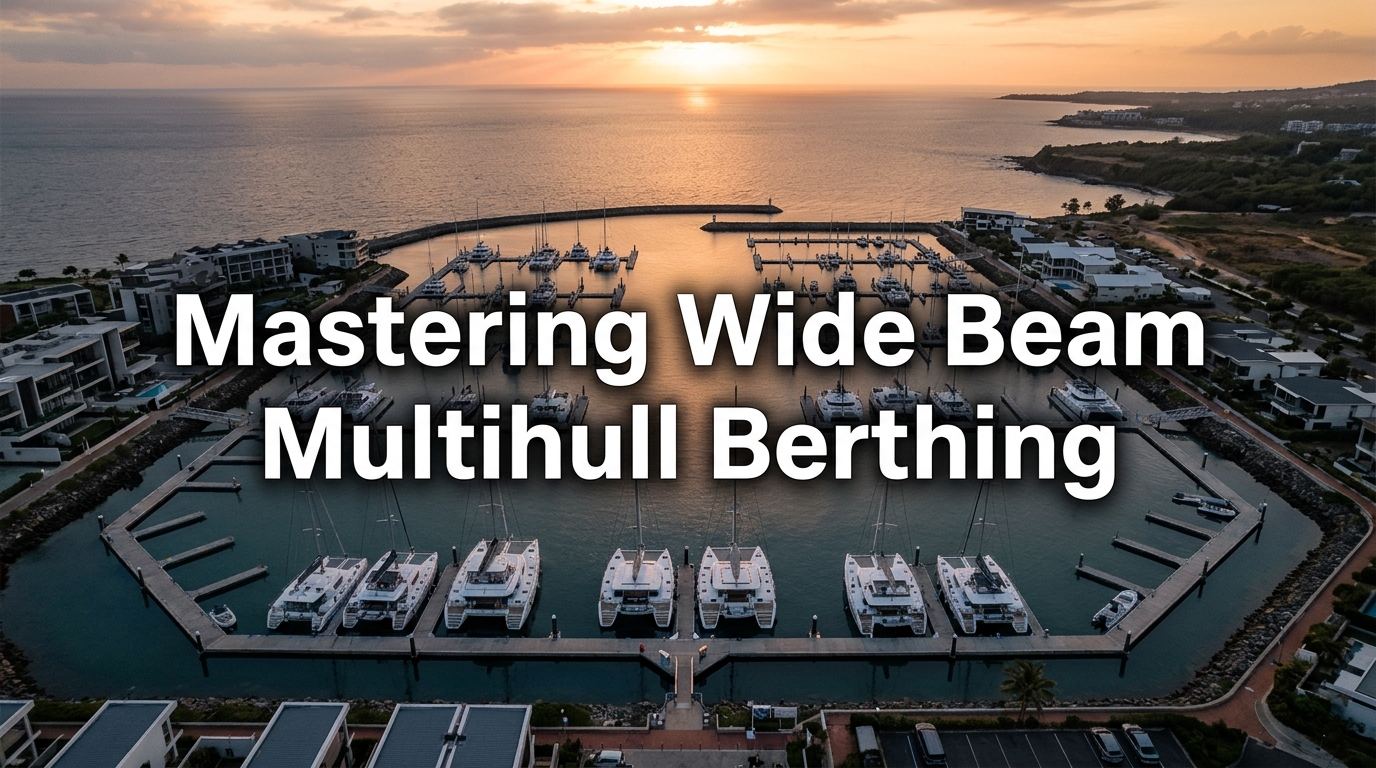
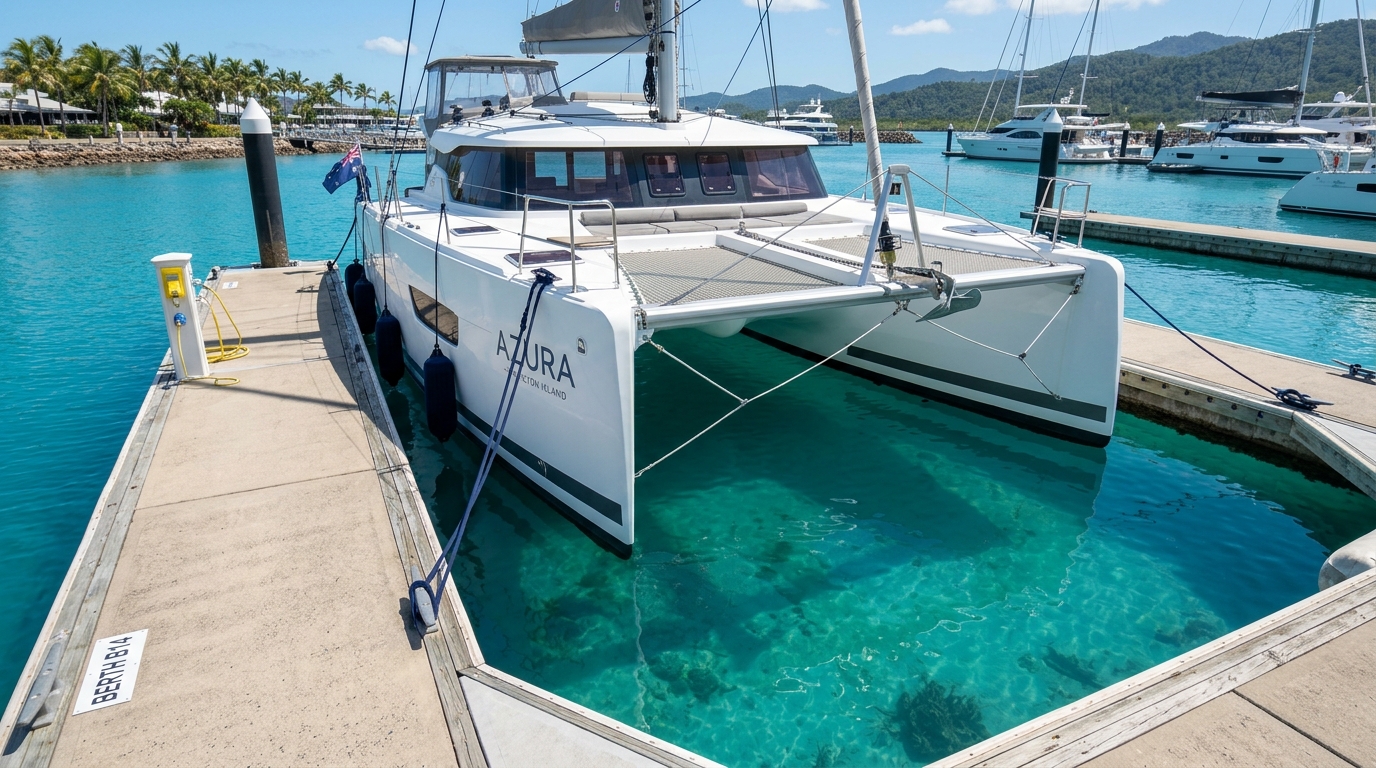
Modern cruising catamarans present unique operational challenges for traditional marina infrastructure. While monohull designs historically expanded primary length overall (LOA) without dramatically altering proportional beam widths, contemporary multihulls feature beam ratios often exceeding 50 percent of their length. A typical 45-foot cruising catamaran can sport a beam measurement between 24 and 26 feet (7.3 to 7.9 metres). Consequently, standard slips designed for traditional single-hull craft fail to accommodate these wide vessel footprints comfortably.
Finding suitable berthing requires looking beyond overall vessel length. Securing a berth rental in Australia or securing a boat slip rental in the USA requires precise verification of effective berth width, navigable fairway clearances, and dock pontoon finger lengths. Skippers must evaluate spatial math accurately to avoid structural damage, excessive hull friction, or non-compliance with local harbour authority regulations.
Calculating Beam Ratios: Length vs Width Tolerances for AU and USA Marinas
When assessing catamaran berth width needs, skippers must factor in total vessel beam inclusive of fenders, rub rails, davits, and side-mounted hardware. A minimum lateral buffer of 0.5 to 1.0 metre (1.6 to 3.3 feet) on both sides of the hull is recommended to ensure safe docking, line adjustment, and tidal movement.
In standard marina dock calculations, berth dimensions are classified by total usable width between piling centres or pontoon edge cleats. Below is a spatial comparison outlining recommended clearances for common multihull sizes:
- 40-foot Catamaran (LOA 12.2m): Typical vessel beam of 6.7m to 7.2m requires a minimum clear berth width of 7.7m to 8.2m.
- 45-foot Catamaran (LOA 13.7m): Typical vessel beam of 7.4m to 7.9m requires a minimum clear berth width of 8.4m to 8.9m.
- 50-foot Catamaran (LOA 15.2m): Typical vessel beam of 7.9m to 8.5m requires a minimum clear berth width of 8.9m to 9.5m.
Regional Slip Infrastructure: Comparing Australian Fairways with US T-Head Berthing
Marina design standards vary significantly between Southern and Northern Hemisphere waterways, directly impacting how catamarans are allocated space.
Berth Rental Australia Standards
Australian marina developers frequently utilise floating pontoon systems fitted with dual finger piers arranged in U-shaped double berths. In Australian waters—such as Pittwater, Moreton Bay, or Whitsunday marinas—a single catamaran is often assigned to a double-monohull berth or a custom wide multihull slip. Australia's AS 3962 guideline for marina design specifies fairway width allowances relative to maximum vessel length, requiring extra navigational margin when turning wide multihulls into tight channels during strong tidal currents.
Boat Slip Rental USA Layouts
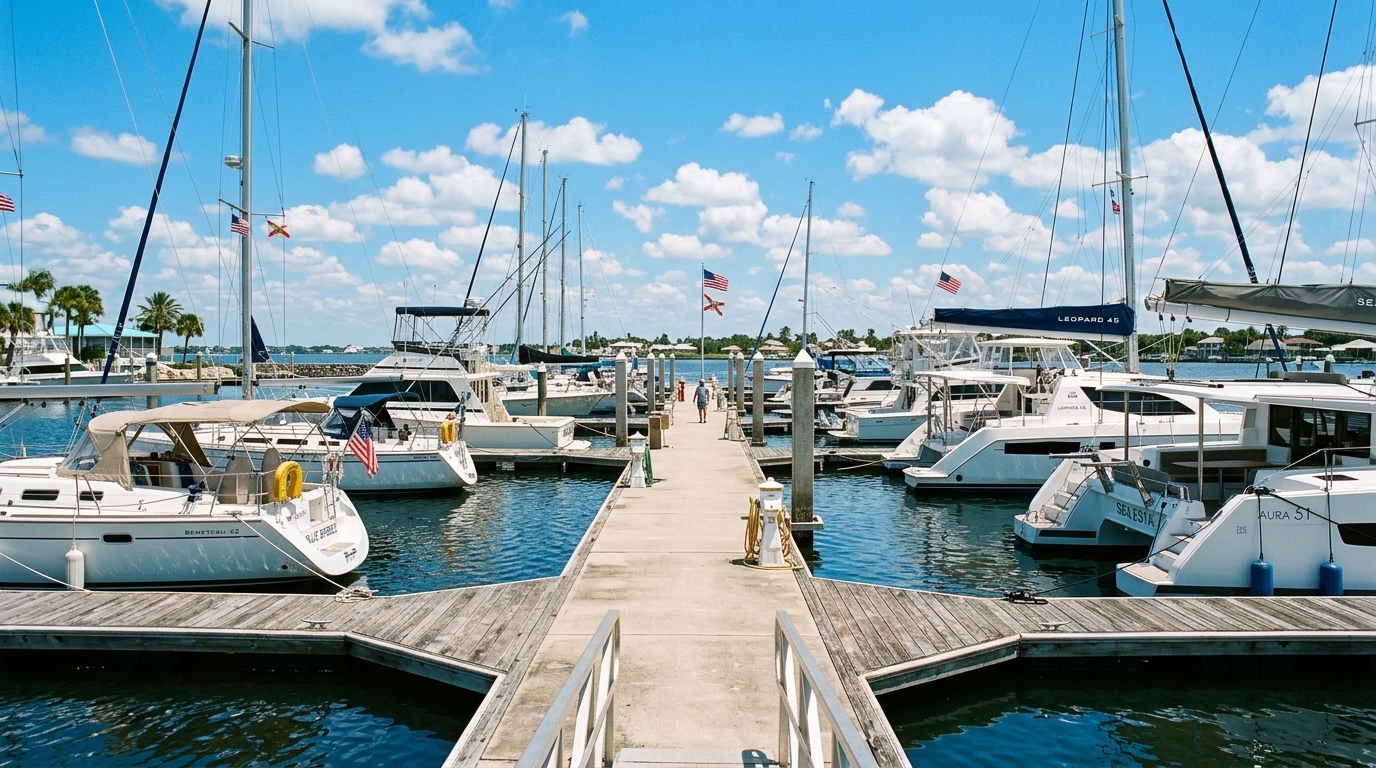
In North American waters, such as the US East Coast, Florida Intracoastal Waterway, and Caribbean hubs, fixed wooden pilings and T-head (end-hammerhead) docks remain prevalent. Wide catamarans are often allocated external T-head positions or end-piles rather than internal slip fingers due to narrow fairway gaps. While T-head positioning simplifies entry, it exposes the vessel to increased chop and tidal surges compared to protected internal slips.
Commercial Considerations: Multihull Surcharges and Modern Wide-Berth Bookings
Marina pricing for multihulls reflects the opportunity cost of dedicated spatial footprints. Because a wide catamaran often occupies the linear dock space equivalent to two standard monohulls, marina operators generally structure fees using one of three pricing models:
- Linear Foot / Metre Rate with Multihull Surcharge: A standard daily or monthly rate per unit of length, augmented by a 30% to 50% multihull premium.
- Square Metre / Foot Calculation: Total surface area pricing calculated by multiplying vessel LOA by total beam.
- Double Slip Flat Rate: Charging the equivalent rate of two parallel monohull slips when dedicated multihull fingers are unavailable.
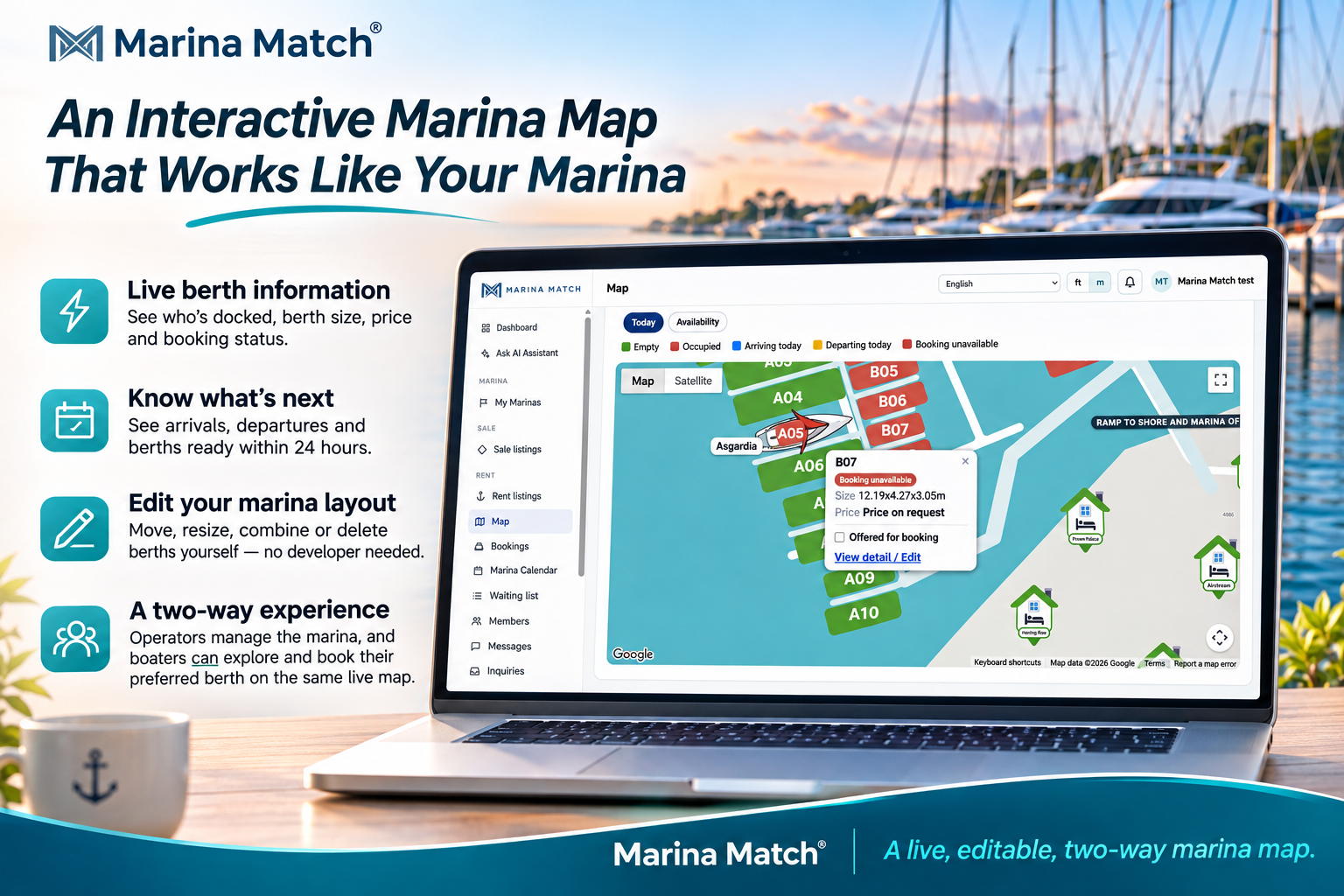
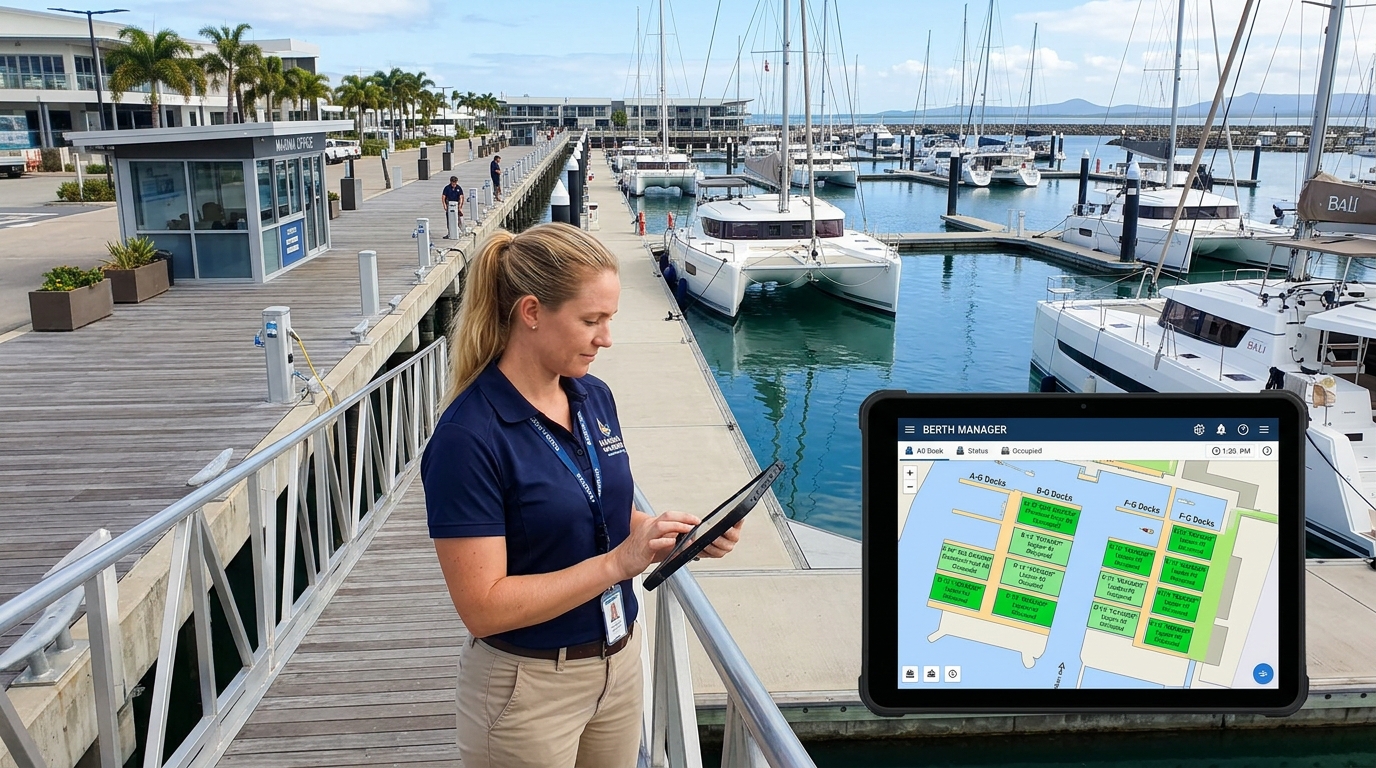
To secure optimal berthing without paying inflated surcharges, vessel owners should search transparent digital networks like Marina Match. Real-time berth listing platforms allow skippers to verify clear width dimensions, power supply capacity (such as 32A or 50A shore power connections), and fairway turning radii before booking.
Frequently Asked Questions
What is the standard catamaran berth width clearance required?
A safe margin generally requires at least 0.5 metres (approx. 1.6 feet) of clear water on each side of the widest point of the hull (including fenders). For instance, a catamaran with a 7.5-metre beam should seek a slip with a minimum net clear width of 8.5 metres.
Are multihull berth rentals in Australia priced higher than single-hull berths?
Yes. Most Australian marinas apply a 1.3x to 1.5x multiplier on the standard linear metre rate, or charge the rate of a double berth if the vessel occupies two standard spaces.
Can modern catamarans fit into standard US boat slip rentals?
Standard US slips built for monohulls are typically too narrow for cruising catamarans. Multihulls usually require designated wide-beam slips, double-slip conversions, or exterior T-head dock positions.
Do you run a marina or own a berth?
Reach boat owners searching for berths. Listing is free.
Recent Blogs