Practical Berth Sizing Rules: Matching Vessel Specs to Monthly Boat Slip Rentals
Securing a monthly boat slip rental requires more than matching the length on your vessel’s registration paper. A successful berthing arrangement depends on evaluating exact marina berth dimensions against the true physical footprint of your vessel, including swim platforms, bow sprits, outboard brackets, and underwater appendages. Overlooking clearance margins can lead to dock damage, stressed mooring gear, or invalid insurance coverage.
Understanding Full Vessel Dimensions Beyond the Registration Sheet
When searching for a marina berth rental, vessel owners frequently quote the manufacturer model designation or standard length overall (LOA). However, published model lengths rarely include aftermarket additions or protruding equipment. To select an appropriately sized berth, you must measure the true maximum dimensions of your boat in its fully loaded state.
- Total Length Overall (TLOA): Measure from the forwardmost point (including anchor rollers, sprits, or pulpit rails) to the rearmost projection (such as davits, tender brackets, or tilted outboard motors).
- Maximum Beam: Measure the widest point across the hull, accounting for rub rails, fender mounts, and outriggers.
- Operating Draft: Determine the distance between the waterline and the lowest point of your vessel, including keel fins, rudders, propellers, or stern drives.
- Air Draft: Establish the clearance required from the waterline to the top of fixed masts, radar arches, or radio antennas.
Calculating Cushion Margins for Marina Berth Dimensions
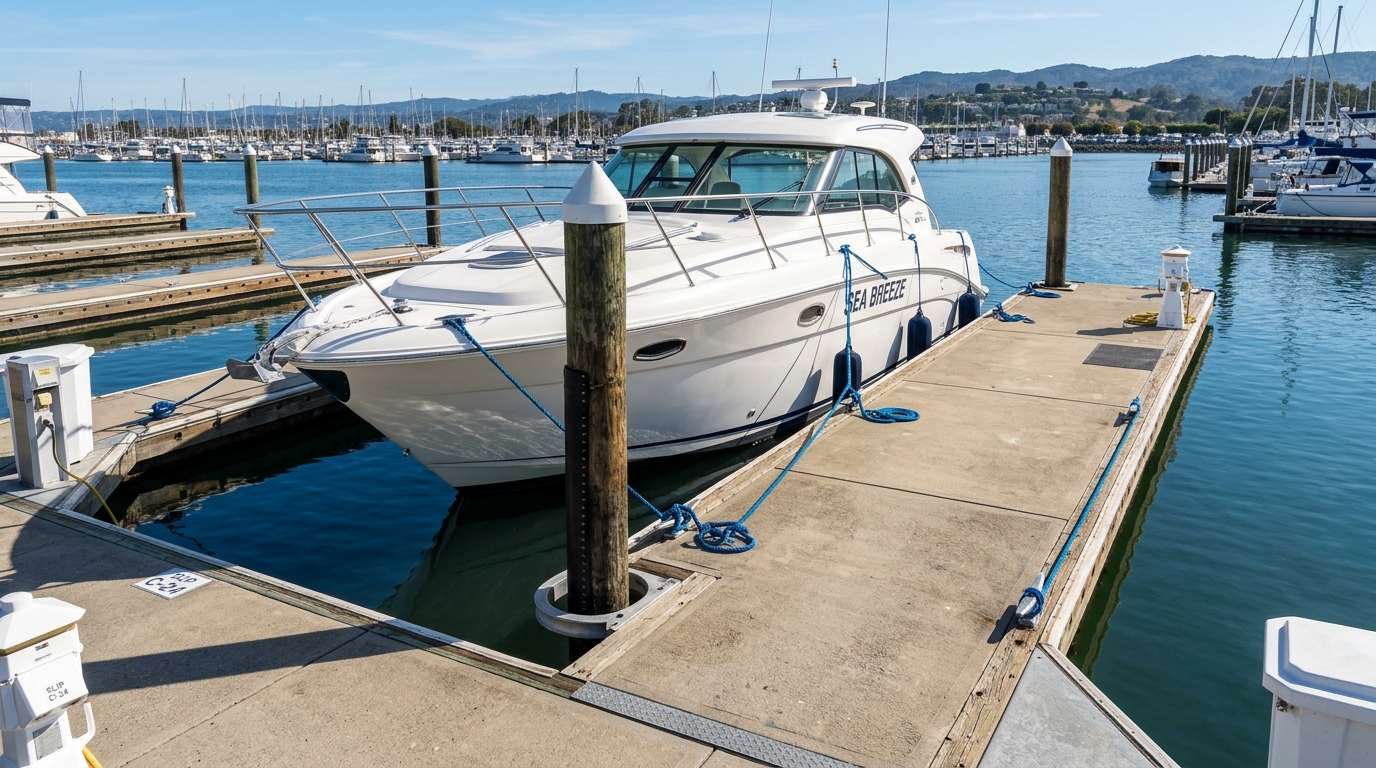
Marinas design their slip footprints with specific buffer zones to allow safe maneuvering, tide changes, and wind drift during docking. Understanding how operators measure marina berth dimensions helps you evaluate whether a specific slip will accommodate your boat comfortably.
Beam Clearance and Finger Pier Alignment
A standard single or double berth must accommodate both hull width and lateral movement caused by wind and current. As a general rule, a single finger berth should provide at least 0.5 metres to 0.8 metres of total beam clearance beyond the boat’s maximum beam. In a double berth shared with another vessel, adequate spacing must exist for fenders on both hulls without crowding the mid-slip line.
Draft, Low Tide Reserves, and Waterway Bottom Clearance
Draft suitability fluctuates with astronomical tides and seasonal water levels. When reviewing monthly boat slip rental terms, confirm the minimum depth at Lowest Astronomical Tide (LAT). A safe berth should retain at least 0.5 metres of clear water beneath the lowest underwater appendage at extreme low tide to prevent grounding or silt ingestion into cooling intakes.
Financial Impact of Slip Footprints on Monthly Rates
Marina operators generally calculate monthly boat slip rental rates using one of three structural methods. Understanding these tariff structures prevents unexpected charges during longer stays.
- Per-Metre of Berth Length: You pay for the full rating of the slip (for example, a 12-metre berth rate), regardless of whether your boat measures 10 or 12 metres.
- Per-Metre of Vessel TLOA: The fee is billed based on your verified vessel length, subject to a minimum berth size threshold set by the marina.
- Tiered Footprint Charging: Wide-beam vessels, such as catamarans or trimarans, often occupy wide single slips or double berths, incurring a beam surcharge ranging from 1.25x to 2.0x standard single-hull rates.
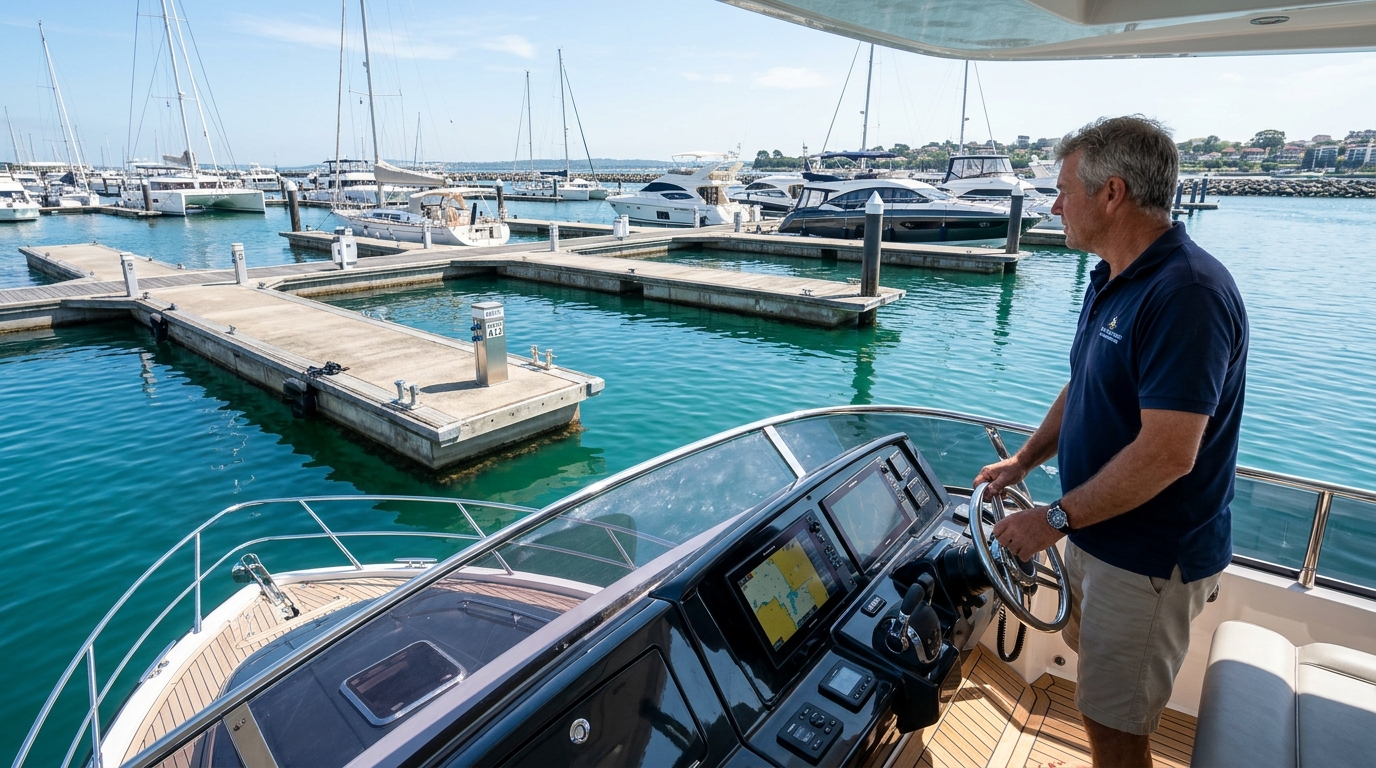
Steps to Verify a Slip Before Finalising a Rental Agreement
Before signing a long-term or monthly marina berth rental contract, execute a thorough physical or digital check of the berth configuration:
- Verify power pedestal specs, including available amperage (15A, 32A, or three-phase) and plug types.
- Confirm shore connection points align with your onboard inlet location without straining cables.
- Inspect the condition of dock cleats, whalers, and finger pier rollers.
- Check fairway width in front of the berth to ensure adequate turning room during strong crosswinds.
Frequently Asked Questions
What happens if my boat exceeds the rated length of a marina berth?
If your vessel projects beyond the finger pier or encroaches into the fairway, the marina operator may deem the berth unsafe, require you to move to a larger slip, or cancel the agreement if no larger space is available.
How are beam surcharges calculated for multihulls on a monthly boat slip rental?
Multihulls usually occupy either a dedicated wide single berth or a double slip. Operators typically apply a standard multiplier to the base metre rate or charge based on the total square area occupied by the vessel footprint.
Are berth dimensions measured from pile centerlines or usable deck edges?
Usable berth dimensions are measured between the inner clear faces of finger piers or piles. Always ask the marina operator for clear usable width rather than pile centerline spacing.
Do you run a marina or own a berth?
Reach boat owners searching for berths. Listing is free.
Recent Blogs