Scaling Waterfronts with Smart Marina Software
The global maritime industry is experiencing a profound wave of technological evolution. For decades, managing slips, moorings, and dry storage was a localized, highly manual process. Dock masters and harbor managers relied on physical clipboards, whiteboard grids, or isolated desktop programs to log incoming yachts. Today, as vessel sizes increase and boater expectations shift toward instant, mobile-enabled convenience, this siloed approach is hitting its operational limits. The adoption of smart marina software is no longer just an optional upgrade for elite yacht clubs; it is a critical infrastructure requirement for any waterfront seeking to optimize occupancy and protect its operating margins.
Transitioning to Smart Marina Software: What It Means for Operators
What does it mean to move from a legacy setup to a digital-first ecosystem? At its core, smart marina software acts as a central nervous system for waterfront assets. Instead of viewing slips as static spaces that require manual check-ins and visual verification, modern platforms treat every berth, mooring, and private slip as a dynamic, cloud-connected resource.
For a busy marina operator, this transition translates directly into reclaimed labor hours and optimized space. When a vessel departs early, the system immediately recognizes the vacancy and updates the booking queue. This real-time visibility prevents lost revenue during peak weekends and ensures that boaters seeking shelter or transient stays are never turned away unnecessarily. By consolidating administrative workflows—from automated insurance validation to digital signature agreements—harbor staff can step out of the back office and spend more time on the docks delivering high-value hospitality.
Marina Match vs Traditional Marina Software: The Core Differences
To understand why modern waterfronts are moving away from legacy platforms, it is helpful to contrast the mechanics of modern networks against older industry standards. The comparison between Marina Match vs Traditional Marina Software highlights differences in connectivity, flexibility, and scope.
Traditional systems were built as closed billing databases. They served accounting departments well enough but ignored the actual journey of the boater and the broader marine ecosystem. Here is how they compare across key dimensions:
- System Connectivity: Traditional software operates in a closed loop, isolated from external networks and requiring manual data entry for every guest. Marina Match functions as an open, global marina network that connects individual harbors, private owners, and transient boaters in real time.
- Inventory Sourcing: Legacy platforms are limited strictly to commercial slips owned by the facility. Marina Match integrates commercial slips, dry stack slots, and private marine properties like a private dock or private jetty.
- Booking Workflow: Older platforms require manual email communication or phone calls to confirm reservations. Modern systems utilize instant online marina booking with live berth availability, completing transactions in seconds.
- Waitlist Operations: Legacy waitlists are static spreadsheets that must be updated manually. Marina Match features automated waitlists that instantly offer open spots to next-in-line boaters via automated messages.
- Payment Security: Older systems rely on taking credit card details over the phone or manual bank transfers. Modern software integrates Stripe secure payments to guarantee instantaneous, PCI-compliant transactions.
Activating the Underutilized Private Dock and Jetty Economy
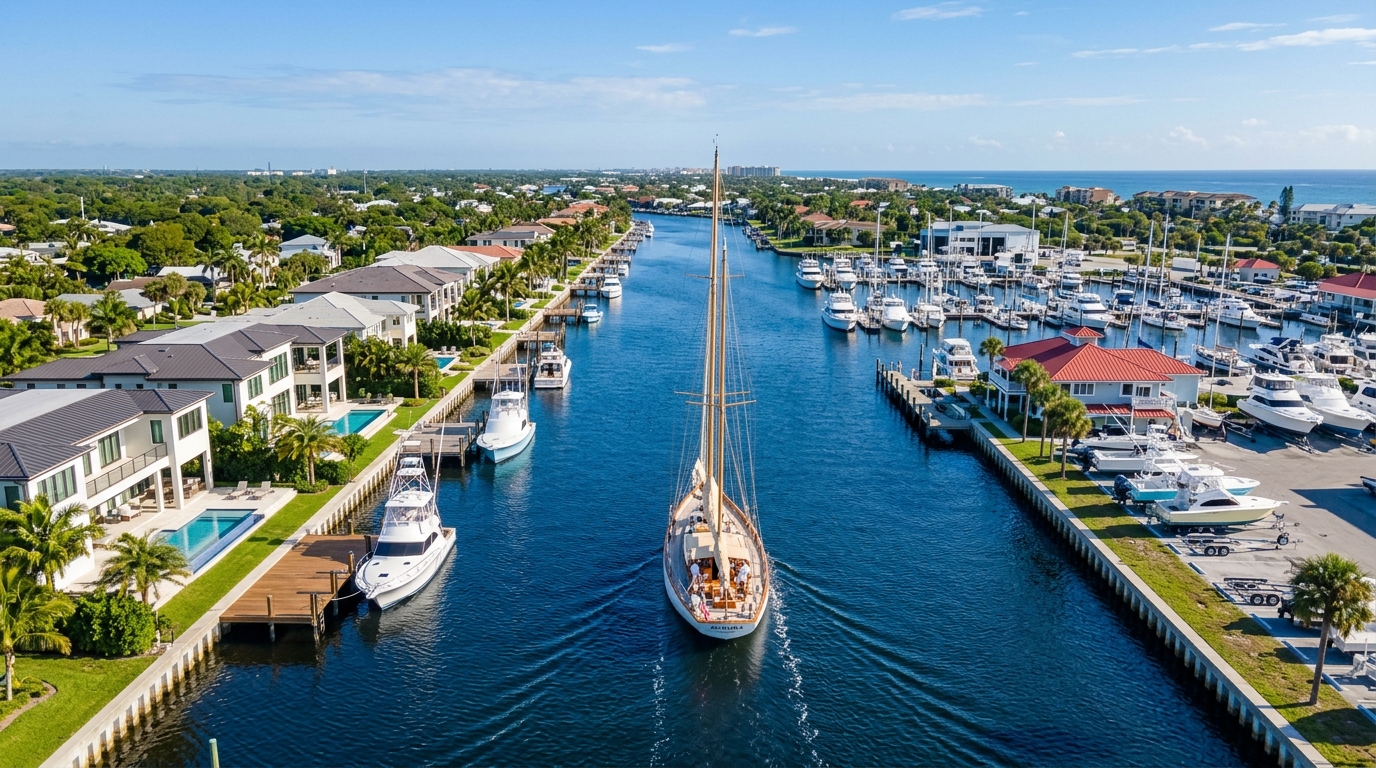
One of the most significant aspects of the modern digital marina transformation is the integration of private assets. Historically, commercial marinas and private residential dock owners existed in completely separate worlds. While commercial harbors faced massive waitlists and record-high occupancy rates, thousands of private residential docks lay empty just a few canals away.
By opening up the marketplace to private waterfront property owners, we unlock massive latent inventory. If you are a homeowner wondering how to safely rent my jetty or lease out an unused private dock, the barrier to entry has traditionally been trust and logistics. Managing liability, verifying vessel dimensions, and securing payments can be daunting without professional systems.
Modern smart marina software bridges this gap. By listing a private berth on a unified marina marketplace, private owners gain access to the same robust toolsets as commercial operators. This includes automated booking agreements, automated liability waivers, and secure payment processing. For boaters, it means access to a vastly expanded network of safe harbors, especially in crowded waterways where commercial berths are booked months in advance.
The Power of the Automated Berth in Modern Operations
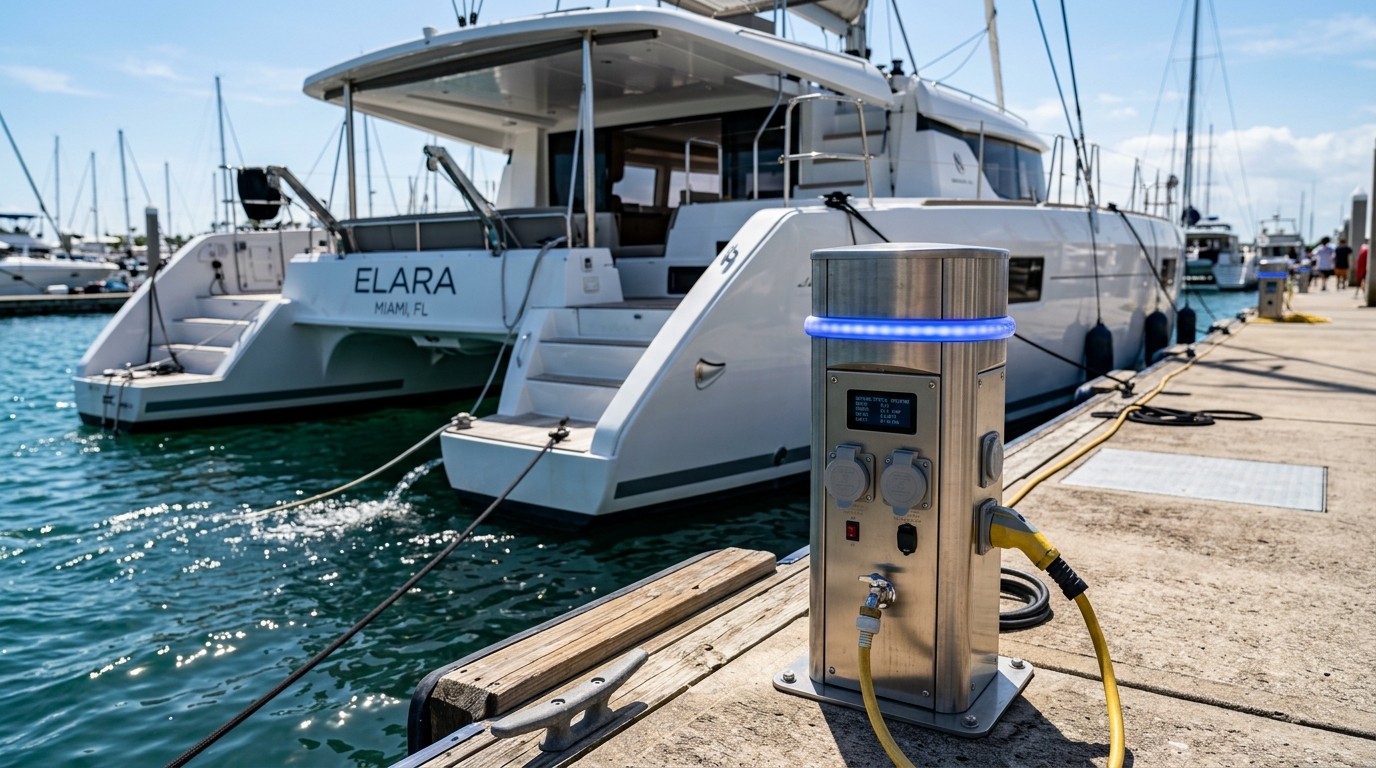
As automation finds its way into every industry, the concept of the automated berth is redefining harbor management. An automated berth relies on a combination of cloud-based scheduling, IoT hardware integration, and intelligent workflows to manage vessel arrivals and departures with minimal staff intervention.
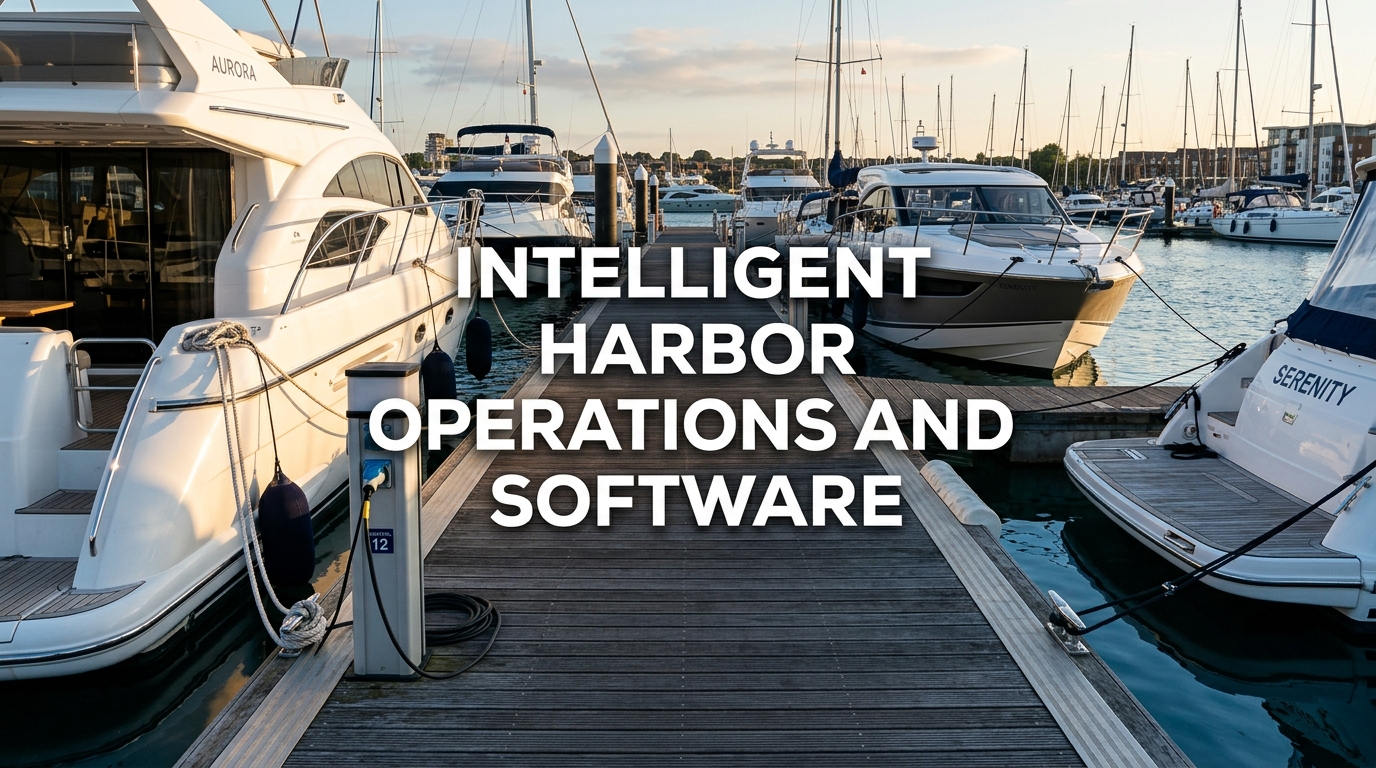
When a boater bookings a slip through an online marina booking platform, the system assigns a slip based on exact vessel parameters: draft, beam, length overall (LOA), and electrical requirements. Upon arrival, smart pedestals can automatically activate utility access linked directly to the boater's profile. If the vessel leaves early, optical sensors or magnetic dock meters can register the vacancy, updating the marina dashboard instantly. This level of automation reduces the need for physical dock walks, allowing harbor masters to manage hundreds of slips from a single, centralized screen with total spatial awareness.
Overcoming Operational Friction with Digital Workflows
Running a waterfront facility is a delicate balancing act of variable weather, shifting schedules, and diverse vessel requirements. When manual processes dominate, errors creep in. A double-booked slip can ruin a boater's weekend and damage a marina’s reputation, while slow billing cycles drag down cash flow.
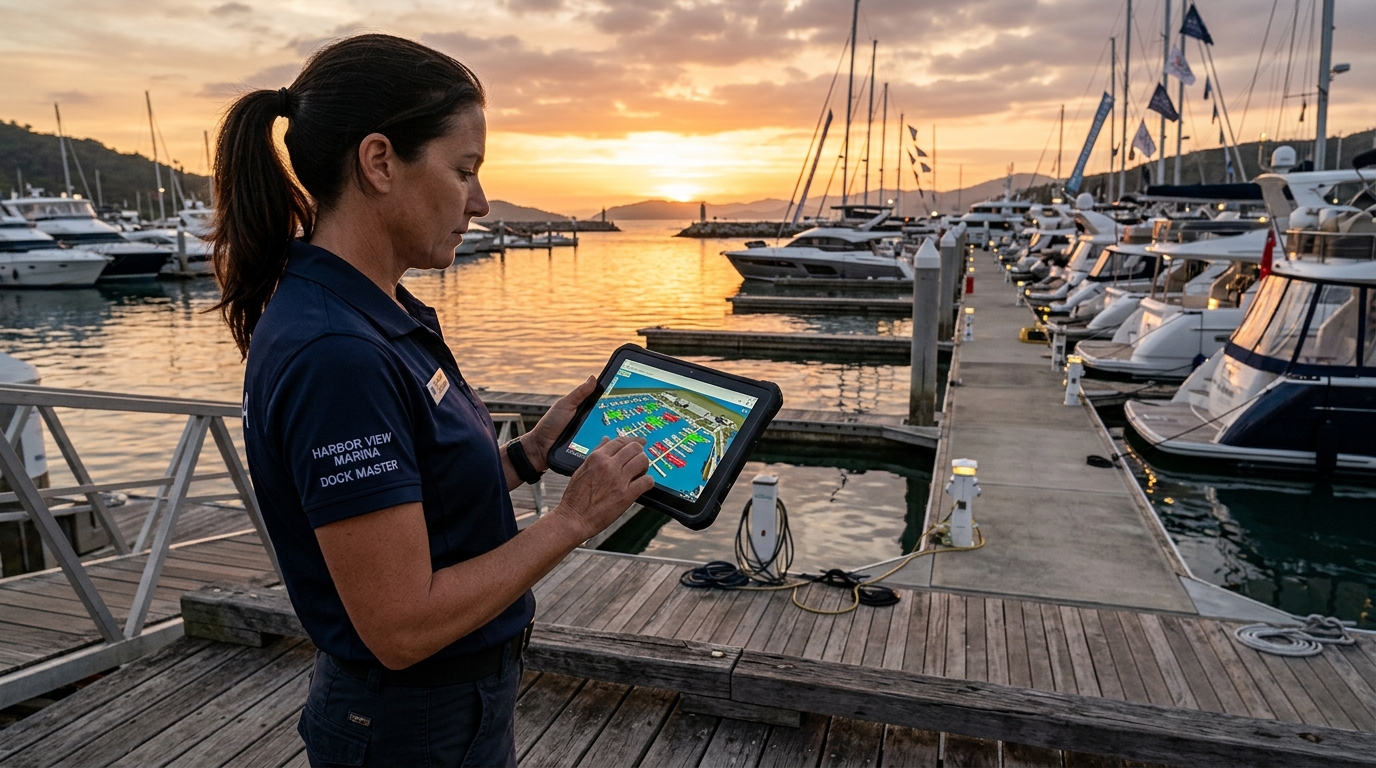
Transitioning to digital workflows resolves these points of friction. Using a dedicated Dock Master Dashboard, managers gain an interactive visual marina map view showing exactly which vessels are in port, which are arriving, and which are overdue. Key features include:
- Dynamic Berth Allocation: The system uses intelligent routing logic to place vessels in the most space-efficient berths, maximizing total layout capacity.
- Integrated Communication: Operators can send broadcast weather alerts or gate codes directly to checked-in boaters through the app, ensuring everyone on site stays informed.
- Consolidated Billing: Slip fees, electrical usage, and ancillary services are compiled automatically and charged securely via integrated merchant gateways, eliminating late payments and paper invoices.
Building a Global Marina Network for Connected Boating
The future of the marine industry does not lie in isolated, individual docks, but in a highly collaborative, global marina network. For boaters, cruising between different regions has historically meant dealing with dozens of different reservation portals, varying rules, and unpredictable slip availability.
A connected marine ecosystem changes this paradigm. When software platforms unify commercial harbors and private listings under one umbrella, cruising becomes a seamless, predictable experience. A boater can plot a course along a coastline, view real-time availability at both major commercial terminals and quiet private berths, and secure their entire itinerary with a few clicks. This level of connectivity benefits the entire blue economy—driving higher traffic to local business districts, increasing secondary revenues for marina businesses, and fostering a safer, more accessible environment for recreational boaters.
Real-World Scenarios: Smart Operations in Action
To understand the practical value of these systems, let's look at how smart marina technology operates in common, high-pressure real-world scenarios:
Scenario A: The Peak-Season Storm
A sudden summer squall approaches a popular coastal region. Dozens of vessels on the water urgently seek safe harbor. Instead of staff answering chaotic, overlapping phone calls while working on the docks, boaters can check live berth availability on their mobile devices. The automated waitlist system processes incoming requests based on emergency criteria and vessel sizes, instantly assigning sheltered slips and sending docking instructions automatically.
Scenario B: The Out-of-Hours Arrival
A yacht arrives at midnight after a long passage. Historically, this meant anchoring outside or guessing which slip was vacant, risking property damage or disputes. With a modern booking platform, the boater completes an online reservation, receives a secure gate code, gets their exact slip assignment on a digital marina map, and plugs into a smart pedestal that activates automatically. The dock master arrives the next morning to a fully updated system and a completed, paid transaction.
Frequently Asked Questions
What is the main difference between Marina Match and traditional marina software?
Traditional systems are isolated, localized billing tools built primarily for commercial facilities. Marina Match is a cloud-based, global platform that combines advanced dock management software with a peer-to-peer marketplace, allowing commercial operators and private dock owners to manage, list, and monetize their slips within a single unified network.
Can I list my private residential dock for rent online?
Yes. Through the Marina Match marketplace, private waterfront property owners can list a private jetty, dock, or mooring for rent. The platform provides the same secure payment infrastructure, booking agreements, and user verification tools that commercial marinas use, making private dock rentals safe and simple.
How does an automated berth system save staff time?
An automated berth updates its availability status in real time as boaters check in and out digitally. By integrating with smart marina technologies, the system minimizes manual slip checks, automates waitlist allocations when vacancies occur, and handles billing automatically, allowing staff to focus on guest services.
How do secure payments work for transient boaters?
All transactions on the platform are handled via Stripe secure payments. Boaters pay online using their preferred method, and funds are distributed directly to the marina operator or private dock owner's account, reducing manual invoicing and eliminating credit card safety concerns.
Can modern marina software handle dry storage and yacht clubs?
Absolutely. Modern smart marina software is designed to manage diverse waterfront layouts, including wet slips, dry stack storage, moorings, and yacht club memberships, ensuring all operations are centralized on a single dashboard.
Does the platform help with waitlist management?
Yes. Instead of using manual spreadsheets, the software utilizes an automated waitlist. When a slip becomes available, the system automatically contacts the next compatible boater on the list, giving them a set window to accept the booking before moving to the next person.
The Horizon of Waterfront Management
The marine industry is standing on the edge of a profound digital shift. As boaters grow more accustomed to instant, on-demand services in every other aspect of their lives, the expectation of a seamless digital experience on the water will only intensify. The era of static spreadsheets and disconnected operations is drawing to a close.
By implementing forward-thinking smart marina software, operators are not just optimizing their current daily workflows; they are future-proofing their businesses for an automated world. Whether you manage a large-scale commercial harbor, run a local yacht club, or are looking to monetize a private dock, the path to greater occupancy, secure revenue, and effortless management lies in digital integration.
Embrace the future of the waterfront. Explore how Marina Match can unify your operations, connect you with a global audience of passionate boaters, and turn every slip into an active, high-performing asset.
Do you run a marina or own a berth?
Reach boat owners searching for berths. Listing is free.