Securing Your Waterfront Legacy: Analyzing a Marina Berth for Sale and Private Dock Opportunities
The maritime world is undergoing a profound structural shift. For decades, recreational boating was viewed simply as a leisure activity, and finding a place to tie up was an afterthought. However, a sustained global surge in boat ownership, paired with increasingly stringent environmental and zoning regulations on coastal developments, has created a severe shortage of wet slips. Consequently, marine berths have transitioned from simple utility spaces into highly prized, income-generating waterfront assets. For buyers, looking at a marina berth for sale is no longer just about securing a home for their vessel; it is a strategic real estate play.
As the physical footprint of marinas remains largely fixed, the digital layer of the marine industry is rapidly expanding to solve this allocation problem. For boaters, investors, and marina operators alike, navigating this landscape requires a deep understanding of slip ownership models, modern yield-management strategies, and the technology driving the digital marina transformation.
Demystifying Slip Ownership: Deeded versus Leasehold
To successfully evaluate a marina berth for sale, one must first understand the legal structures governing wet slip ownership. Unlike traditional land-based real estate, marina slips are typically sold under one of two primary legal frameworks: fee-simple deeded ownership or long-term leasehold agreements.
Fee-Simple Deeded Ownership: Often referred to as "dockominiums," these berths are treated as distinct parcels of real property. As an owner, you receive a deed to a specific slip or a percentage interest in the marina's common elements, accompanied by a specific right of use. This model is highly prevalent in regions like North America. Deeded slips can be bought, sold, mortgaged, and passed down through generations. They also tend to appreciate in line with coastal real estate values, making them exceptionally attractive to long-term investors.
Long-Term Leaseholds: In many parts of Europe, Australia, and New Zealand, marine berths are sold as long-term leaseholds. Under this structure, a purchaser buys the exclusive right to use a specific slip for a set duration—typically ranging from 20 to 99 years. The underlying seabed is often leased from a local port authority or government entity by the overall marina operator. While these assets still hold significant value and can be subleased or sold on the secondary market, their value inherently depreciates as the lease term nears its expiration.
For any prospective buyer, identifying which model applies is the critical first step in determining long-term asset viability and resale potential.
Key Considerations When Browsing a Marina Berth for Sale
Acquiring a marine slip requires a level of technical due diligence that far exceeds typical real estate transactions. When analyzing a marina berth for sale, several physical and operational variables must be meticulously assessed to ensure the asset can accommodate modern vessels and retain its market value:
- Draft and Water Depth: One of the most common pitfalls for buyers is failing to verify the draft clearance at Mean Low Water (MLW). A slip that is deep enough during high tide may leave a deep-draft sailboat or a heavy displacement motor yacht grounded during low tide. Furthermore, look into the siltation rates of the marina and whether the marina operator has a long-term dredging plan in place.
- Beam and Overhang Allowances: Modern vessel design has leaned heavily toward wider beams, driven in part by the immense popularity of cruising catamarans. A standard slip built twenty years ago may not accommodate modern wide-beam vessels. Additionally, check the marina's policy on bowsprit and swim-platform overhangs, as exceeding the designated slip length can result in fines or forced relocations.
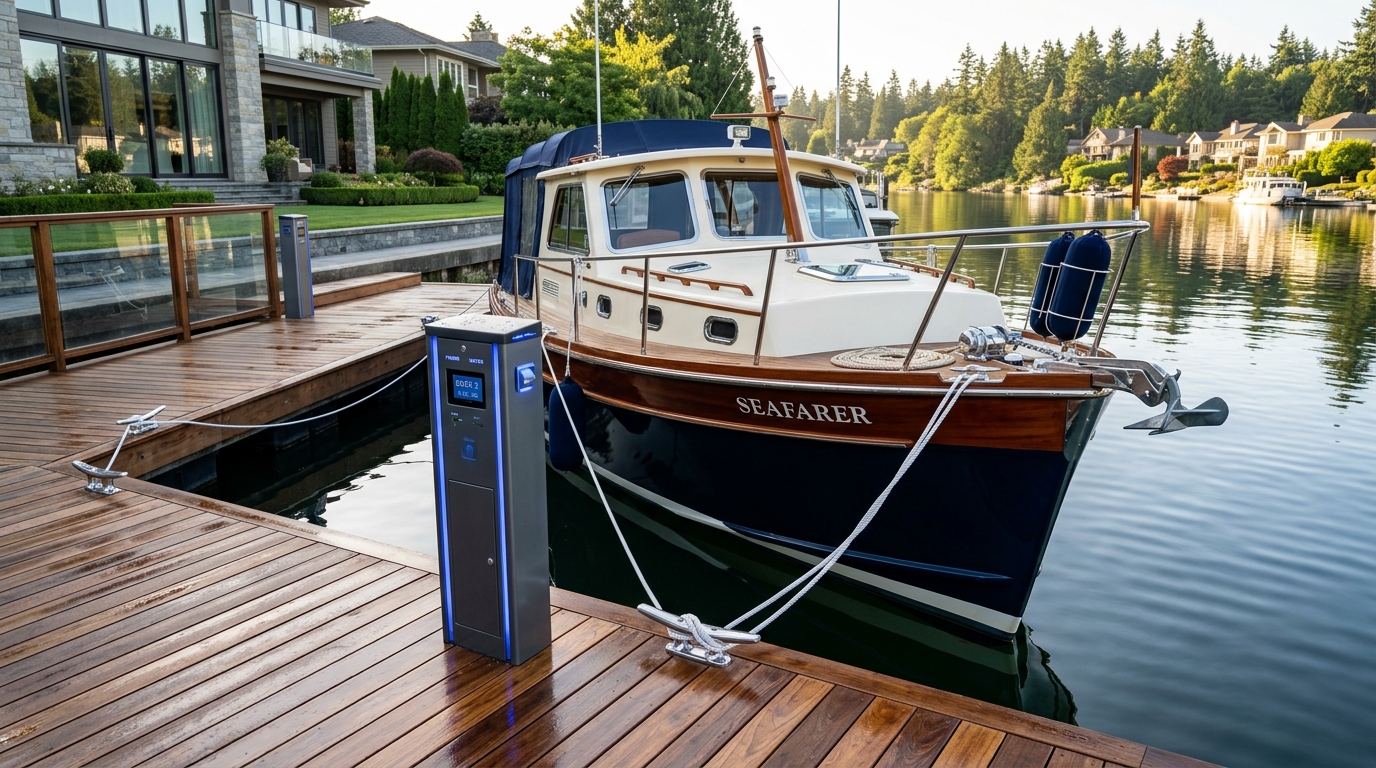
- Utility Infrastructure and Power Supply: Premium vessels require robust shore power configurations. Ensure the slip is equipped with stable electrical pedestals—ideally offering smart metering and varied configurations (such as twin 30-amp, single 50-amp, or three-phase power for larger yachts). High-speed Wi-Fi access, fresh water connections, and in-slip blackwater pump-out systems add significant premium value to any listing.
- Marina Bylaws and Subleasing Restrictions: If your intention is to generate passive income when your boat is cruising, you must carefully read the homeowner association (HOA) or yacht club bylaws. Some facilities strictly prohibit a commercial boat berth rental program or place heavy restrictions on transient subleasing.
By leveraging a digital Marina Marketplace equipped with a comprehensive Marina Map View, prospective buyers can filter listings based on these exact physical parameters, ensuring they only invest in slips that fit their vessel's operational profile.
Comparing Commercial Slips, Leases, and a Private Berth
When looking to secure dedicated water access, buyers generally choose between commercial marina slips, yacht club leaseholds, or acquiring a residential property with a private berth. Each path offers distinct trade-offs in terms of capital investment, regulatory responsibilities, and flexibility. To help clarify these distinctions, we can evaluate the options across several key operational dimensions:
- Commercial Deeded Slip:
- Initial Capital: High. Requires significant upfront investment to purchase the deeded real estate outright.
- Regulatory Burden: Low. The overall marina operator handles environmental compliance, dredging, and common area maintenance.
- Yield Potential: High. Can be listed on a global marketplace for high-rate transient stays during peak seasons.
- Flexibility: Moderate. Subject to marina rules, bylaws, and shared community guidelines.
- Long-Term Leasehold Berth:
- Initial Capital: Moderate to High. Decreases gradually as the lease term approaches its end date.
- Regulatory Burden: Low. Major maintenance and structural upgrades remain the responsibility of the marina owner or primary operator.
- Yield Potential: Moderate to High. Subleasing is highly lucrative in high-demand, supply-constrained destination harbours.
- Flexibility: Moderate. Must conform to the operational policies set by the master lessor.
- Private Berth (e.g., Private Jetty or Private Dock):
- Initial Capital: High. Usually tied directly to the purchase of prime waterfront residential real estate.
- Regulatory Burden: High. The homeowner is solely responsible for structural integrity, environmental permits, and local council compliance.
- Yield Potential: Very High. Homeowners can rent my berth directly to local boaters, bypassing commercial overheads.
- Flexibility: High. Absolute control over usage, scheduling, and vessel types, subject only to local municipal zoning laws.
Unlocking Passive Income: Turning Vacant Slips into Cash Flow
For many boat owners, their vessel is not a permanent fixture in its slip. Whether you are embarking on a three-month coastal cruise, participating in seasonal regattas, or hauling your boat out for dry winter storage, your slip represents prime waterfront real estate sitting entirely empty. In a traditional system, this vacancy represents a lost opportunity.
However, the rise of peer-to-peer maritime marketplaces is changing how we view idle assets. If you own a deeded slip or a private berth attached to your home, you can easily transition from a passive consumer to an active participant in the marine sharing economy. By offering your slip as a temporary boat berth rental, you can generate a highly reliable stream of passive income.
To do this successfully and safely, modern technology is absolutely essential. Historically, trying to rent my berth privately involved posting on physical corkboards or unmonitored online classifieds. This exposed owners to significant risks, including uninsured vessels, non-payment, and overstaying tenants.
Modern platforms mitigate these risks entirely. By utilizing an integrated Marina Marketplace, private owners can list their slips with exact specifications, clear pricing, and specific availability windows. Key features that protect owners include:
- Stripe Secure Payments: Ensuring all funds are processed, verified, and secured before the visiting vessel ever touches the dock.
- Live Berth Availability: Ensuring that a berth reservation is only accepted during the precise windows when your own vessel is away.
- Verified Boater Profiles: Allowing you to review the vessel's dimensions, insurance documentation, and previous reviews before accepting an online marina booking.
This digital framework turns what was once a highly fragmented, risky process into a seamless, institutional-grade transaction, providing waterfront homeowners and slip investors with peace of mind and consistent returns.
How Technology Bridges the Gap for Operators and Owners
While individual owners benefit from peer-to-peer marketplaces, commercial operators face an even larger challenge: managing high-volume, multi-faceted docking facilities. A successful modern marina business must simultaneously coordinate permanent slip holders, transient boaters, dry storage facilities, and maintenance yard schedules.
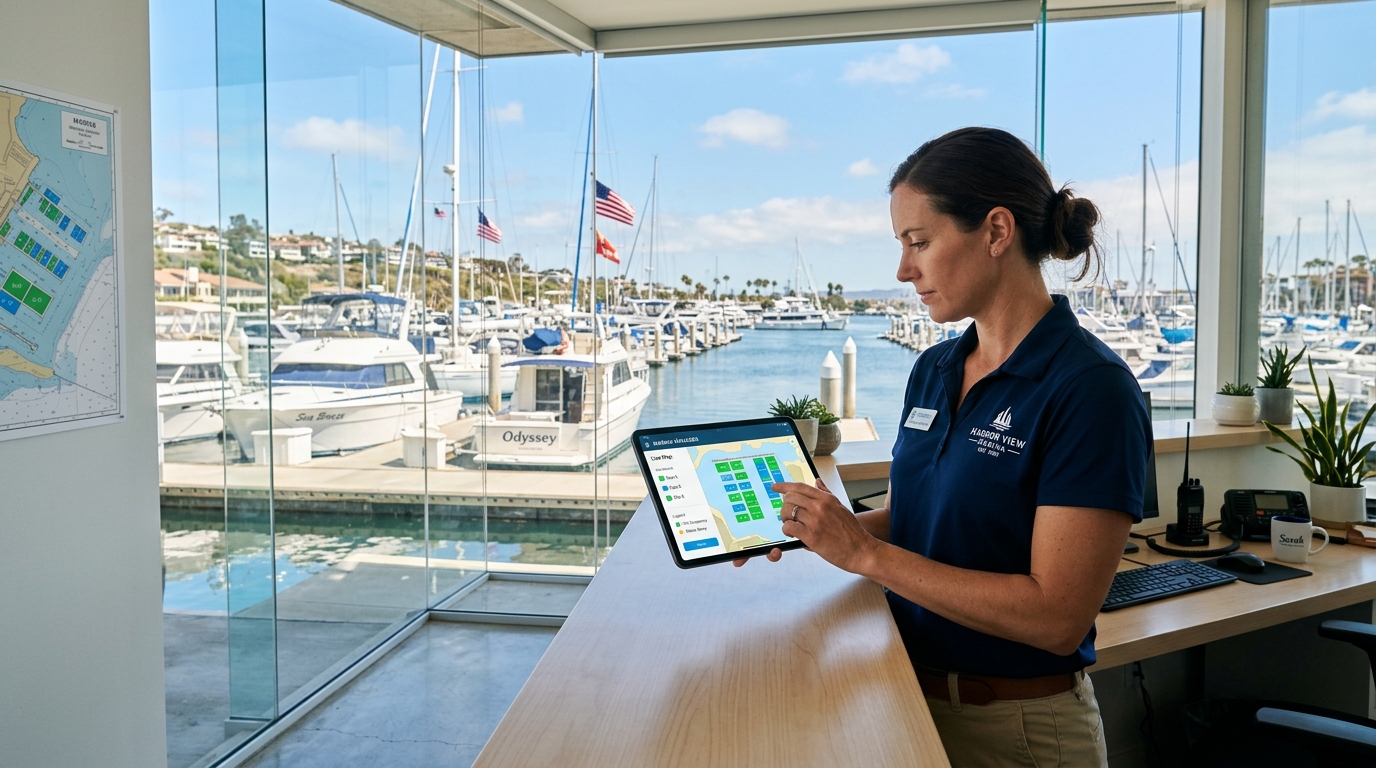
This is where advanced marina management software becomes the backbone of modern operations. Rather than relying on legacy spreadsheets or manual whiteboards, a digital-first marina operator utilizes a centralized Dock Master Dashboard to manage every aspect of the waterfront.
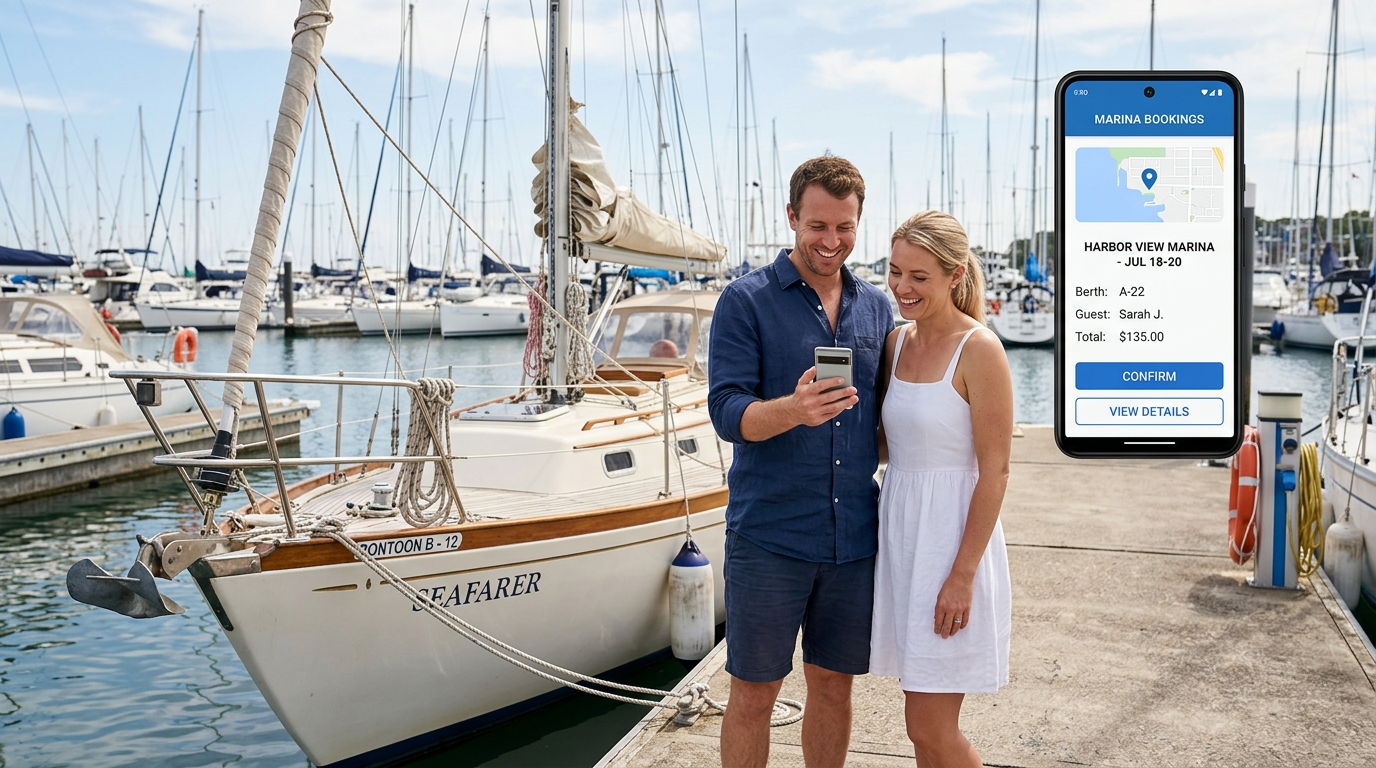
When a private owner lists their slip for subleasing, or when a commercial facility opens transient berths, this software automatically updates the public-facing platform with Live Berth Availability. When a boater secures an online marina booking, the system instantly logs the arrival, assigns the slip, updates the billing ledger, and notifies the dock staff.
Furthermore, the inclusion of an automated waitlist feature ensures that high-demand slips are never left vacant. If a prime berth becomes available due to a last-minute cancellation, the software instantly notifies the next boater on the digital waitlist, immediately capturing lost revenue and optimizing occupancy rates. This seamless coordination is what elevates a standard marina into a highly profitable, interconnected hub.
The Future of Waterways: Artificial Intelligence and Global Networks
We are standing on the cusp of a major technological evolution in maritime infrastructure. While the current generation of software excels at automating bookings and streamlining payments, the next phase of development centers on connectivity and intelligence.
The ultimate goal of the modern marine sector is the creation of a fully unified, global marina network. In this connected ecosystem, individual yachts, private docks, and commercial marinas do not exist as isolated silos. Instead, they share data in real-time to optimize global vessel transit.
For example, imagine a future where your yacht's onboard navigation system communicates directly with an AI-ready platform. As you cruise toward your destination, the system monitors weather conditions, fuel consumption, and real-time berth availability across multiple nearby harbors. If a storm is approaching, the AI automatically secures a berth reservation at the nearest protected facility, alerts the dock master of your estimated arrival time, and adjusts the marina's power grid to accommodate your vessel's electrical requirements upon arrival.
While these highly automated, AI-driven booking systems represent the near future, the foundational infrastructure is being built today. By digitizing current operations, standardizing reservation protocols, and opening up private inventory like residential jetties to the wider public, the industry is paving the way for a safer, more efficient, and infinitely more accessible boating experience.
Frequently Asked Questions
- Is buying a marina berth for sale a good investment? Yes, purchasing a marina berth can be an exceptional investment. Because the supply of wet slips is strictly limited by environmental regulations and coastal zoning, demand routinely outpaces supply in popular boating destinations. Owners can generate steady passive income by listing their slip as a boat berth rental when not in use, while also benefiting from long-term asset appreciation.
- Can I legally rent out my private berth or residential jetty? In most jurisdictions, yes, but it is highly dependent on local municipal zoning laws, canal association rules, and environmental regulations. Many waterfront homeowners successfully monetize their private dock space by using dedicated platforms that verify visiting vessels and handle liability insurance and secure payments automatically.
- What is the difference between a deeded slip and a leasehold berth? A deeded slip (or dockominium) is real property that you own outright with a physical deed. You can buy, sell, or pass it on indefinitely. A leasehold berth gives you the exclusive right to use a slip for a specific number of years (often 20 to 99 years) under a master lease. Once the lease expires, the rights typically revert back to the marina developer or port authority.
- How does live berth availability protect my private dock? Live berth availability features ensure that your private dock is only booked when you want it to be. By setting precise calendar windows when your own boat is away, you prevent double-bookings and maintain absolute control over who uses your waterfront asset and when.
- Why should marina operators switch to digital marina management software? Transitioning to modern marina software eliminates manual errors, reduces administrative labor, and dramatically increases revenue. It allows operators to view live slip occupancy via a Dock Master Dashboard, manage waitlists automatically, process secure payments, and tap into a global booking network to capture high-value transient boaters.
- How do online bookings and secure payments protect slip owners? Digital booking platforms require boaters to submit verified vessel profiles, insurance documentation, and secure credit card payments via processors like Stripe before their arrival. This eliminates the risk of unpaid fees, simplifies the check-in process, and ensures that clear terms of service protect both the owner and the boater.
Conclusion
Securing water access in today's crowded maritime market requires a proactive, strategic approach. Whether you are a dedicated cruiser searching for a stable marina berth for sale, a waterfront homeowner looking to monetize an underutilized private dock, or a professional operator striving to maximize commercial occupancy, the path forward is defined by digital integration.
The traditional, fragmented ways of managing slips are rapidly giving way to a more connected, transparent, and automated ecosystem. Platforms like Marina Match are leading this charge, building the essential infrastructure for a seamless, secure, and dynamic global marine marketplace. By bringing together commercial marinas, private jetty owners, and a global network of passionate boaters, we are unlocking the true potential of our waterways.
Are you ready to optimize your waterfront asset? Explore how Marina Match can elevate your boating experience, simplify your management, and connect you to a world of maritime opportunities today.