Connecting Docks and Data: Inside the Modern Digital Marina
For decades, managing a waterfront facility has been an inherently hands-on, physical challenge. Marina operators and dock masters have historically relied on whiteboard scheduling, manual logbooks, and fragmented spreadsheets to track vessels, process payments, and coordinate slip allocations. However, as boaters increasingly expect the same seamless, on-demand digital experiences they enjoy in other areas of travel and hospitality, the maritime industry is undergoing a structural shift.
Today, the transition toward a fully realized digital marina is no longer just a trend for high-end mega-yacht facilities; it is a operational necessity for marinas, yacht clubs, and private dock owners worldwide. By uniting advanced maritime software, specialized customer relationship management systems, and local physical automation, waterfront businesses can unlock unprecedented operational efficiency. This guide explores how connecting physical berths with digital intelligence transforms daily waterfront management, drives revenue, and keeps boaters coming back.
The Architecture of a True Digital Marina
At its core, a digital marina is an ecosystem where physical dock infrastructure and cloud-based software communicate in real time. Rather than treating slip reservations, utility monitoring, customer communications, and gate access as separate administrative tasks, a connected marina unifies them into a single, cohesive operating system.
To understand how this works in practice, we must look at the flow of data. When a boater makes an online marina booking, that transaction should instantly trigger a chain of automated events. The reservation system registers the boat's dimensions (length, beam, draft) and power requirements, matches them with an ideal, vacant slip, updates the Dock Master Dashboard, generates a secure payment request, and prepares the physical dock space for the vessel's arrival. This level of synchronization eliminates human error, reduces administrative labor, and ensures that no slip remains empty due to miscommunicated availability.
This digital evolution is driven by three foundational pillars:
- Centralized Cloud Management: Accessing operations from any device, anywhere, allowing dock teams to step away from the office desk and manage the docks using mobile devices.
- Dynamic Customer Intelligence: Moving beyond simple contact sheets to maintain detailed, actionable profiles of every boater, vessel, and transactional history.
- Physical Integration: Connecting software directly to hardware, such as smart utility pedestals, automated security gates, and digital dock maps.
Transforming Relationships with a Dedicated Marina CRM
Many waterfront businesses attempt to manage customer relationships using generic CRM platforms or basic email clients. However, the maritime industry presents unique operational variables that standard sales software simply cannot accommodate. A generic CRM does not understand the difference between a catamaran with a twenty-five-foot beam and a deep-draft monohull, nor can it map a customer record directly to a physical, water-based asset like a mooring or a dry stack berth.
A specialized marina CRM bridges this gap by marrying customer profiles directly with spatial and maritime constraints. It tracks vital vessel specifications, insurance expirations, power requirements, and historical slip preferences alongside standard contact information. For a commercial marina operator or a busy commodore handling yacht club management, this structured data is invaluable.
When a returning boater calls or books online, the team immediately knows if their vessel fits the requested slip, whether their liability insurance is up to date, and if they prefer port-side or starboard-side tie-ups. This personalized service builds trust and long-term customer loyalty while safeguarding the physical safety of the docks.
Furthermore, a dedicated CRM streamlines billing. Recurring dockage contracts, seasonal slip leases, transient booking fees, and utility charges can be consolidated into automated, digital invoices. By utilizing modern integrations like Stripe secure payments, operators can collect payments automatically, reducing administrative overhead and significantly improving cash flow.
The Reality of Boat Automation and Smart Docking
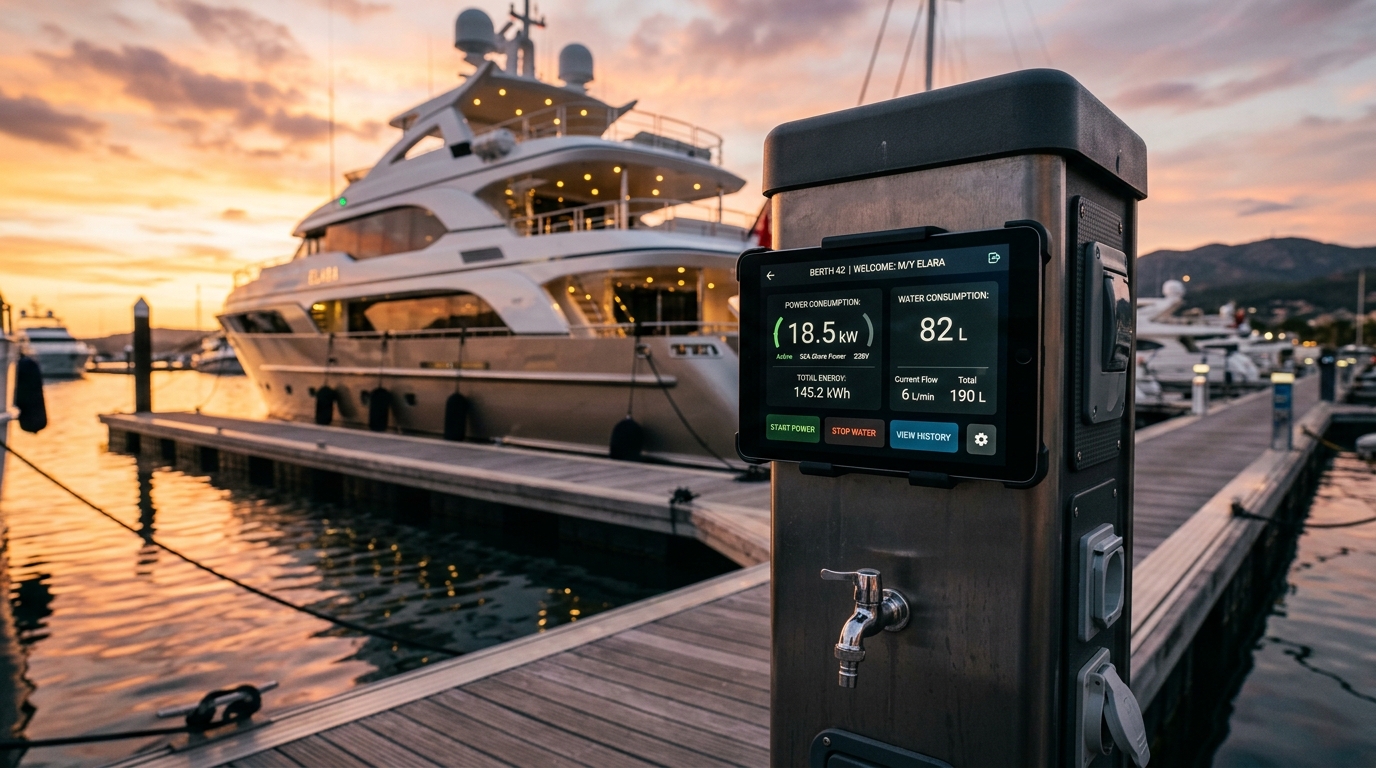
As vessel manufacturers advance onboard technology, the relationship between the boat and the dock is changing. The emergence of Boat Automation—ranging from connected onboard telemetry and remote bilge monitoring to assisted docking systems—is paving the way for a smarter waterfront. In a modern digital environment, the physical dock is designed to interact intelligently with these automated vessels.
While fully autonomous, self-docking boats are still emerging in highly controlled settings, practical automation is already transforming dock operations today. Consider the following real-world applications of dockside and boat automation:
- Smart Utility Pedestals: Traditional utility reading requires staff to walk the docks, manually note meter numbers, and transcribe them into billing systems. Automated pedestals track water and electrical draw in real time, transmitting usage data directly to the billing portal of the marina software. This prevents utility theft, eliminates transcription errors, and ensures accurate invoicing.
- Automated Access Control: When a boater completes their online booking, the system can automatically generate a unique, time-sensitive gate or clubhouse access code. This code is sent straight to the Boater Dashboard, allowing secure, 24/7 self-check-in without requiring staff to remain on-site after hours.
- Environmental & Safety Sensors: Connected optical and acoustic sensors can monitor slip occupancy, alerting the dock master if a boat has departed unexpectedly, or if an unassigned vessel has occupied a reserved berth. Similarly, smart sensor networks can detect fuel spills, extreme water levels, or dock movement during major storm events.
By connecting software with physical dock hardware, the digital marina minimizes physical friction, protects expensive waterfront assets, and allows staff to focus on delivering high-touch hospitality rather than managing manual paperwork.
Maximizing Marina Occupancy and Revenue
To run a highly profitable marina business, optimizing slip occupancy is paramount. Every night a slip sits empty represents unrecoverable revenue. Traditional booking methods often lead to artificial vacancy—slips that appear occupied on paper due to administrative lags, but are physically empty because a seasonal tenant is cruising away for the weekend.
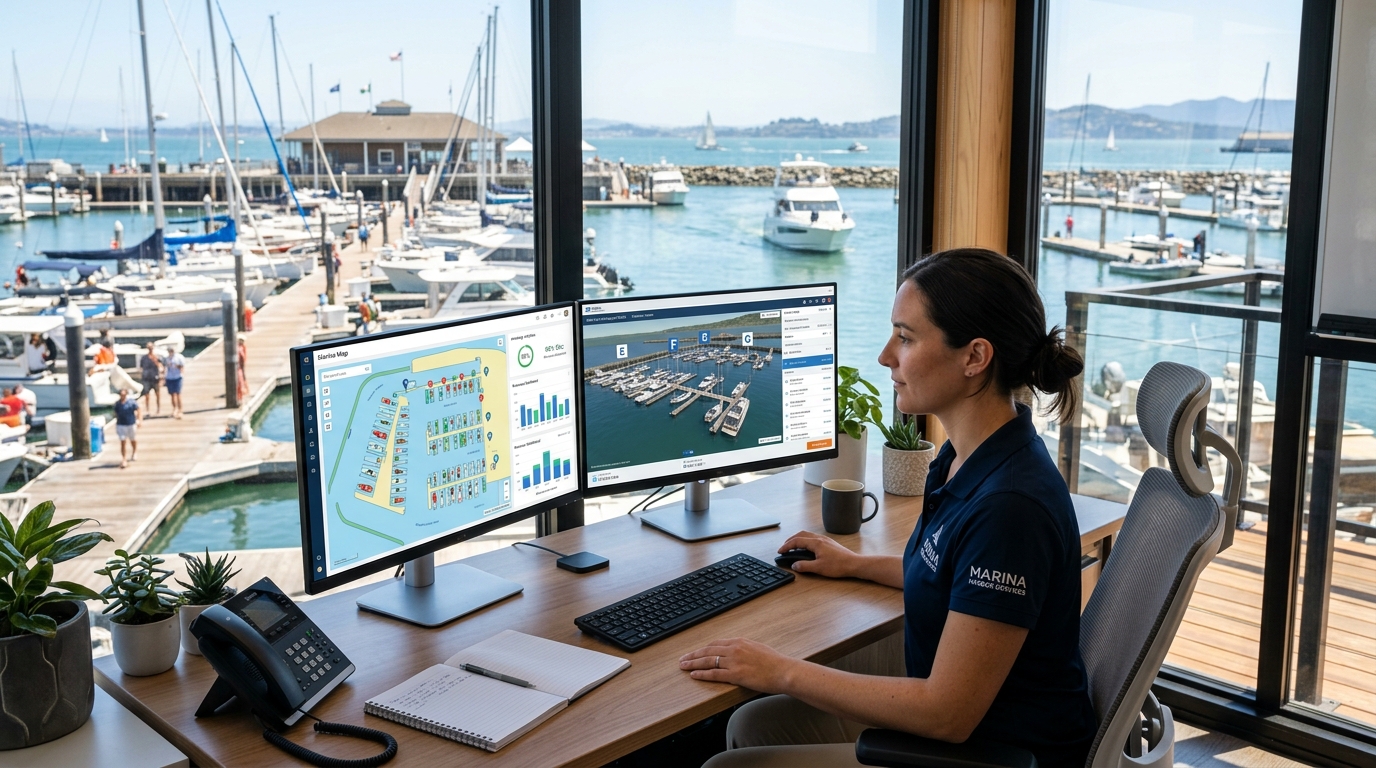
A connected digital marina solves this through real-time visibility and automated shared inventory. Through an interactive, live-updating Marina Map View, staff can instantly see which slips are physically occupied, which are booked, and which are temporarily vacant because the primary tenant has logged their absence. This opens the door to sub-leasing programs, allowing operators to monetize seasonal slips multiple times over with transient boaters, boosting total marina revenue while offering a cut of the earnings back to the seasonal slip holder.
Additionally, modern systems prevent missed opportunities through automated waitlists. If a highly sought-after 50-foot slip becomes available due to a last-minute cancellation, the software instantly identifies waitlisted vessels that fit the exact parameters of that slip, automatically offering them the berth reservation via email or SMS. This keeps occupancy high without requiring hours of manual phone calls from the office staff.

Integrating the Sharing Economy: Private Docks and Jetties
The demand for secure, accessible water space has consistently outpaced the construction of new commercial marinas. Environmental regulations, high coastal land costs, and zoning restrictions make building new deep-water slips incredibly challenging. This scarcity has led to a growing appreciation for private waterfront resources, such as private docks, home jetties, and unused residential moorings.
Historically, private waterfront property owners had no easy way to connect with boaters searching for safe harbor. Today, the expansion of the digital marina concept into a global marina network has solved this access problem. By utilizing peer-to-peer marketplace platforms, private jetty owners can securely list their idle space for rent, set their own pricing, specify acceptable vessel dimensions, and manage bookings with the same tools used by commercial operators.
For boaters, this means access to unique, sheltered berths in residential canals, rivers, and bays where commercial marinas do not exist. For private dock owners, a simple private dock rental can transform an underutilized asset into a reliable stream of passive income. By managing these transactions through a secure digital platform, both parties are protected by verified boater profiles, automated digital agreements, and integrated insurance protocols.
The Power of Real-Time Marina Analytics
In a traditional marine business, understanding performance meant looking backward at paper ledgers or bank statements at the end of the season. To thrive in today's competitive landscape, operators need forward-looking, real-time insights.
With an integrated analytics dashboard, operators can monitor key performance metrics instantly. This data-driven approach allows for strategic adjustments that directly impact the bottom line:
- Occupancy Forecasting: Analyze historical booking trends to predict peak demand periods, allowing you to adjust staffing levels and maintenance schedules dynamically.
- Yield Management and Dynamic Pricing: Adjust slip rates automatically based on local events, holidays, high-demand weekends, or real-time slip availability, maximizing revenue per linear foot.
- Utility and Operational Auditing: Compare total utility purchases with billed usage to pinpoint system leaks, faulty equipment, or unbilled electricity use along the docks.
By moving from gut-feel decisions to hard data, managers can confidently justify capital expenditures, optimize lease rates, and demonstrate clear ROI to investors or club boards.
Frequently Asked Questions
What exactly is a digital marina?
A digital marina is a waterfront facility that integrates cloud-based management software with physical internet-of-things (IoT) dock technology. This combination allows for real-time tracking of slip availability, digital customer management, secure automated billing, and integrated dockside utility monitoring, creating a seamless experience for both staff and boaters.
How does a marina CRM differ from a standard CRM?
Unlike standard CRM platforms built for traditional sales, a specialized marina CRM is designed around physical spatial limits and maritime regulations. It matches customer profiles with specific vessel dimensions (length, beam, draft, displacement), power needs, and active slip leases, ensuring that reservations are physically compatible with the dock layout.
What is the role of Boat Automation in dock management?
Boat automation involves connected technology onboard vessels that communicates with smart dock infrastructure. Currently, this includes remote vessel tracking, digital access keycards, and automated utility billing. In the future, this will expand to let vessels automatically communicate their arrival times, power requirements, and docking paths directly to the harbor master.
Can private dock and jetty owners list their slips online safely?
Yes. By using a secure online marketplace, private dock owners can safely list their private jetties, berths, or moorings. The platform handles guest verification, vessel size checks, liability documentation, and processes secure online payments, giving private owners complete control over who docks at their property and when.
How do automated waitlists help marina operators?
Automated waitlists eliminate the manual task of tracking down boaters when a slip opens up. When a cancellation occurs, the system automatically checks the waitlist for a boat that fits the exact slip size, sends an automated booking offer to the boater, and processes the reservation, ensuring the slip remains occupied with zero manual intervention.
Embracing the Connected Waterway with Marina Match
The modernization of the marine industry is not a distant vision—it is unfolding right now. Waterfront facilities that continue to rely on manual systems risk falling behind as modern boaters naturally gravitate toward facilities that offer instant booking, clear communication, and friction-free service. Transitioning to a digital model does not mean losing the personal, high-touch hospitality that defines the marine community; instead, it frees your dock team from administrative burdens, allowing them to spend more time on the pontoons assisting boaters.
Whether you are a commercial marina operator looking to optimize your yield, a yacht club commodore wanting to simplify member billing, or a private waterfront property owner hoping to monetize an empty dock, Marina Match provides the infrastructure to succeed. By uniting a powerful dock master dashboard, a seamless booking marketplace, real-time marina analytics, and an integrated marina CRM into a single, intuitive platform, Marina Match is building the connected global marina network of tomorrow.
Ready to unlock the true potential of your waterfront? Discover how easy it is to digitize your operations, list your available slips, and connect with boaters worldwide by partnering with Marina Match today.
Recent Blogs